Two numbers
In 1910 about two thirds of the world's Christians lived in Europe.
A hundred years later, in 2010, only about a quarter (26%) remained in Europe. Nearly as many Christians (24%) lived in sub-Saharan Africa, where in 1910 Christians were still relatively few.
These two numbers come from the Pew Research Center's 2011 report Global Christianity. They mean that the equation many people carry in their heads, "Christianity = a Western religion," no longer holds, at least in numbers.
Thought to be a colonial legacy
The common explanation is that this was the work of missionaries in the colonial age.
Missionaries mattered, of course. But the historian of religion Philip Jenkins points out in The Next Christendom (2002) that the truly explosive growth of African Christianity came largely after colonial rule ended. And its main actors were often not foreign missions but churches the Africans ran and led themselves: indigenous independent churches, Pentecostal churches, and older-denomination churches led by African clergy.
Put plainly, Christianity's spread across Africa really began, to a large extent, only after it ceased to be "the colonisers' religion."
A book that was translated
The Gambian-born historian of religion Lamin Sanneh put forward a very influential view in Translating the Message (1989): the key is translation.
Missionaries translated the Bible into several hundred African languages. Once the book is written in your mother tongue, how to interpret it is no longer entirely up to the missionaries. The missionaries handed over the key, though perhaps they did not think so at the time. In it people read of prophets, visions, healing, casting out spirits, ancestors and land, things long faded in the European churches but very close to African life.
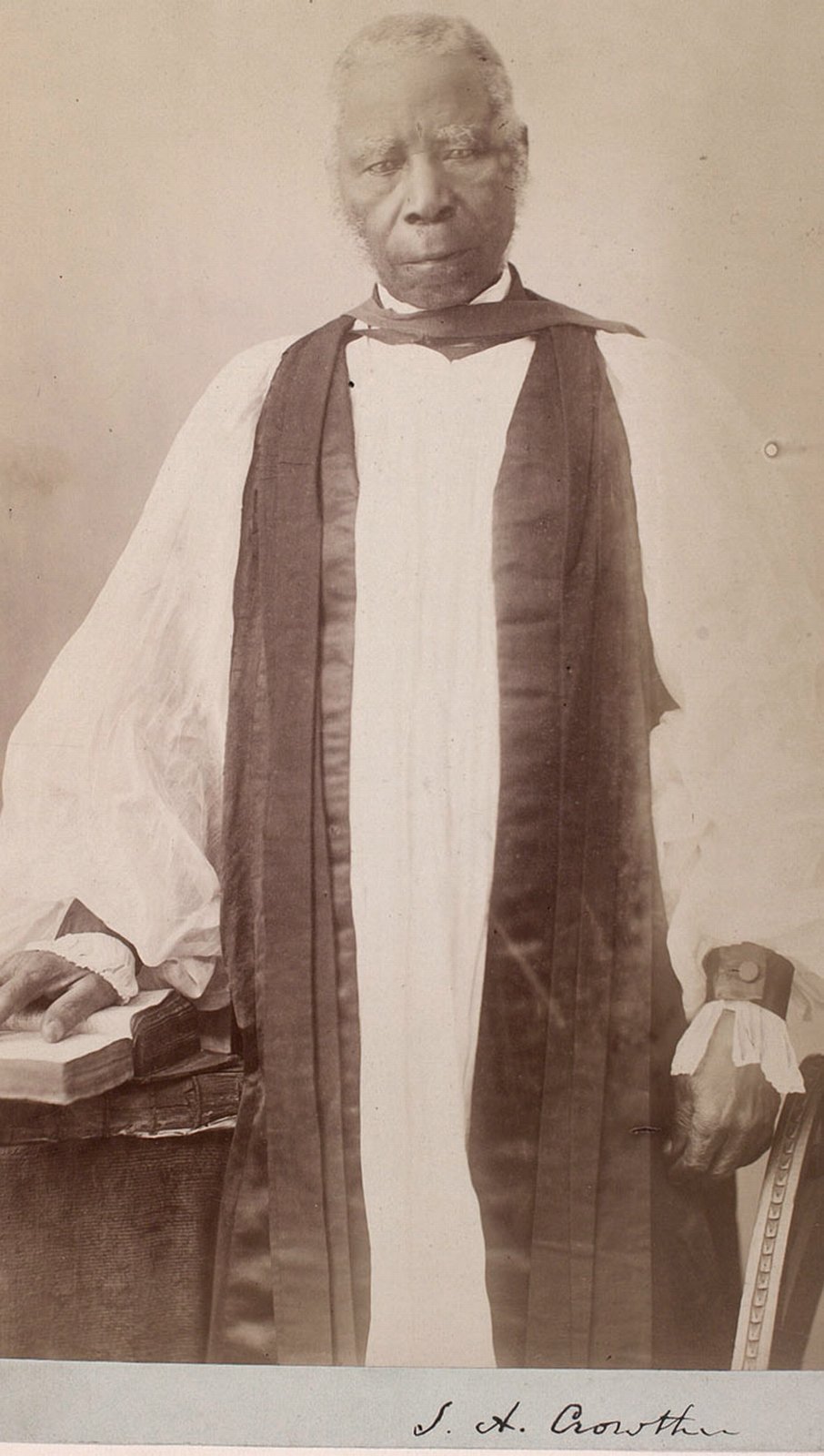
Samuel Ajayi Crowther (c. 1809–1891). As a child he was seized into slavery and rescued at sea by a British warship; he later became the first African Anglican bishop and led the translation of the Bible into his own mother tongue, Yoruba. Source: Wikimedia Commons, public domain

Sanneh held that translation is itself "indigenisation": by being translated, Christianity became the Africans' own religion.
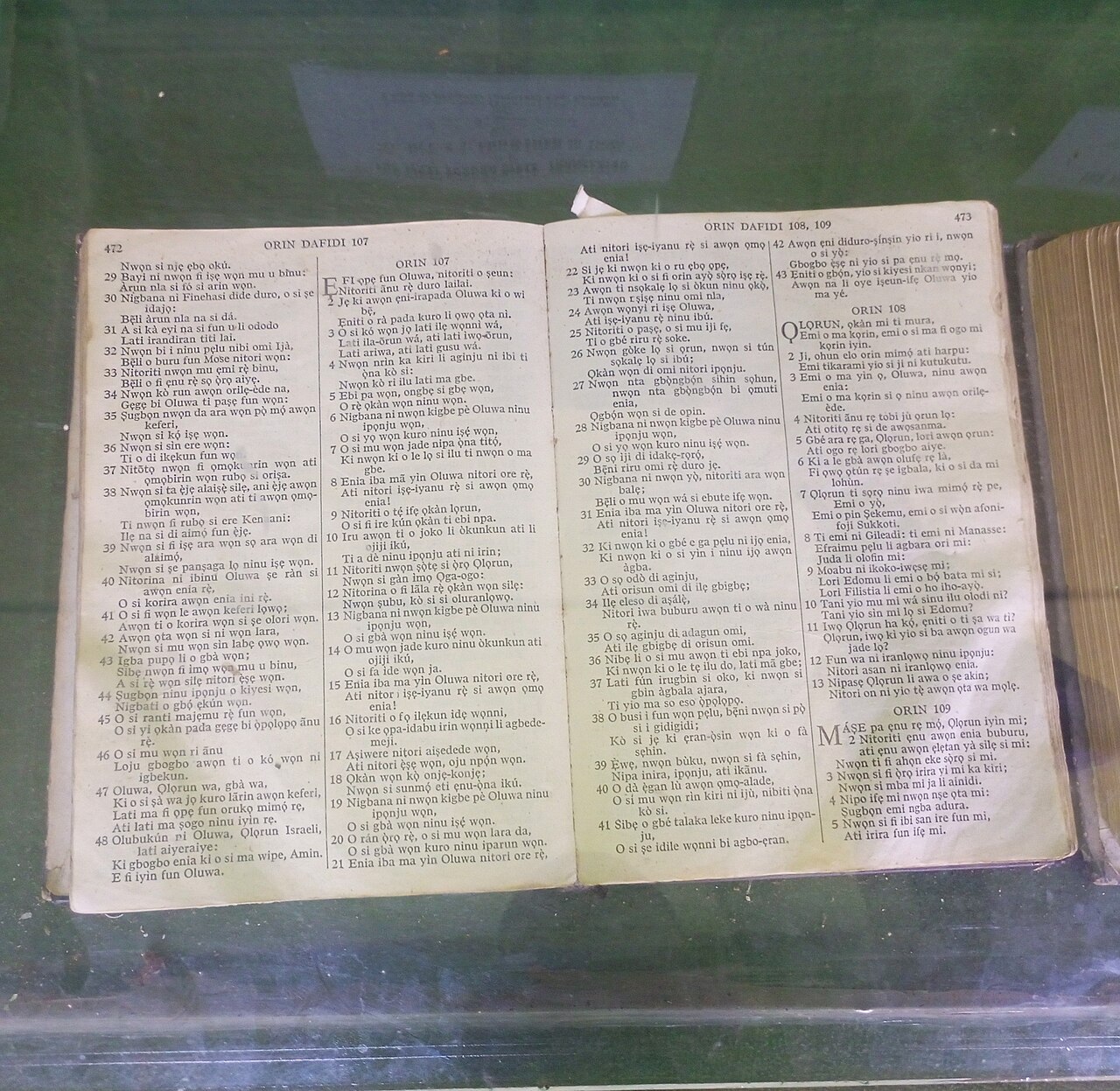
The first Yoruba Bible. From this moment, those who read Scripture no longer needed to learn English. Source: Wikimedia Commons, photo by Ridzaina, CC BY-SA 4.0

This is somewhat like Buddhism's entry into China: once the sutras were translated into Chinese, Buddhism to some degree became a Chinese religion.
What if it were put into Chinese characters
The Chinese-speaking world has walked this road once as well.
In April 1919 the "Union Version" Bible, the result of decades of collaborative translation, was published in Shanghai in the vernacular of the time, roughly contemporary with the May Fourth vernacular movement. It became the most widely used translation in Chinese churches, and many Chinese Christians still read it today.
A translated book did the same in China as in Africa: it let people read, argue and quarrel in their own words.
The direction reverses
Then the influence began to flow backward.
On many moral and theological questions, the churches of the South are more conservative than churches in Europe and America. In June 2008 a group of Anglican leaders met in Jerusalem at the "Global Anglican Future Conference" (GAFCON), with African churches' delegates making up a large share of those present. One cause was that they could not agree with the British and American Anglican churches on blessing same-sex couples and ordaining gay clergy. After the meeting they formed their own global fellowship.
The old mission field began to speak to London and New York. In some European cities, new churches led by African-born pastors and made up mainly of African immigrants also appeared, which some call "reverse mission."
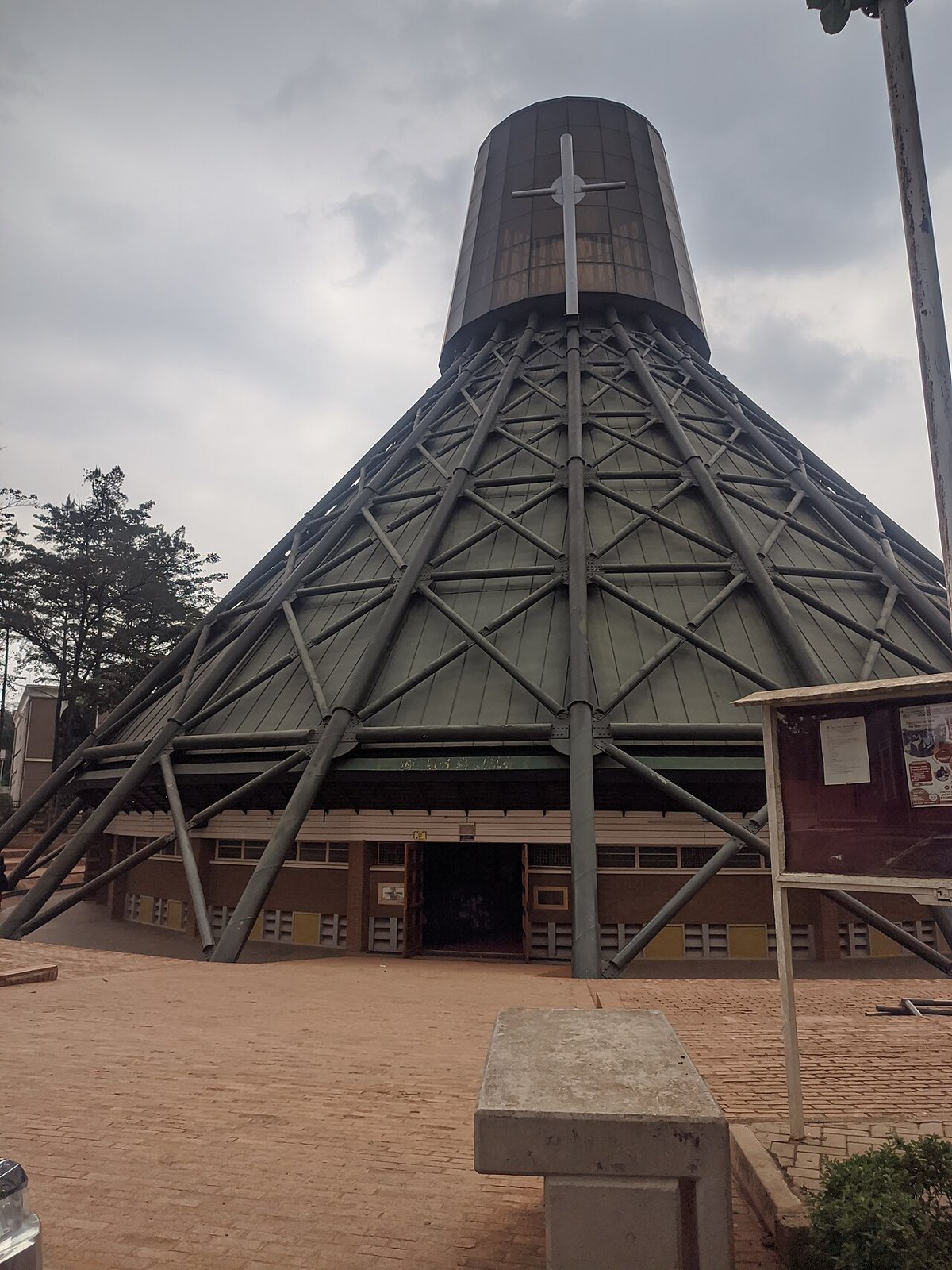
The shrine of the Uganda Martyrs at Namugongo, Uganda, commemorating a group of young Christians put to death by the king between 1885 and 1887. Every 3 June millions walk from all over East Africa on pilgrimage. Source: Wikimedia Commons, photo by Lebu Ayiga, CC0

Turning it around
But "the centre of gravity moving south" does not mean "the West no longer runs things."
Seminaries, publishers, international charities and money are still mostly in the North. People in the South and institutions in the North: that mismatch is itself a force.
African Christianity is not one block either. Catholics, Anglicans, Pentecostals and indigenous independent churches differ greatly in theology, ritual and political stance. On the same land Islam is also growing; sub-Saharan Africa is at once among the places where the two great religious populations are growing fastest.
There is a more basic question still: when we say "Christianity's future is in Africa," we are still using maps and categories invented by Europeans. African believers themselves may not describe their faith this way.
If the largest body of believers of what you believe lived on another continent, interpreted by people you do not know, would you still think it the same thing?
References
- Pew Research Center, Global Christianity, 2011
- Philip Jenkins, The Next Christendom, Oxford UP, 2002
- Lamin Sanneh, Translating the Message, Orbis, 1989
- The Union Version published in Shanghai on 22 April 1919: United Bible Societies China ministry, "Giving the Very Best Version of the Bible to China" (2019-01-15) 🟢
- The GAFCON meeting in Jerusalem in 2008, Bishop Crowther, the Namugongo martyrs: standard history
- Image credits are in each caption