
A table of seven lines
In 1945 the British philosopher Russell published A History of Western Philosophy. In the chapter on St Augustine he suddenly inserts a "dictionary," which he says is a way to "understand Marx psychologically":
- Yahweh = dialectical materialism
- The Messiah = Marx
- The Elect = the proletariat
- The Church = the Communist Party
- The Second Coming = the revolution
- Hell = punishment of the capitalists
- The Millennium = the communist commonwealth
Russell goes on to explain that the words on the left give the words on the right their emotional weight; and it is this emotion, familiar to those brought up in Christianity or Judaism, that makes Marx's eschatology seem credible.
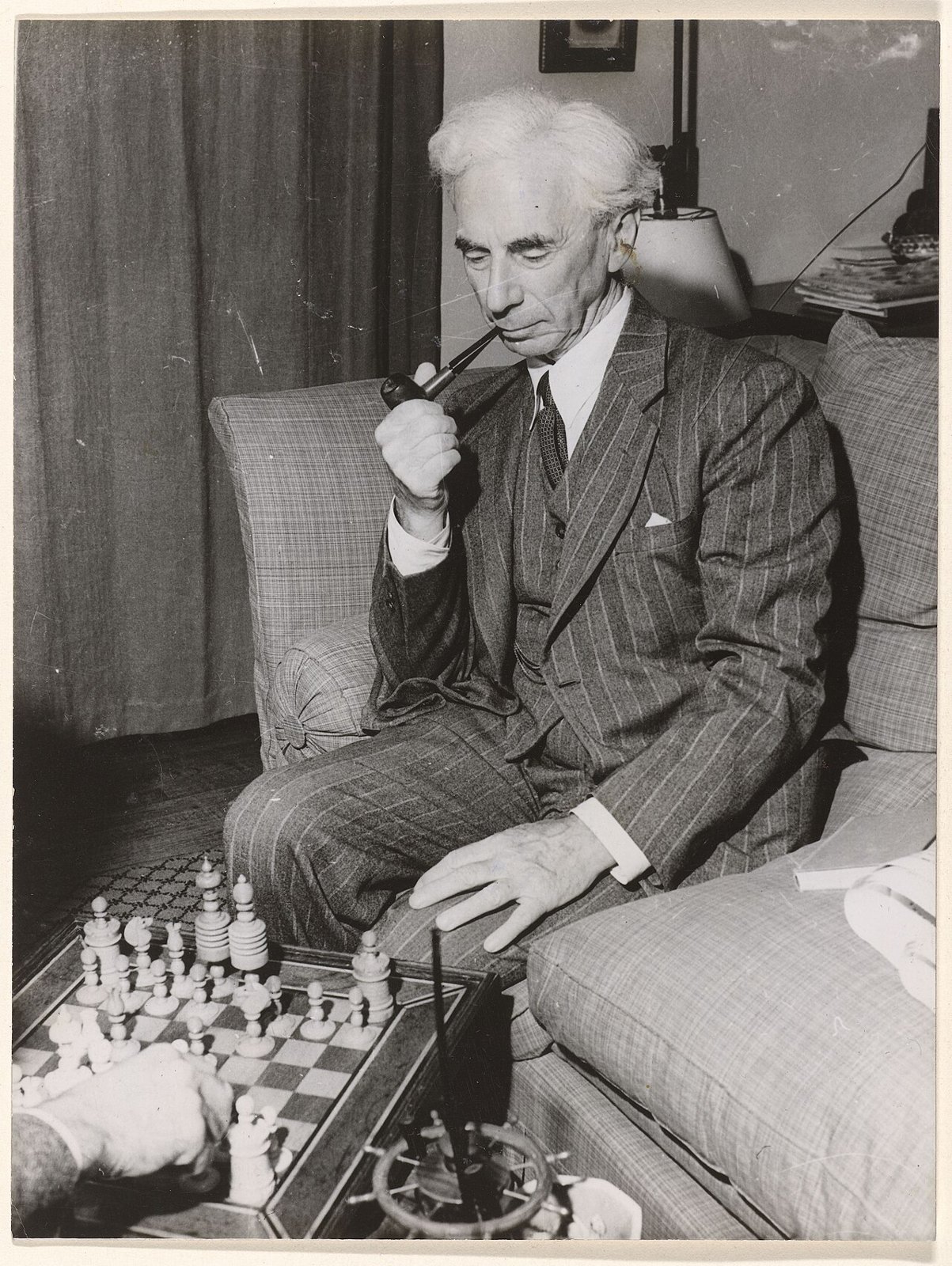
Russell in 1950, around the time he received the Nobel Prize in Literature. He was a well-known unbeliever himself, the author of Why I Am Not a Christian*. Source: Wikimedia Commons, Rijksmuseum, CC0*

His meaning: Marxism moves people not only through its economic arguments but because its "shape of story" is identical to the Judeo-Christian view of history: a fallen present, a chosen people, a final judgment, a perfect world about to come.
Not only Russell thought so
Russell was not the only one to make this comparison.
In 1938 the German-born political philosopher Eric Voegelin wrote a small book called Political Religions, seeing modern totalitarian movements such as Nazism and Bolshevism as "political religions" taking the place of traditional religion. In 1944 the French sociologist Raymond Aron put forward the term "secular religions," for modern ideologies that functionally replaced religion.
The historian Norman Cohn's The Pursuit of the Millennium (1957) traced the millenarian movements of medieval Europe: prophets, the elect, the Last Judgment, the kingdom on earth. He held that some twentieth-century revolutionary movements inherited exactly this old psychological structure.
In AI conversation records and in various things I saved, I have also seen similar remarks again and again: the Party oath is like baptism, criticism and self-criticism are like confession, the leader's preserved body is like a saint's incorruptibility, and revolutionary holy sites are like pilgrimage destinations.
China's version
In China these comparisons had a version that needed no comparing.
In the decade after 1966, in many workplaces, schools and families, people every morning faced the portrait of Chairman Mao for "morning requests for instructions" and in the evening "evening reports," reporting the day's thoughts. People danced the "loyalty dance," sang quotation songs, and before going out, eating or meeting read a passage of "supreme instructions." Everyone had a copy of the little red plastic-covered book Quotations from Chairman Mao, carried against the chest as they walked. The official editions alone numbered over a billion copies.
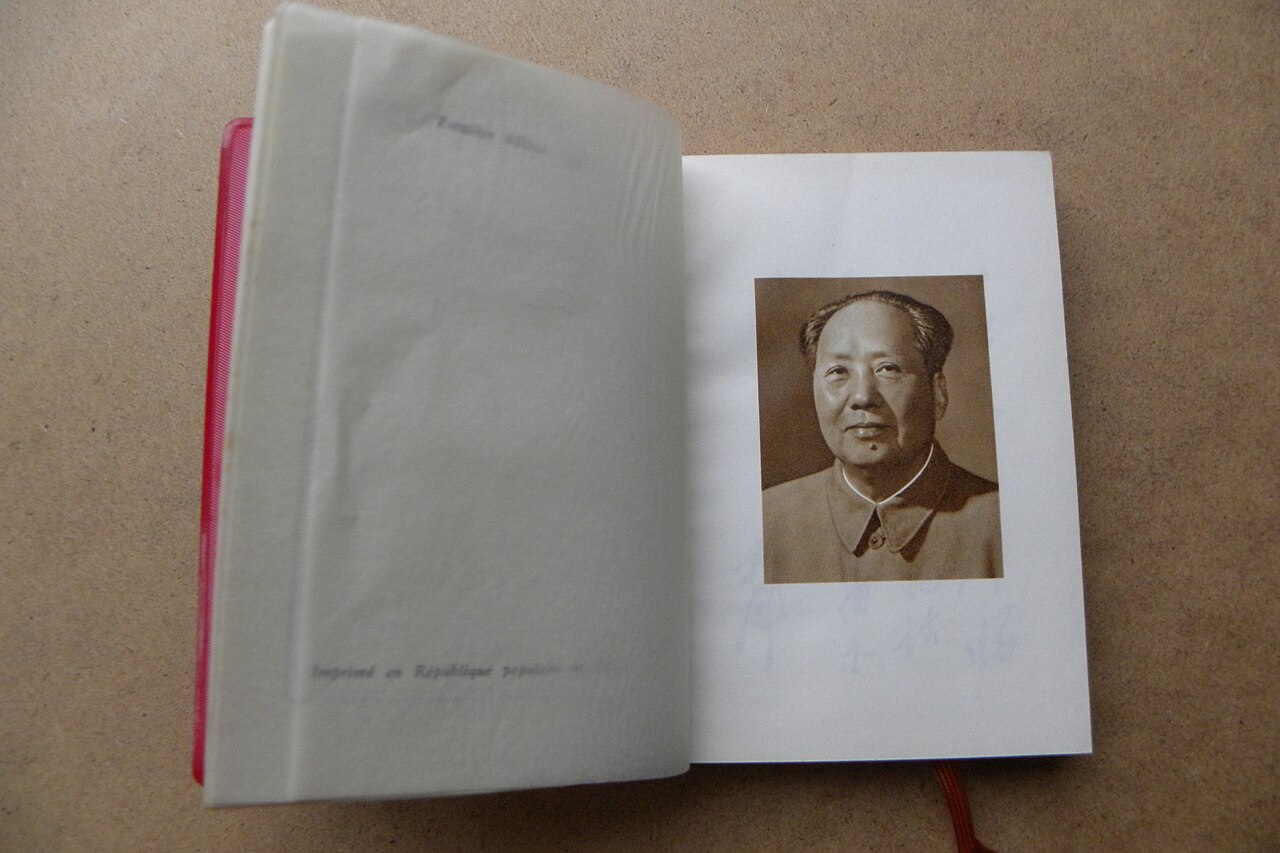
The 1966 edition of Quotations from Chairman Mao (French), with Mao's portrait on the frontispiece. It was translated into several dozen languages and is among the most printed books of the twentieth century. Source: Wikimedia Commons, photo by Olnnu, CC BY-SA 3.0

Mao Zedong died in 1976, and the next year a memorial hall was built in Tiananmen Square, where the body, preserved in a crystal coffin, is open to view. Lenin's Mausoleum on Red Square in Moscow is half a century older.
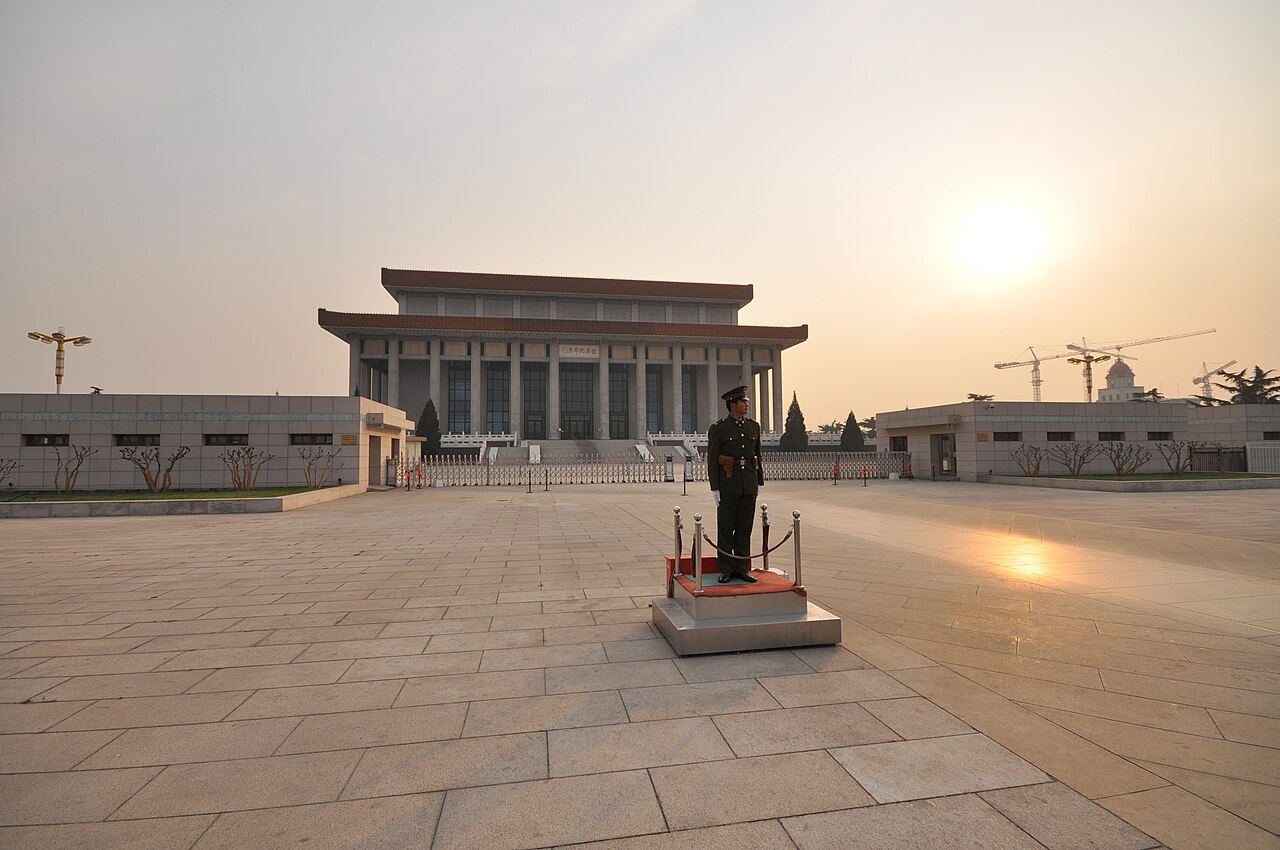
The Mausoleum of Mao Zedong in Tiananmen Square, Beijing, completed in 1977. Source: Wikimedia Commons, photo by Jorge Láscar, CC BY 2.0

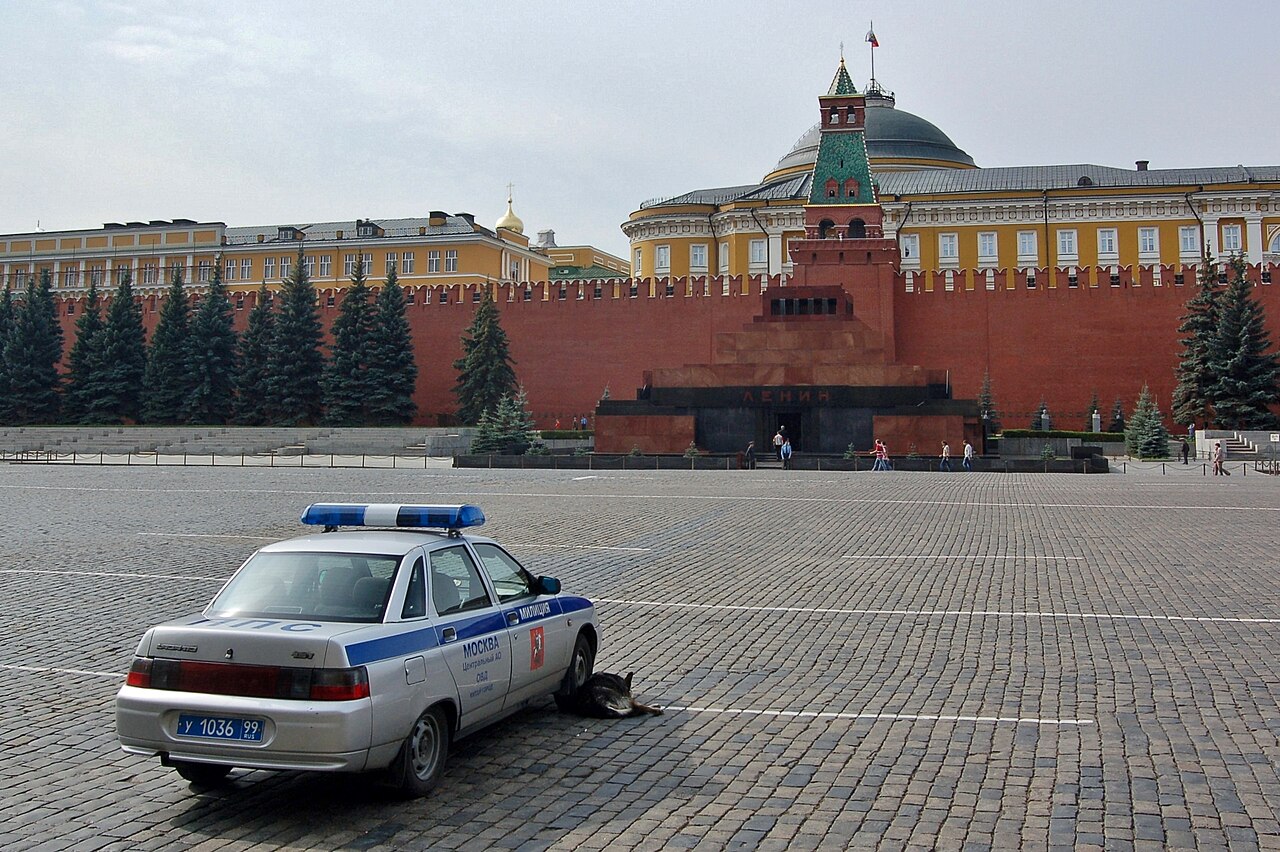
Lenin's Mausoleum on Red Square, Moscow. Lenin died in 1924, and his body is still inside. A thoroughgoing materialist, treated after death as an incorruptible saint. Source: Wikimedia Commons, photo by Bahnfrend, CC BY-SA 4.0

What the analogy is good for
The analogy is most useful in explaining some things that economics cannot:
- On what grounds does a theory make millions willing to die for it?
- Why does it treat internal disagreement as "heresy" rather than as scholarly debate?
- When the "kingdom" is long in coming, why does it not change the theory but reinterpret the prophecy?
These are questions the sociology of religion has studied for a long time. Borrowing the frame of religion lets us see some of the psychological machinery of ideologies.
The kingdom never came
The third question has a ready answer in China too.
In 1958 the slogan of the "Great Leap Forward" was "run into communism." Public canteens were set up everywhere, with meals free, saying communism was right before our eyes. The next few years were the great famine. How many died, scholarly estimates run from more than ten million to more than thirty million.
The kingdom did not come; the later explanation was "three years of natural disasters," and later still "the Soviet Union pressing for debts." The prophecy was not wrong; what was wrong was Heaven, and outsiders. This script Cohn had already written out in the millenarian movements of the Middle Ages.
Most of those who starved to death in the villages in those years had never read Russell and had never read Marx. They had simply believed in a story, or had no choice.
The limits of the analogy
But the analogy is also easily overused.
First, Marxism is plainly atheist and materialist. It opposes anything supernatural, and applying the word "religion" to it is a functional comparison, not an identity of essence. Critics say that if everything can be called "religion," the word loses its meaning: football fans, celebrity worship and consumerism can all be called religions.
Second, "resembles" does not mean "comes from." The structure may be similar because the ways people tell stories are limited to begin with, not necessarily because one learned from the other.
Third, and most important: this analogy has a distorted version that should not be touched at all. A claim circulates online that communism was "deliberately designed by the Jews" as a "fourth religion" to dissolve other peoples. This is no longer a comparison in the history of ideas; it is a conspiracy theory: it swaps a structural resemblance in the history of ideas for the deliberate plot of an ethnic group. It has no evidence, and it comes from the same source as the most vicious anti-Semitic propaganda in history.
The same intuition can grow into two utterly different things: one is the intellectual-historical analysis of Russell, Voegelin and Aron, the other is a conspiracy theory. What separates them is evidence and the subject of the sentence: the former discusses the structure of ideas, the latter accuses a group of people.
Turning it around
Russell's table answers "why does this theory seem credible to people"; it speaks of psychology, and does not judge right and wrong.
So to say a body of thought is "like a religion" is not to say all its judgments are wrong; conversely, to say it has "the story shape of a religion" is not to say it is a religion. What the table can do is show what moves people in a body of thought; it does not draw the conclusion for it.
Around you, is there something that is not called a religion but is believed like one?
References
- Bertrand Russell, A History of Western Philosophy, 1945 (the chapter on St Augustine)
- Eric Voegelin, Die politischen Religionen, 1938
- Raymond Aron, "L'avenir des religions séculières," 1944
- Norman Cohn, The Pursuit of the Millennium, 1957
- Alexander C. Cook (ed.), Mao's Little Red Book: A Global History, Cambridge UP, 2014, Preface: "Official editions numbered well over a billion copies in three dozen languages" 🟢
- "Morning requests and evening reports," the loyalty dance, the Mao Mausoleum (1977), estimates of deaths in the Great Leap Forward famine: standard history and scholarly estimates
- Image credits are in each caption