A temple to Vishnu
Angkor Wat in Cambodia covers about 162 hectares and is generally held to be the largest religious building in the world.
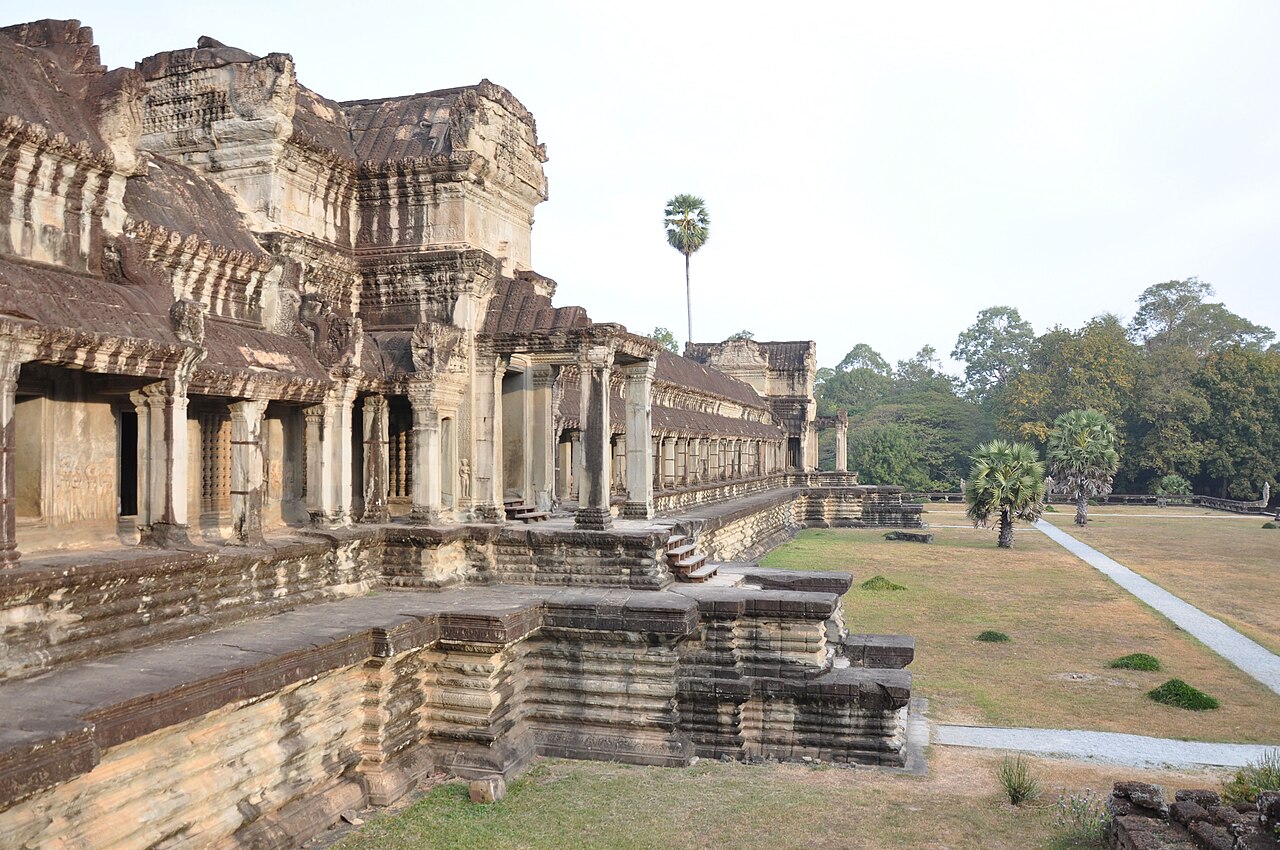
The façades of the first and second levels of Angkor Wat. It faces west; in Hinduism west is the direction of Vishnu, and also the direction of death. Source: Wikimedia Commons, photo by Jorge Láscar, CC BY 2.0

It was built in the early twelfth century under the Khmer king Suryavarman II as his state temple, and possibly his tomb. It was dedicated to Vishnu, one of the chief gods of Hinduism. Its bas-reliefs show stories from the Ramayana and the Mahabharata and the Indian myth of the "Churning of the Ocean of Milk."
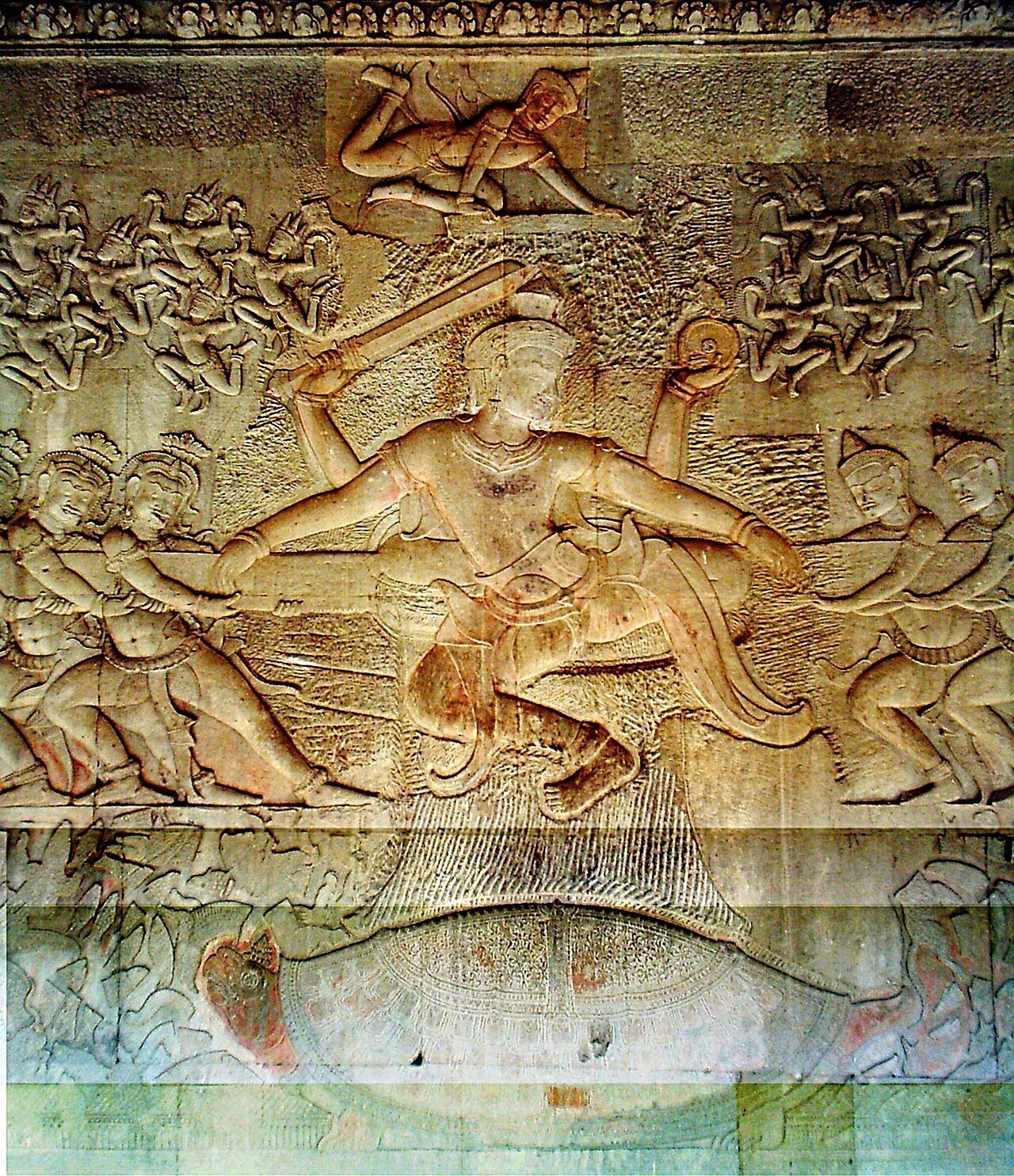
The "Churning of the Ocean of Milk" bas-relief in a gallery of Angkor Wat: gods and asuras pull a great serpent as a rope to churn the ocean of milk, seeking the nectar of immortality. The relief is over forty metres long, an Indian myth on Cambodian stone. Source: Wikimedia Commons, photo by Markalexander100, CC BY-SA 3.0

An Indian god, thousands of kilometres from India, has the largest temple in the world.
Later it became a Buddhist temple
Even more interesting is Angkor Wat's later fate. In the late twelfth century the Khmer king Jayavarman VII was a Mahayana Buddhist; after that Angkor Wat slowly became a Buddhist temple, and many Hindu images were replaced by Buddhist ones. Later still, Theravada Buddhism became Cambodia's mainstream, and Angkor Wat has remained an important Buddhist holy place.
It is the best preserved of the Angkor sites and the only temple whose incense has not gone out from its building to this day.
One building has served two religions in turn.
It survived the Khmer Rouge
It survived something worse.
From 1975 to 1979 the Khmer Rouge ruled Cambodia and announced the abolition of religion. Temples were turned into warehouses, pigsties and prisons; monks were forced back to lay life, and many were killed. In a country where for centuries nearly every man spent a period of his life as a monk, the monastic community was almost cut off at the root.
Angkor Wat remained. The Khmer Rouge took it as a national symbol and drew its outline on their flag. After 1979 the monks came back to the temples one by one, and the incense was lit again.
Not conquest
How did Hinduism and Buddhism come to Southeast Asia?
In the mid-twentieth century the French scholar George Coedès put forward the concept of "Indianised states." He noted that from the early years of the common era a series of states emerged on the mainland and islands of Southeast Asia whose royal houses used India's religion, Sanskrit, ideas of kingship, law and art: Funan, Chenla, Champa, Srivijaya, Mataram...
But this was not India attacking. India has almost never carried out large-scale colonial conquest in Southeast Asia in its history. It spread mainly along two roads:
- Trade routes: the monsoon sea lanes of the Indian Ocean, along which Indian merchants, Brahmins and monks came and went in the ports of Southeast Asia.
- The royal houses took it up themselves: Southeast Asian rulers found that Indian religion and ideas of kingship (such as the "god-king") backed them up well, and invited Brahmins and monks of their own accord.
Coedès's specific account has since been revised considerably, and scholars now stress the initiative of the Southeast Asians themselves: not India "exporting," but Southeast Asia "selecting." Either way, it was a spread without armies.
A polytheistic "expansion"
There is a popular claim online: "polytheism cannot beat monotheism." The reasoning: monotheism is exclusive and has the urge to convert; polytheism is inclusive and has no wish to expand.
Angkor Wat is a very hard counterexample to this claim.
Over more than a thousand years, Hinduism and Buddhism spread across Southeast Asia: in Java, Indonesia, are Borobudur (Buddhist) and Prambanan (Hindu), both built in the ninth century; Bali is still mainly Hindu today; Myanmar, Thailand, Laos and Cambodia are all Theravada Buddhist countries today.
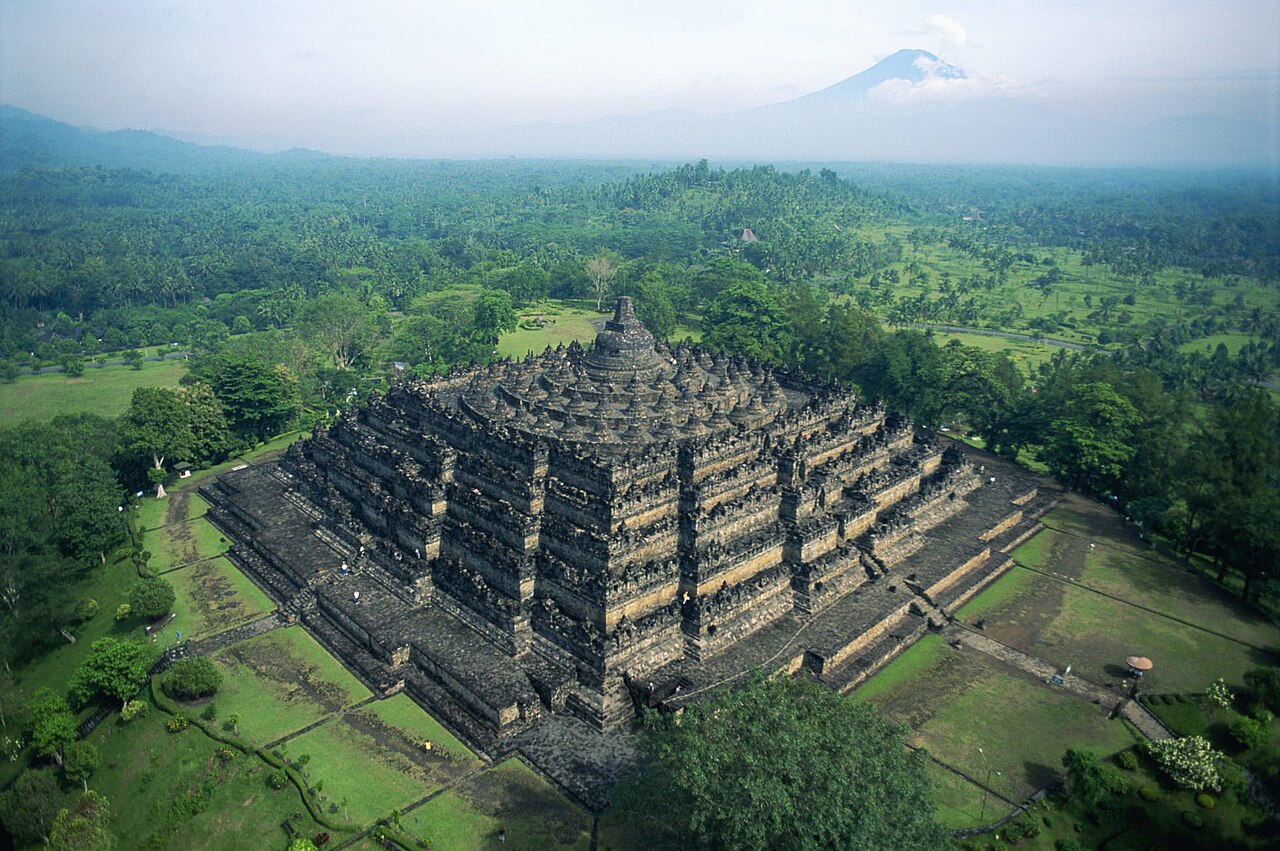
Borobudur in Central Java, Indonesia, the great Buddhist stupa built in the ninth century. Those who live around it today are mostly Muslims. Source: Wikimedia Commons, photo by Zaenulihsan91, CC BY-SA 4.0

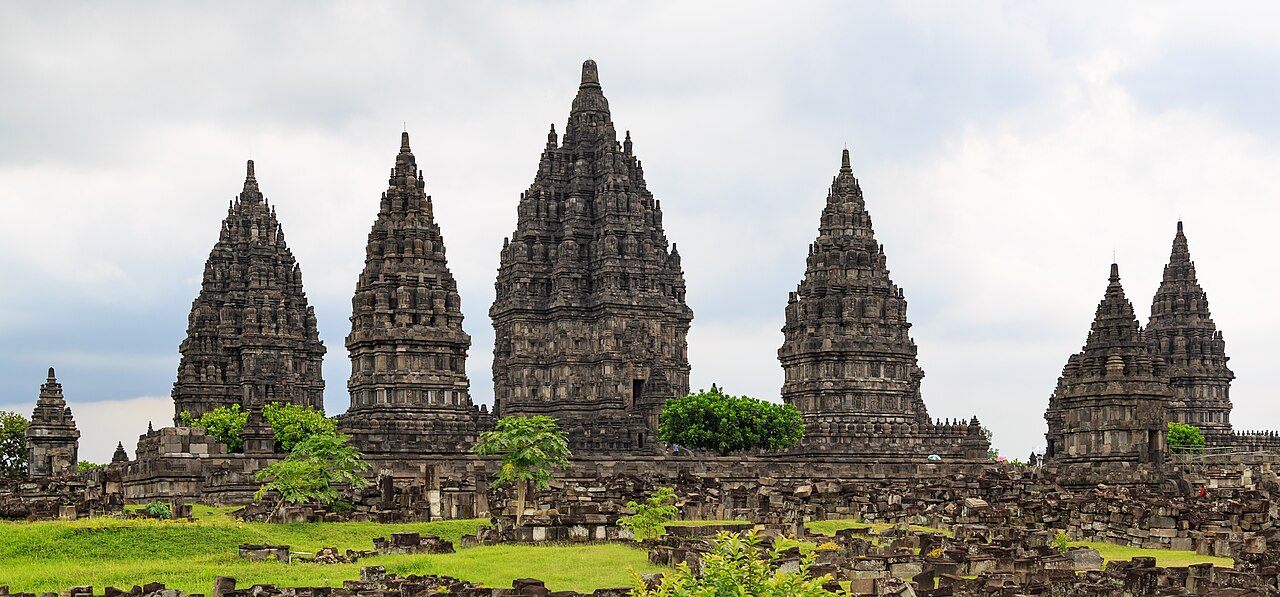
Prambanan, a group of Hindu temples not far from Borobudur, also built in the ninth century. On the same plain, a Buddhist stupa and a group of Hindu temples, dozens of kilometres apart, were raised at about the same time. Source: Wikimedia Commons, photo by CEphoto, Uwe Aranas, CC BY-SA 3.0

Buddhism spread further: from India to Central Asia, China, the Korean peninsula, Japan, Tibet and Southeast Asia. A religion not centred on a creator god became one of the most widely spread in human history.
And Islam in Southeast Asia
Islam in Southeast Asia gives an interesting comparison too.
Today's Indonesia is the country with the most Muslims in the world. But Islam spread across the islands of Southeast Asia mainly not by fighting but, like the earlier Hinduism and Buddhism, along trade routes: Muslim merchants from Arabia, Persia and India, rulers of port cities who converted of their own accord, Sufi preachers.
So in Southeast Asia, whether polytheism, Buddhism or monotheism, the way of spreading was much alike: they came on merchant ships and were picked by the local king.
Turning it around
Of course, monotheisms often are more organised and more eager to convert; the Christianisation of the Roman Empire and the Islamisation of the Arab empire were indeed accompanied by political and military power.
But reducing the spread of religions to "the strength of doctrine" misses the most important thing: the road. How far a religion can go often depends on which trade route it boarded and which royal house it persuaded, not just on how many gods it has.
Your own faith or values: did someone persuade you, or did you happen to be born on that road?
References
- George Coedès, The Indianized States of Southeast Asia (English translation 1968)
- The building of Angkor Wat (Suryavarman II, early twelfth century, dedicated to Vishnu) and its conversion to a Buddhist temple: standard history
- Borobudur and Prambanan (ninth century); Hinduism in Bali; the spread of Islam in Southeast Asia along trade routes: standard history
- The abolition of religion in the Khmer Rouge period (1975–1979): standard history
- Image credits are in each caption