A difference you can see in one sentence
In the Analects, "Xian Jin," Confucius once compares two of his students.
Of Yan Hui he says: "He is nearly there, but often has nothing at all." (The original: "Hui is about right, yet often empty.")
Then of Zigong: "Ci does not accept his lot, and makes a business of trade; his guesses often hit."
In plain words: Ci doesn't stay in his place (what exactly "doesn't accept his lot" means has long been debated), goes off to do business, guesses the market, and often guesses right.
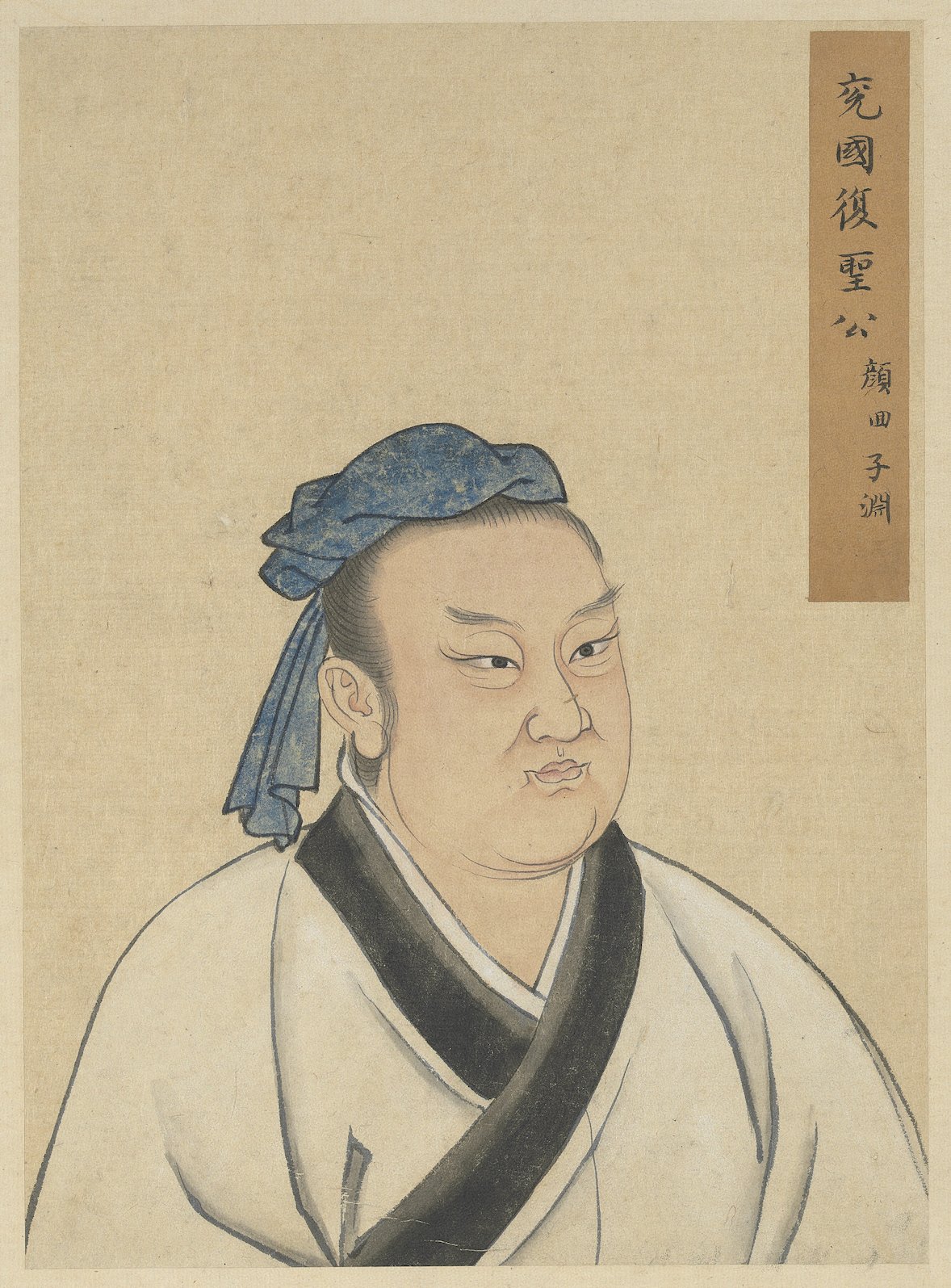
Yan Hui, from the album "Half Portraits of the Great Sage and Virtuous Men of Old" in the National Palace Museum, Taipei. Confucius said he was "often empty," often having nothing at all. Source: Wikimedia Commons, anonymous, public domain

From this one line you can't tell whether it is regret or admiration. What is certain: the word "huozhi" appears in the Analects, and it is about Zigong's business. The name of this series comes from here.
How Sima Qian wrote him
The one who really wrote Zigong in full was Sima Qian. The Records of the Grand Historian has a chapter, "The Biographies of the Money-Makers," giving lives to those who made their fortunes in trade, and Zigong comes very near the front.
The gist of the original:
"After Zigong had studied with Confucius, he went back to Wei and took office, and hoarded and sold goods between Cao and Lu. Of Confucius's seventy-odd disciples, Ci was the richest. Yuan Xian couldn't get enough even of chaff and hid in a poor alley; Zigong had carriages with teams of four horses one after another, and visited the lords of the states with bundles of silk, and everywhere he went, the rulers met him as equals."
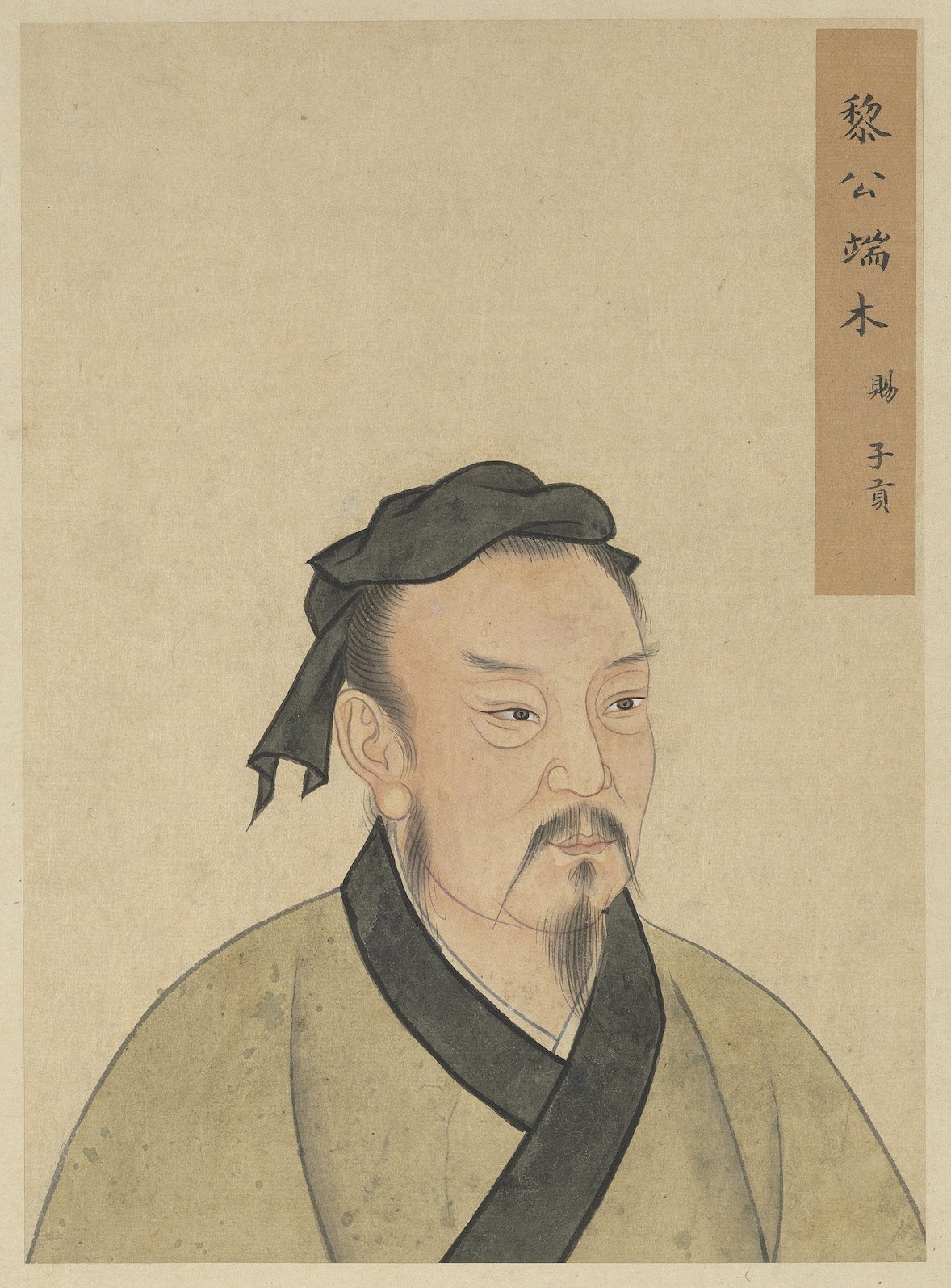
Zigong (Duanmu Ci), from the same album, inscribed "Duke of Li, Duanmu Ci, Zigong." Confucius said of him: "makes a business of trade, and his guesses often hit." Source: Wikimedia Commons, anonymous, public domain

And a harsher line follows:
"What made Confucius's name spread through the world was Zigong going ahead and behind arranging things. This is what is called having power and being made more brilliant by it, isn't it?"
Picture it: Yuan Xian and Zigong, Sima Qian puts them in the same passage. One couldn't even get chaff to eat; one went out with a fleet of carriages. Two men, both students of Confucius.
What Confucius himself said
Someone may wonder: wouldn't Confucius look down on this kind of thing?
In the Analects, "Shu Er," Confucius says:
"If wealth could be sought, I would do it even if it meant being a driver holding a whip; if it can't be sought, I'll follow what I love."
That is quite frank. He didn't say money doesn't matter. He said: whether money can be sought isn't for me to decide. If it can, I'll drive a cart; if it can't, I'll do what I like.
I want to pause here
I'm opening this series because of one sentence I'm more and more sure of: trade and commerce are the foundation of everything; without money, everything is empty talk; and that is not in accord with the Way of Heaven.
By "the Way of Heaven" I don't mean getting rich by windfall. I mean that a household, a community, a civilization, to stand, must first have food, have money in circulation, have a base that can bear trouble. A tradition that can talk about principle but can't keep accounts will lose when it meets opponents who can. In modern times we paid for that.
Many people think Confucianism by nature looked down on merchants. Reading the original, I found it isn't so: the richest in Confucius's school was Confucius's own student, and his fame was spread by that student's arrangements. Confucianism isn't without commerce; it was read too narrowly later. So this series has a job: to read the neglected half back in.
Another job is more practical: I'm a student too. Stocks, exchange rates, gold, funds: I learn and record as I go, and what I learn has to land in my own accounts, knowing and doing as one; later, it should also build a steady fund for a long-term piece of research. So you'll see here how I think and how I calculate, and also where I calculate wrong.
The other side of wealth
But reading this piece as "Confucius supports getting rich" would be a misreading.
In the same Analects, Confucius also says:
"Wealth and rank are what everyone wants; but if they come by the wrong path, the gentleman will not stay content with them."
And a more direct one: "Wealth and rank gained unrighteously are to me like floating clouds."
The key in both is "the Way" and "righteousness." Confucius isn't against wealth; he is against wealth that doesn't come by the proper road.
Sima Qian didn't only speak well of money, either. In "The Biographies of the Money-Makers" he writes coldly: among ordinary households, if someone is ten times richer than you, you are beneath him; a hundred times, you fear him; a thousand times, you work for him; ten thousand times, you become his servant. "It is the principle of things." (The original: "Among the registered people, when wealth is ten times, they humble themselves; a hundred times, they fear; a thousand times, they are employed; ten thousand times, they are servants: this is the principle of things.")
So the more accurate statement is: Confucius didn't say money doesn't matter, and didn't say any way of getting it is fine. Where the line is drawn is what this series will read, bit by bit.
Bustling crowds
This series' subtitle is "Bustling crowds all come and go for profit."
It adapts a line in "The Biographies of the Money-Makers": "The world bustles, all come for profit; the world is astir, all go for profit." (The Wikisource text writes the second word differently from most printed editions.) Right after it comes: "A king with a thousand chariots, a lord with ten thousand households, a master of a hundred families, still worry about poverty; how much more the common registered man!"
Even those who are rulers fear poverty; how much more households like ours. When Sima Qian said it, he wasn't scolding anyone for greed; he was stating a fact. I like the line precisely because it doesn't pretend.
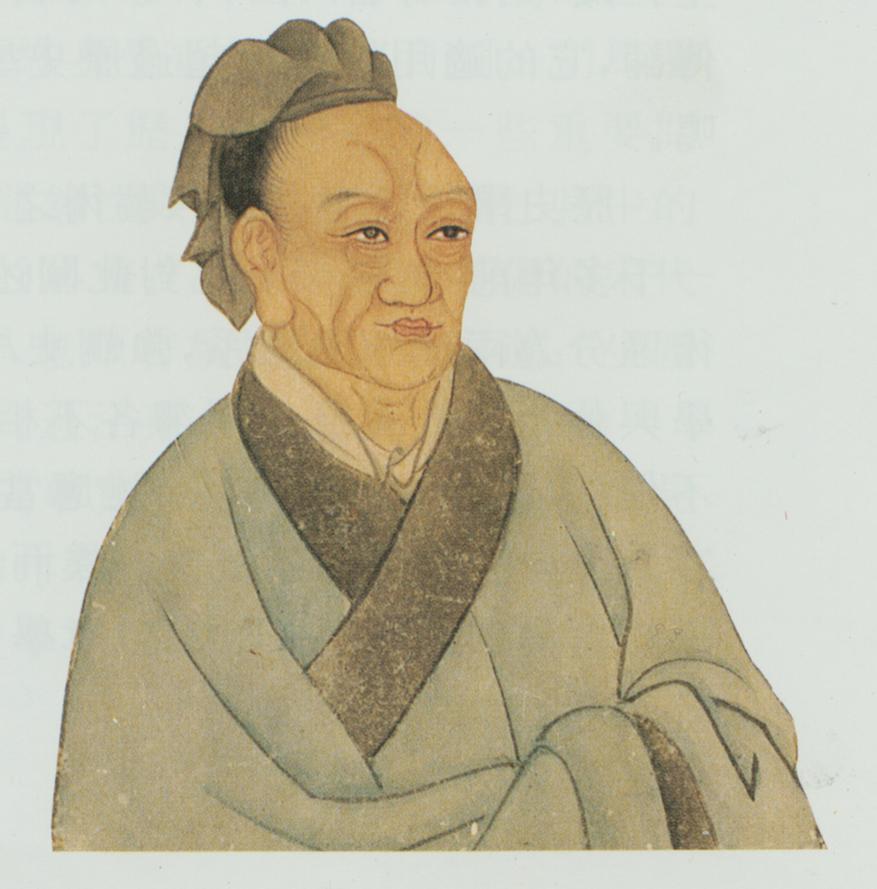
Sima Qian (a later painting). "The Biographies of the Money-Makers" is the biography he wrote for merchants. Source: Wikimedia Commons, anonymous, public domain

What this series covers
Roughly four lines:
- Catching up on lessons: read back, piece by piece, "The Biographies of the Money-Makers," Mencius's "why speak of profit" (actually said to a ruler), the great Han debate over salt and iron, and the tomb inscription Wang Yangming wrote for a merchant; and see how monotheisms like Islam, Judaism and Protestantism treat money, what can be borrowed and what's a pit.
- Understanding money: currency, inflation, interest rates, exchange rates, stocks, bonds, funds, gold, bitcoin; first the history and the principles.
- Looking at now: what happened in the last two years, and how the next two may go. For now the site has three groups:
- Market watching: gold, silver, and a method piece on how to read a forecast;
- Emotional value: diamonds, Pop Mart, blind boxes: which are stores of value, which are consumption, which are passing the parcel;
- Going overseas: Chinese firms going to Southeast Asia, a way out or a new trouble; how "involution" has been exported to other people's doorsteps.
- Knowing and doing as one: bookkeeping, decision logs, reviews. Every "doing" leaves behind a "knowing" that can be looked back at.
There's only one rule: numbers come with a source and a date, second-hand ones are marked, and what I'm unsure of I say I'm unsure of. My own view goes separately in each piece's "My view," not mixed into the numbers.
Confucius said "if wealth could be sought." Where do you think the line falls today between what can be sought and what can't?
References
- Analects, "Xian Jin": "Hui is about right, yet often empty. Ci does not accept his lot, and makes a business of trade; his guesses often hit"; "Shu Er": "If wealth could be sought…" and "Wealth and rank gained unrighteously are to me like floating clouds"; "Li Ren": "Wealth and rank are what everyone wants…" (Wikisource, checked word for word, not against page numbers of the original books)
- Records of the Grand Historian, juan 129, "The Biographies of the Money-Makers": the Zigong passage, the "world bustles" passage, the "ten times richer" passage (Wikisource, checked word for word, not against page numbers; this text has the variant "壤壤")