The last time
My inclination is toward making Confucianism a religion. I am not the first person to have had that idea.
More than a hundred years ago in China, someone seriously tried it.
In October 1912 the Confucian Association (Kongjiaohui) was founded in Shanghai. Its founders included Chen Huanzhang and Mai Menghua. In November 1913 Kang Youwei was elected president, with Chen Huanzhang as general secretary.
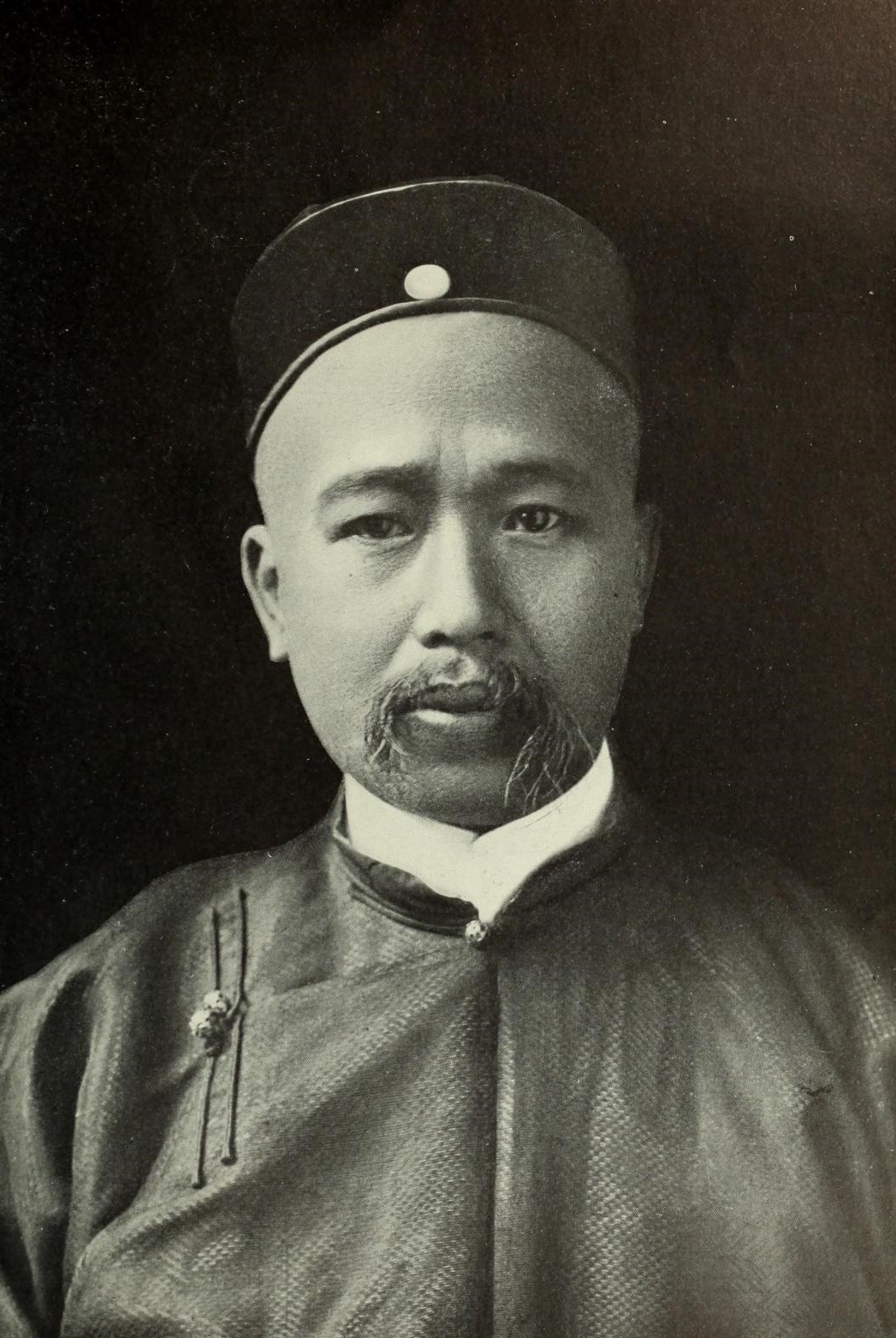
Kang Youwei (1858–1927). Source: Wikimedia Commons, photographed by Elmer Chickering, Public domain

Chen Huanzhang held a doctorate from the United States. His dissertation, published in 1911, was The Economic Principles of Confucius and His School. We will meet him again later.
The petition
In August 1913, Chen Huanzhang and others submitted a Petition of the Confucian Association to both houses of the first National Assembly of the Republic of China, asking that Confucianism be named the state religion in the constitution. Among the signers were Chen Huanzhang, and also Liang Qichao and Yan Fu.
Their reasoning deserves to be told in full. In April 1913 Kang Youwei wrote: "Freedom of belief is generosity, letting the people follow their own tastes; establishing a state religion is singling one out, to honour what suits the people's customs. Each has its own purpose; they do not interfere with each other, and they do not burden each other." In other words, freedom of belief and a state religion are two different things, and neither gets in the other's way. He also said that China had made Confucianism its state religion for two thousand years while Buddhism, Daoism and Islam ran alongside it, so freedom of belief had in fact been practised all along.
The constitutional drafting committee rejected the petition.
Three years later, in 1916, after Yuan Shikai's death, the Association petitioned again for Confucianism as the state religion. It was refused again.
Why it was refused
The opponents' main argument was the freedom-of-religion clause in the constitution: would making one religion the state religion violate freedom of belief? That was the biggest dividing line between the two sides.
Chen Duxiu put the problem most concretely. On 1 November 1916 his essay "The Constitution and Confucianism" appeared in New Youth, volume 2, number 3. If Confucianism became the state religion, he wrote, then a president or an official of another faith would find that "not to sacrifice to Confucius breaks the law, and to sacrifice to him betrays the faith; there is no way out". A student at school who was a Buddhist, Daoist, Christian or Muslim would find that "not to sacrifice to Confucius breaks school rules, and to sacrifice to him destroys one's belief; again no way out".
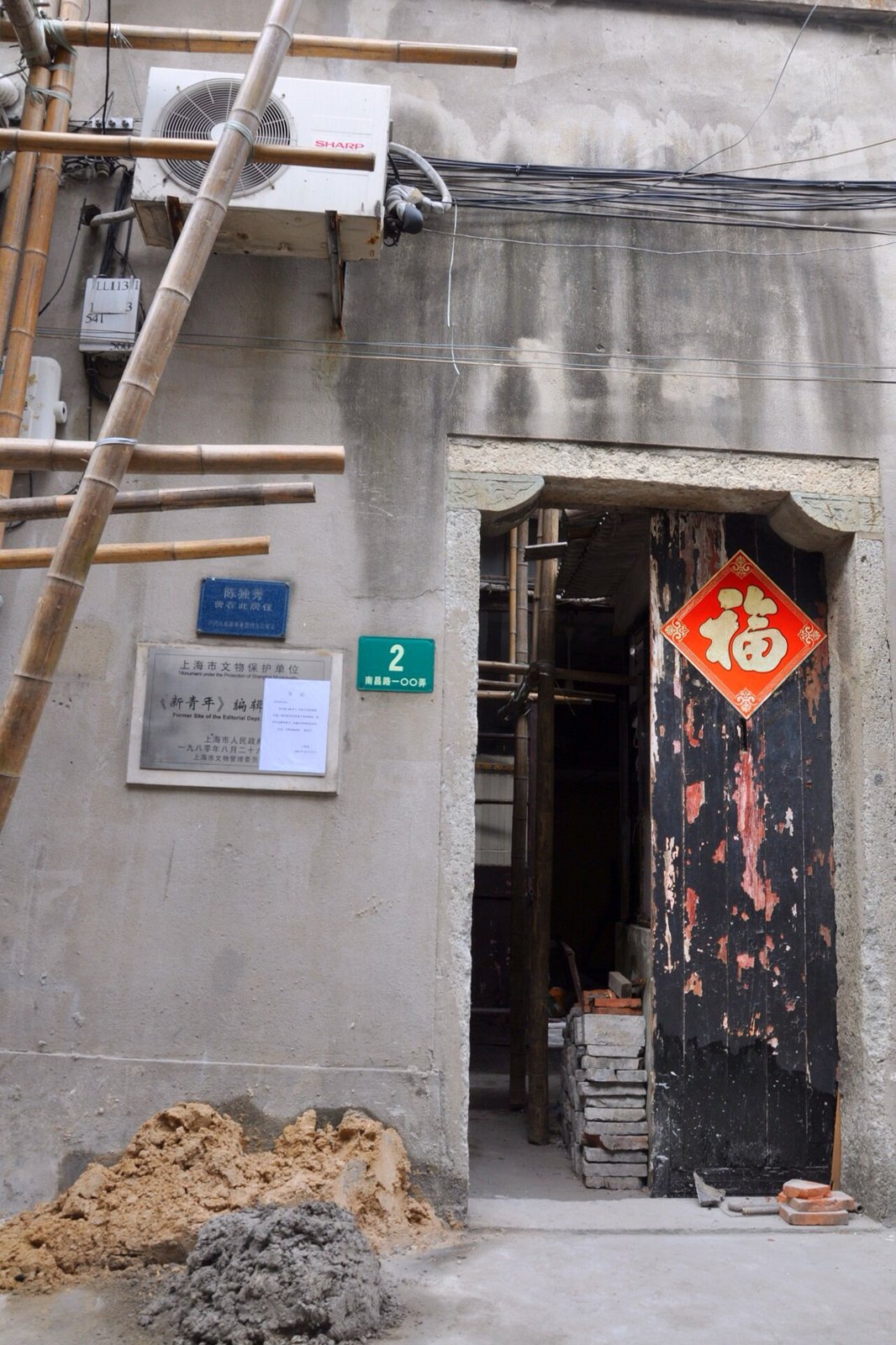
The former site of the New Youth editorial office in Shanghai (Chen Duxiu's former residence). Source: Wikimedia Commons, photographed by Fayhoo, CC BY-SA 3.0

There were also more practical political reasons. Yuan Shikai supported honouring Confucius and issued a series of decrees on the Confucian sacrifices, but he publicly opposed making Confucianism the state religion. He said Confucius "was never a religious figure in the first place", and in 1915 he is said to have ordered the Confucian Association's Qufu headquarters to change its name. What he honoured was "Confucius". What he feared was "religion". Even the man who most needed Confucius to lend him authority did not make Confucianism the state religion.
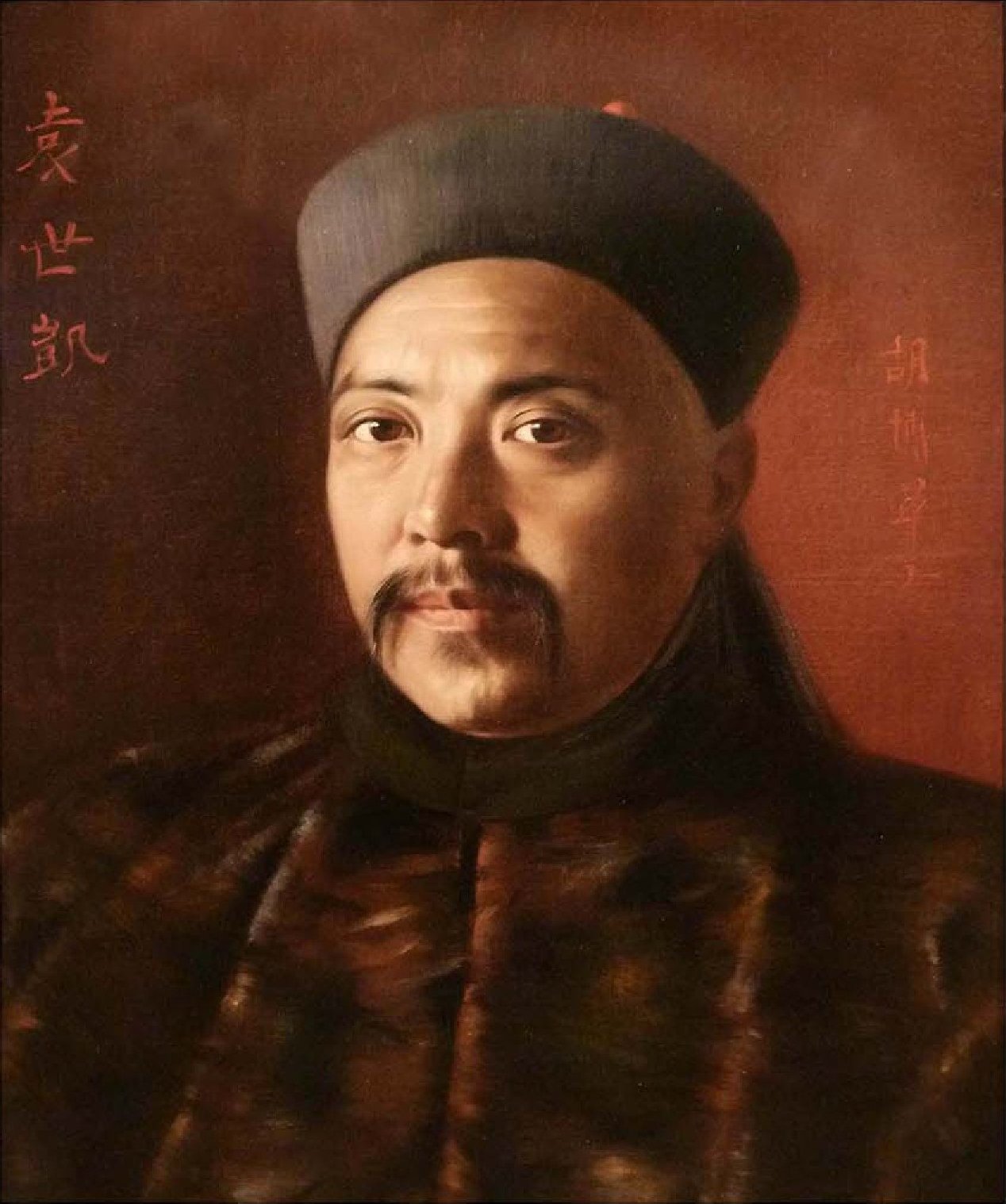
Portrait of Yuan Shikai painted by Hubert Vos. Source: Wikimedia Commons, Hubert Vos, Public domain (What is said of Yuan Shikai here is relayed from secondary research; there is no first-hand archive to check years and wording against. What is certain is that in June 1913 he issued the order honoring Confucius and did not make Confucianism the state religion.)

What was not lost
"Rejected twice" is only half the story.
On 31 October 1913 the constitutional drafting committee of the National Assembly passed the Draft Constitution of the Republic of China, known as the "Temple of Heaven draft". Article 19 reads: "National education takes the way of Confucius as the foundation of self-cultivation."
It did not say state religion. It said Confucius.
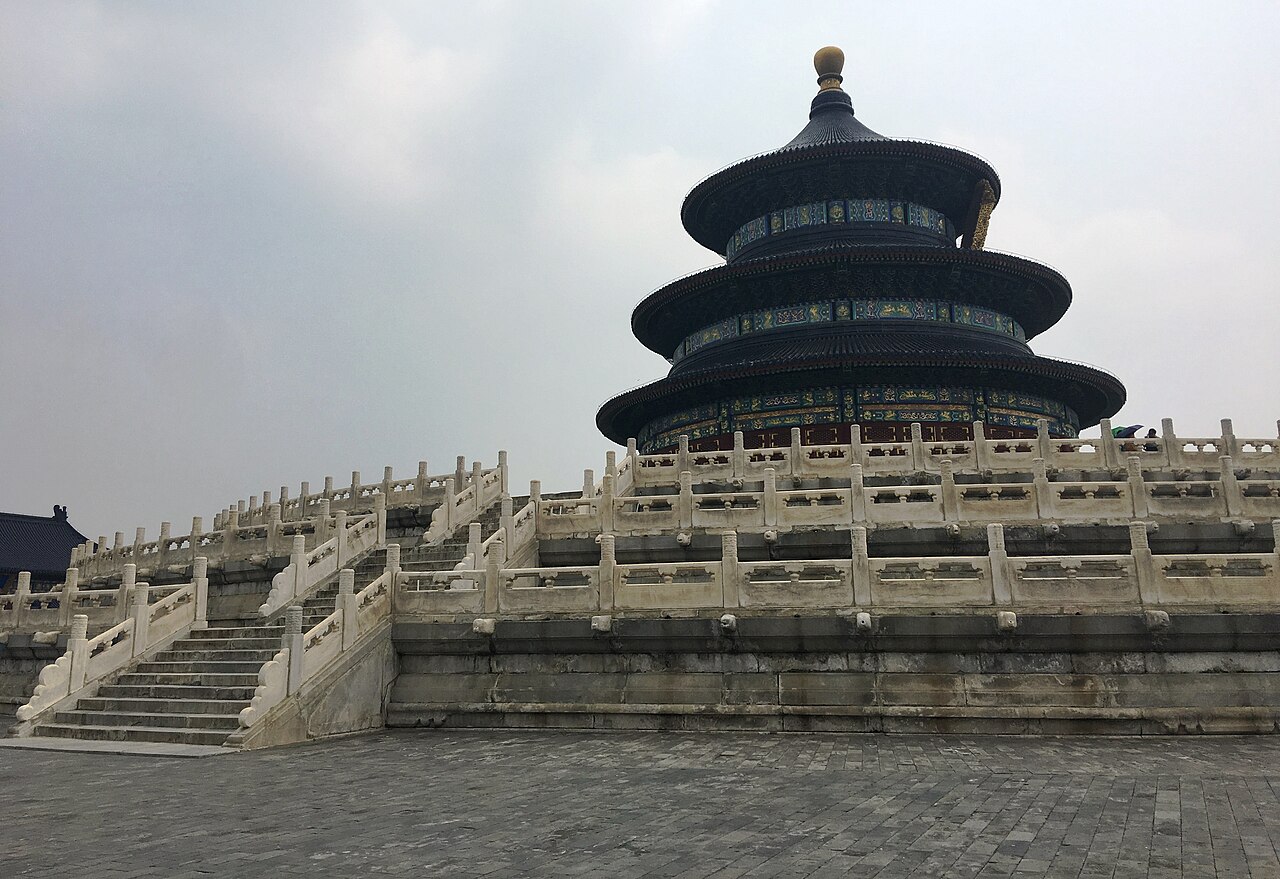
The Hall of Prayer for Good Harvests at the Temple of Heaven, Beijing. The 1913 draft constitution was drawn up inside the Temple of Heaven, which is why it is called the "Temple of Heaven draft". Source: Wikimedia Commons, photographed by Bjoertvedt, CC BY-SA 4.0

After that, this article was argued over in parliament again and again. In January 1917 Li Dazhao, in "Confucius and the Constitution", called it a "grotesque fact" and hoped it would be struck out at the second reading.
In the Constitution of the Republic of China of 1923, Article 12 ends up reading: "Citizens of the Republic of China have the freedom to honour Confucius and to practise religion, which shall not be restricted except according to law."
The state religion never came. Confucius stayed in the constitution, written as "the freedom to honour Confucius".
What the Confucian Association did not achieve
After the petitions failed, the "honour Confucius, restore the old ways" movement that the Association had promoted slowly went quiet.
There is no single answer for why it failed. A few questions are worth pressing on.
First, was the "state religion" it wanted a religion like Christianity, with believers and weekly worship, or a set of state rites? In the petitions the two seem mixed together. What can be found is that all the Association actually built was Confucian sacrifices, annual meetings and periodicals. Weekly gatherings, membership rolls and the daily life of a congregation do not turn up. The kind of "church" Kang Youwei imagined, it never built itself.
Second, it tied itself too tightly to politics. In 1917 Kang Youwei took part in Zhang Xun's attempt to restore the monarchy. When the promoter of a religion stands on the side of a restoration, "Confucianism" can hardly shake off the label of "going back".
Third, it tried to finish through legislation in parliament something that should have grown by itself inside society.
Fourth, perhaps it was the times. It ran into a great age in which many people were sick of tradition and eager for the new. The Association wanted to make tradition the state religion, and it stood exactly opposite them.
These are questions, not conclusions. Scholars such as Zhao Fasheng and Zhang Xiang have studied this movement in depth, and their conclusions differ; I only raise questions here.
Looking at it the other way
"The Confucian Association failed" is also a claim to be careful with.
It failed at the level of the state. But the religionisation of Confucianism did not end there. Half a century later, in Indonesia, Confucianism entered the official list of recognised religions under the name Agama Khonghucu (1965), was later restricted and cut down to five recognised religions, and after 2000 was slowly given back. The same thing: the state recognises it one moment and not the next, following politics. (I read the originals of the 1965 presidential decree and the 2000 presidential decision; the reference number of the Interior Ministry circular of 18 November 1978 is written differently in different places, and I read only scholarly paraphrase.)
On the Korean peninsula, people tried the same thing: at the turn of the twentieth century Yi Byeong-heon argued for turning Confucianism into a religion, and the Sungkyunkwan Confucian Association (Seonggyungwan Yudohoe), founded in 1945, is said to have had more than two hundred branches. (The figure is unchecked.)
Also, the opponents' reasons were not all "anti-religion". What Chen Duxiu objected to was, to a large degree, turning Confucius's teaching into something the state enforces. That is the same worry people have about a "state religion" today. In the Tianjin newspaper Yishibao, Catholics also came forward to object; one of them said that if Confucianism were made the state religion, the other religions would have to ban the books of Confucius in response, and would that not "cut off the way of Confucius"?
So perhaps the question to ask is not "why did the Confucian Association fail", but this: if religionisation does not go through the state, what can it go through?
What I read from this
This failure means three things for my own idea.
The first is the path. The Association wanted to use a vote in parliament to make Confucianism the state religion in a single step. What I call "enough" takes four things: numbers, organisation, wealth, doctrine. All four have to grow out of the community itself, bit by bit; legislation cannot give them. What I mean by "leading" is cultural leadership, not political power. The lesson from the Association: do not borrow the state's hand.
The second is Confucius. The Association pushed Confucius up as the founder of a religion, someone who receives revelation. I will not take that road. I choose "first teacher": Confucius is the one who set down the rules and handed them on, something like a prophet, something like Moses, but not a recipient of revelation. The divine lies elsewhere, in the "Way of Heaven" (tiandao).
The third is what remains. The failure was not total: Confucius finally stayed in the constitution, inside "freedom". An idea does not have to wait for the state to recognise it to survive in society. But what survived was a freedom, not a belief to rely on and return to (yigui). That belief has to be given by the community itself.
Why give it? Back then, the Association ran into people who were sick of tradition and eager to innovate. Now, I think, atomised modern people need it.
This is what I take from the failure of 1913 to 1916, and I may be wrong.
I have respect for Chen Huanzhang and Kang Youwei, and a little heartache too. They were among the most learned people of their day. They sincerely wanted Confucius to go on living, and they used the most dignified means they could think of: write a petition, go to parliament, get into the constitution. They lost, were laughed at as "restorers of the old", and were remembered as helpers of a "restoration". I often wonder: what if, back then, they had not gone to the state to ask, but had first gone back to the localities, made the Confucian sacrifice something every village could do every month, and linked up the ancestral halls, the academies and the guild halls? Would it have turned out differently? That "what if" proves nothing, but I want to keep the question for myself: the road I take has to be the one they did not take.
This is written for friends outside China, and for friends inside it. Chen Huanzhang and Kang Youwei lost: in 1913 they carried their petition into parliament and were refused; in 1916 they petitioned once more and were refused again. Later they were called helpers of the "restoration", called "old-fashioned", and some people still tell their names as a joke. But what I see in this history is a group of people who meant it. It was an age when many people resented tradition and scrambled for the new, and still they stood up and said: we cannot let Confucius disappear. The method they chose was wrong, but you understand the feeling behind it. It is what rises in you on Qingming, standing before your ancestors' graves: you do not want it to end with your generation. What they never got, I think perhaps we can do: not ask the state, not borrow anyone's hand, just carry it on, bit by bit, in each person's own days.
If the clause "Confucianism as the state religion" had passed back then, would Confucianism be stronger or weaker today?
References
- For comparison: "'Shrines Are Not Religion': How Japan Turned a Tradition into a State Faith, and How It Was Taken Apart" (same series: what happens when a nation ties itself to a tradition); Yigui, "Not to Sacrifice to Confucius Breaks the Law, to Sacrifice Betrays the Faith" (the same events, with more of the record)
- Confucian Association: founded in Shanghai, October 1912; petition of August 1913 (signers include Chen Huanzhang, Liang Qichao, Yan Fu); Kang Youwei president, November 1913; second petition refused, 1916
- Chen Duxiu, "The Constitution and Confucianism", New Youth, vol. 2 no. 3, 1916-11-01
- Draft Constitution of the Republic of China (Temple of Heaven draft), Article 19, 1913-10-31; Li Dazhao, "Confucius and the Constitution" (1917-01-30); Constitution of the Republic of China (1923), Article 12
- Kang Youwei, "On Making Confucianism the State Religion to Match Heaven" (April 1913, Buren, no. 3), cited via Zhang Xiang
- Zhao Fasheng, "The Dispute over the State Religion and the Failure of Kang Youwei's Movement to Revive Confucianism"; Zhang Xiang, "Republic and State Religion: The Question of 'Establishing Confucianism as the State Religion' at a Time of Constitutional Upheaval", Open Times, 2018 no. 6
- Zhao Xiuli, "A study of press opinion on Catholic opposition to writing Confucianism into the constitution in the early Republic", Journal of Macao Polytechnic, 2021 no. 3 (secondary)
- Indonesian Confucianism: the author's notes "From Tianxia to the State", section 3 (secondary); Presidential Decree No. 1 of 1965, explanatory note (six religions including Confucianism), Indonesian Wikisource https://id.wikisource.org/wiki/Penetapan_Presiden_Republik_Indonesia_Nomor_1_Tahun_1965 🟢; Presidential Decision No. 6 of 2000, Audit Board regulations database https://peraturan.bpk.go.id/Details/57713/keppres-no-6-tahun-2000 🟢; Interior Ministry circular of 1978 (to be verified)
- Chen Huanzhang, The Economic Principles of Confucius and His School (1911); Zhang Xun's restoration of 1917 and Kang Youwei: standard history
- Image sources are given in each caption