A line that gets misread
Xunzi (a Confucian of the Warring States, about half a century later than Mencius) wrote a famous passage in "Discourse on Heaven" (《天論》).
Why does it rain after a rain sacrifice? There is no why; it would have rained anyway. When the sun is eclipsed, people go to "rescue" it; in a drought they pray for rain; for great matters they consult the oracle. Xunzi says that none of this is done in the real belief that anything can be obtained by asking. It is "treated as ornament" (以為文): a refinement added to ritual.
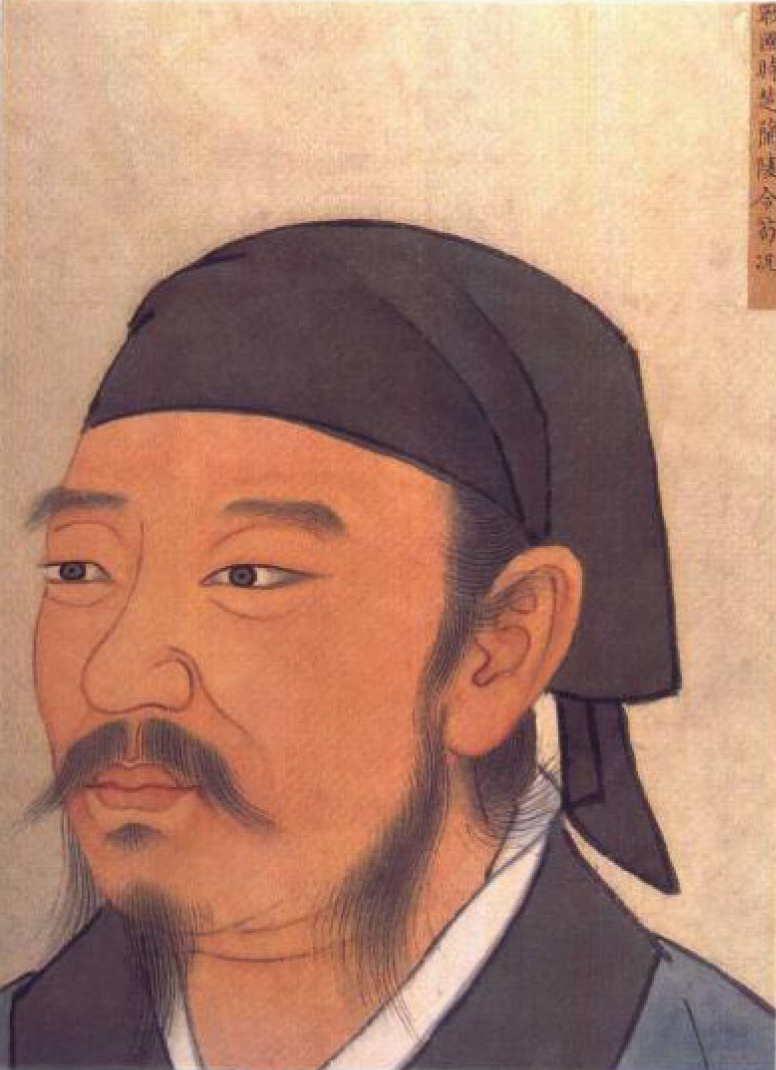
Portrait of Xunzi (Xun Kuang). Source: Wikimedia Commons, unknown artist, Public domain

Then comes the line people so often quote: "The gentleman takes it as ornament, while the common people take it as spirit. To take it as ornament is auspicious; to take it as spirit is ominous." (君子以為文,而百姓以為神。以為文則吉,以為神則凶。)
Many people read a "two-layer structure" into this: the clever know it is ritual, ordinary people think it is real.
But the passage ends: to treat it as ritual is auspicious; to treat it as truly having gods is ominous.
That is, Xunzi names the structure, but he does not admire it. What he wants is for everyone to treat it as "ornament" (wen).
This is what I wanted to say first: this old idea is not quite the same as the impression it later gave.
Another line, from the Book of Changes
Another line often brought up comes from the Commentary on the Judgment of the hexagram Guan in the Book of Changes: "Observe the divine way of Heaven, and the four seasons never err; the sage teaches through the divine way, and all under Heaven submit." (觀天之神道,而四時不忒;聖人以神道設教,而天下服矣。)
Later readers often take it as "the sage borrows ghosts and spirits to teach the people".
But Wang Bi's commentary does not mean that. He says: the divine way has no shape; we cannot see Heaven making the seasons run, yet the seasons never go wrong; in the same way, we cannot see what the sage does, and the people simply come to submit.
On this reading, the "divine way" is more like a silent order, running as the seasons do. To "teach through it" is to follow it, not to invent a set of ghosts and spirits.
So the original meaning of this sentence may be much wider than the later "keep the people foolish" reading.
People elsewhere said similar things
This thought did not appear only in China.
The Greek historian Polybius was taken prisoner by the Romans and lived in Rome for more than ten years. In Book VI of his Histories he analyses what is most distinctive about the Roman republic: its view of the gods. The multitude, he says, is fickle, full of lawless desires and irrational anger, and can be held back only by "mysterious fears". It was not for nothing that the ancients brought in the ideas of gods and of hell.
Scaevola, the Roman high priest (pontifex), is said to have divided the gods into three kinds: the gods of the poets, the gods of the philosophers, the gods of the statesmen. The first are too absurd, the second are unfit for the state, and some things should not be told to the people. He held that "it is useful for the city to be deceived in matters of religion."
That sentence comes from Augustine's retelling in The City of God. Note that Augustine is a critic of this idea; he is reporting Varro.
Later still comes Dostoevsky.
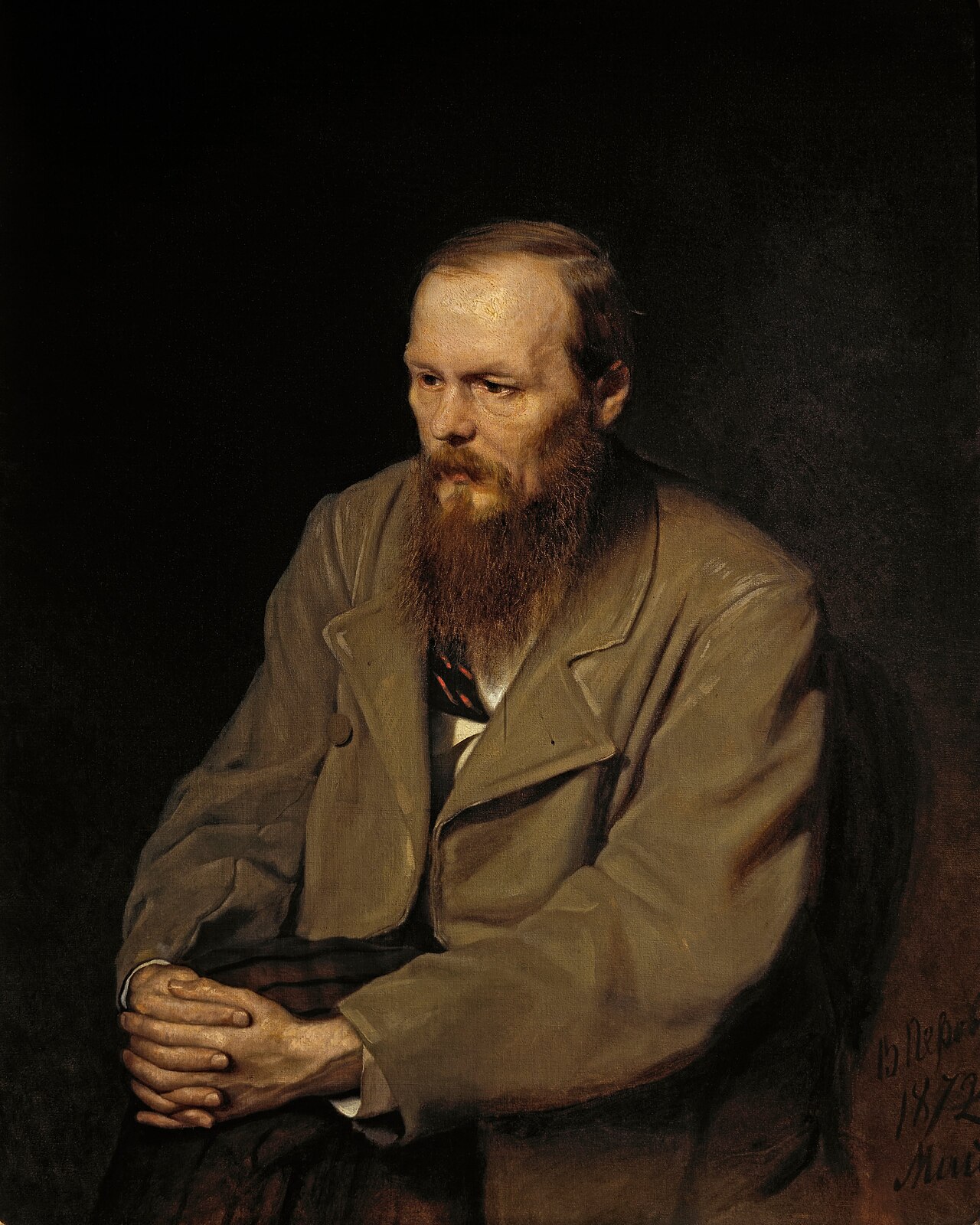
Dostoevsky (1821–1881), painted by Vasily Perov in 1872. Source: Wikimedia Commons, Public domain

In The Brothers Karamazov, Ivan tells a story: Christ returns to earth and is arrested by the Grand Inquisitor. The Inquisitor says to him that "we have corrected your work and founded it upon miracle, mystery and authority." People are overjoyed, because they are once again being led like a flock of sheep.
When I read this passage my heart goes cold. The Inquisitor is not a bad man. He truly loves those people, loves them with something close to despair: he believes they cannot bear freedom.
Does it work
Put these together and a pattern emerges:
- there is a group of people who think religion is useful to the masses;
- their own attitude to religion is more complicated;
- so a layer of "we know" and a layer of "they believe" take shape.
The idea is seductive because it seems to solve a real problem: a society needs some things that everyone holds in common, but not everyone wishes to, or is able to, think them through.
So how long can it last?
Rome's civic cult lasted several centuries on ritual and office, until Christianity replaced it at the end of the fourth century. China's "teaching through the way of the divine" existed in various forms for two thousand years.
But there are short-lived examples too. During the French Revolution Robespierre designed a cult of the "Supreme Being"; the National Convention decreed it on 7 May 1794, and a grand festival was held on 8 June. In less than two months, on 27 July, he fell, and the cult vanished with him. One of its sources of ideas was the "civil religion" Rousseau imagined in The Social Contract.
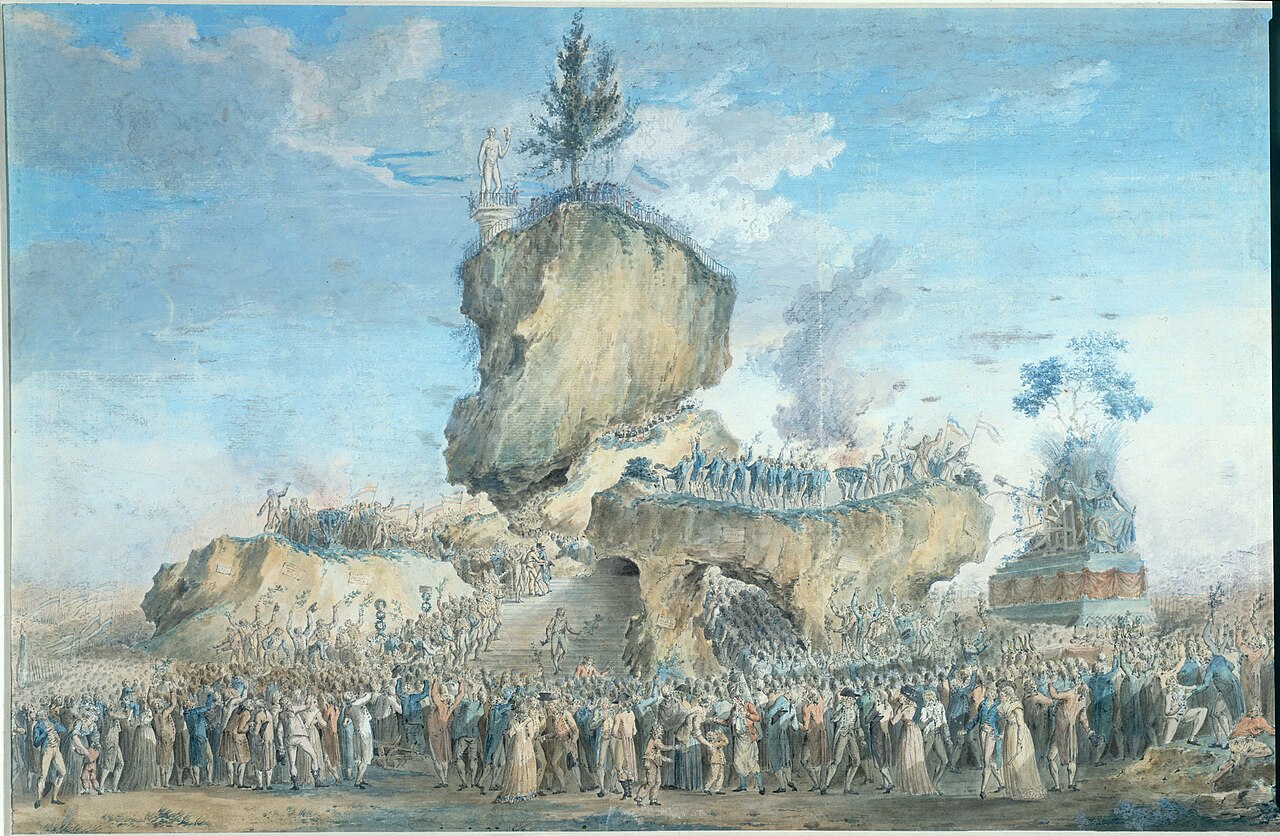
The Festival of the Supreme Being in Paris, 8 June 1794. Source: Wikimedia Commons, Thomas-Charles Naudet, Public domain

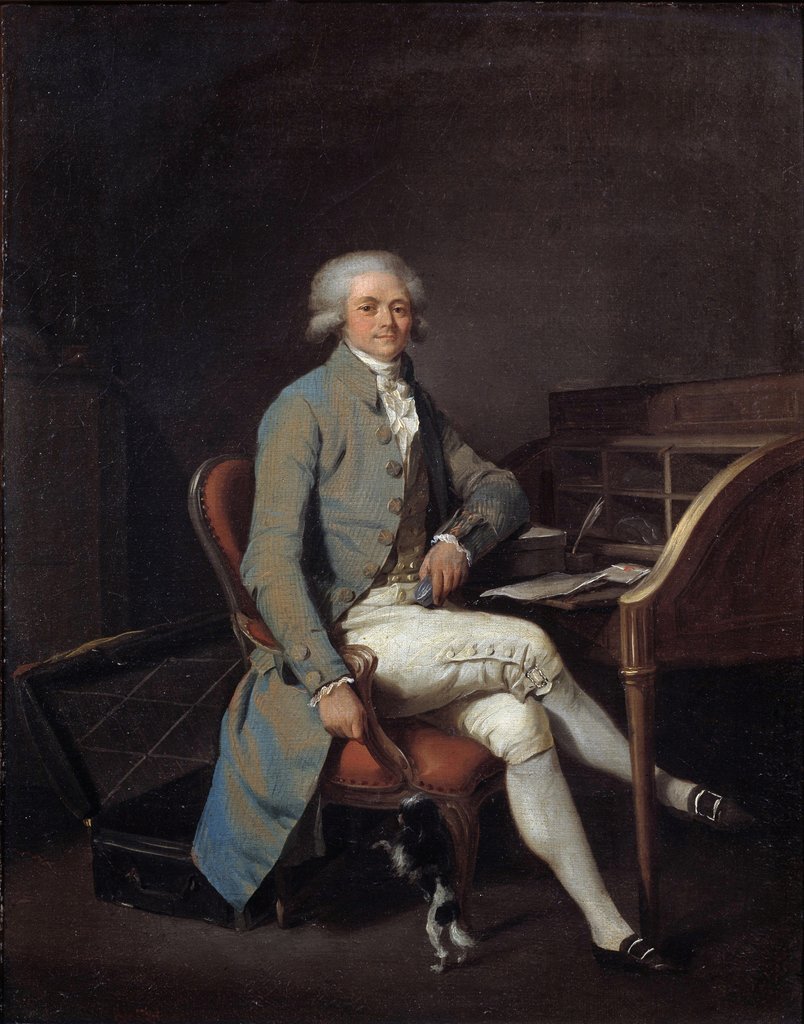
Portrait of Robespierre (1758–1794). Source: Wikimedia Commons, Louis-Léopold Boilly, Public domain

A religion designed from the top down and a religion that grows among people seem to have different fates. But that is only my observation; the sample is too small to call a rule.
Looking at it the other way
First, a problem with the evidence.
On "the elite don't really believe", most of the evidence we can see is second-hand, and often comes from opponents. Scaevola's words are Augustine retelling Varro; Polybius is an outside observer; Ivan's story is a story told by a character in a novel; it does not equal Dostoevsky's own view.
Then there is Xunzi. He describes that structure but says outright that "to take it as spirit is ominous". So to put him in a lineage of "keeping the people foolish" is itself somewhat unfair.
And a more basic doubt: when the elite "do not believe", is it real disbelief, or a different way of believing? Confucius says, "Sacrifice as if present; sacrifice to the spirits as if the spirits were present." (祭如在,祭神如神在) At the moment of sacrifice, it is as if the spirit were truly there. Is that disbelief, or another kind of belief?
What does this structure mean for my idea? What I want is not "the elite believe one thing and the masses another". I do not want one layer of "we know" and one layer of "they believe". In that case, one day the people below will find that the people above do not believe, and then the whole thing collapses; the examples I have read here, Rome's civic cult and the Cult of the Supreme Being, both carry a shadow of this. What I want is the ending Xunzi describes: everyone, from the scholar to the old man who farms, treats it as "ornament" (wen): as a way of revering, a rite, a practice that gives days some weight, not as a deal in which something can be obtained. That is why I say of tiandao: revere it, ask nothing of it. A Heaven that takes no offerings and hears no petitions has nothing to "deceive" anyone with, and needs nobody to "keep the secret" from the masses on its behalf.
I should also admit a difficulty here: I cannot knock down the Inquisitor's line in one breath. Many people may truly need a god they can ask, one who answers, one who comforts. Can we say to them: what you want I cannot give; all I can give you is a silent Heaven? That is not a light question. But I think it can be asked another way: at his hardest moment, does a person need a god who says yes to him, or a person at his side? A community with rites may be able to give the second: at Qingming someone stands with you at the grave, and when it is hard someone opens the door for you. A thing like that needs no deception. It is real.
A word for the neighbours. Have you ever done a ritual for an elder at home that you did not believe in yourself? I guess you have. I guess that in that moment you did not feel you were "deceiving" anyone, and did not feel you were "believing" either. You only felt: this is not done for the gods to see; it is done for her to see, for the person who raised you. I think this may be what Xunzi means by wen. If a society could let everyone act this way and revere this way, it might not need a "Grand Inquisitor" at all.
Have you ever done a ritual for an elder at home that you did not believe in yourself?
References
- For comparison: this series, "'Shrines Are Not Religion'" (State Shinto can be read as a modern version of "teaching through the way of the divine")
- Xunzi, "Discourse on Heaven"
- Book of Changes, hexagram Guan, Commentary on the Judgment; Wang Bi's commentary
- Polybius, Histories, VI.56
- Augustine, De civitate Dei, IV.27 (retelling Varro and Scaevola)
- Dostoevsky, The Brothers Karamazov, Part II, Book V, ch. 5 "The Grand Inquisitor"
- Rousseau, The Social Contract (1762), Book IV, ch. 8 "Civil Religion"; Robespierre's cult of the Supreme Being (decree of 1794-05-07, festival of 1794-06-08, fall on 1794-07-27): standard history
- Analects, "Bayi" (八佾): "Sacrifice as if present; sacrifice to the spirits as if the spirits were present"
- Image sources are given in each caption