A film
In 1982 Hong Kong made a film called Boat People (《投奔怒海》), directed by Ann Hui. It is about Vietnam around 1978: a society closes its door on a group of people, and those people decide to leave by boat.
I saw it, and I have always remembered it.
A colleague of mine now is Vietnamese Chinese, about sixty years old; back then he was a refugee.
I have never asked him about his experience in detail.
Four hundred and fifty thousand
In 1978 and 1979 about 450,000 ethnic Chinese left Vietnam, or were expelled, across the land border.
About 250,000 of them went to China: 170,000 overland from the north, the rest by boat. The remainder went by boat to other Southeast Asian countries, and some drifted as far as Hong Kong.
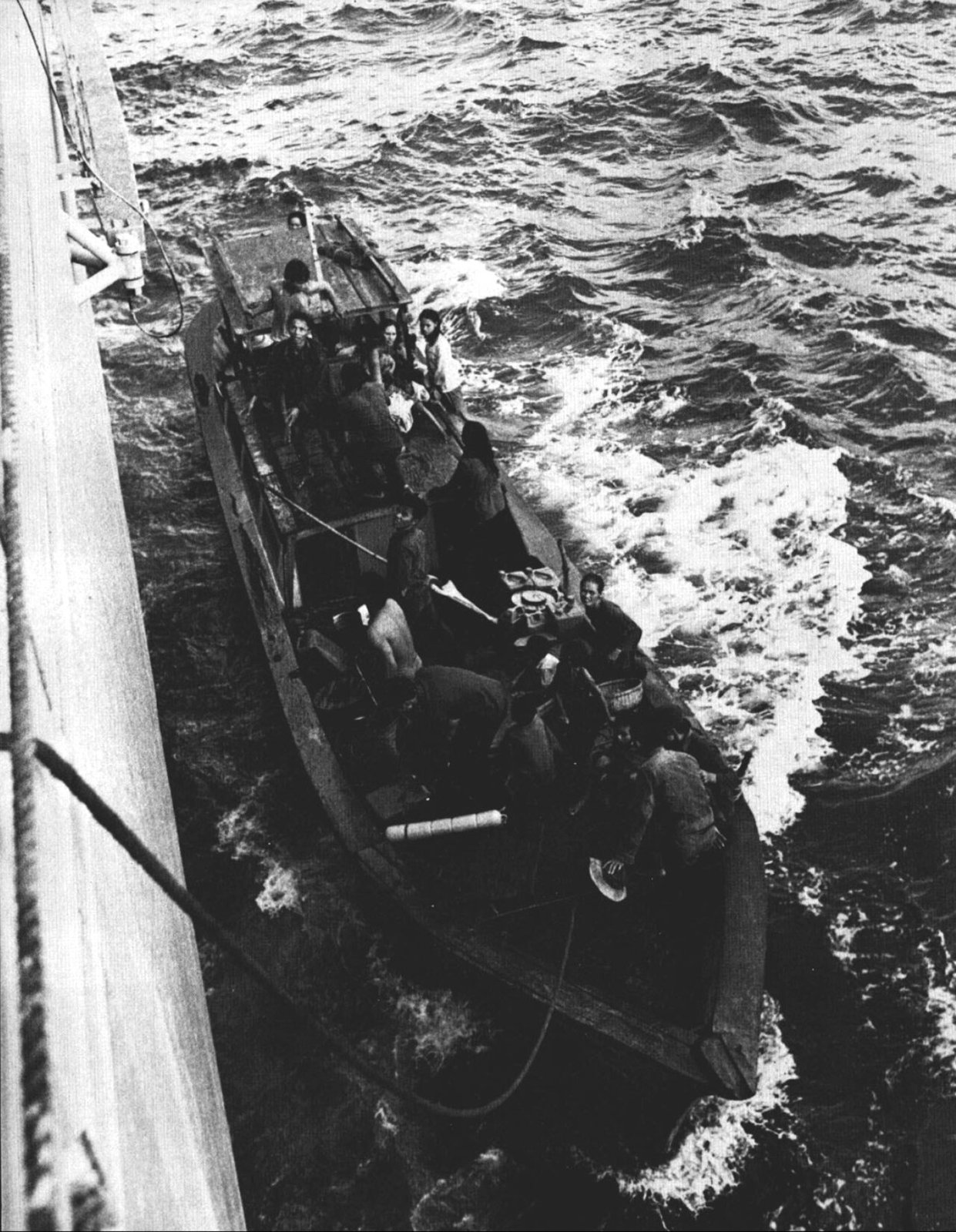
Around 1979, a crowded Vietnamese refugee boat alongside a US Navy supply ship. Source: Wikimedia Commons, US Navy, Public domain

There were two layers of reasons. One: relations between China and Vietnam had worsened, and the Vietnamese government saw the Chinese as a security threat. The other: the Chinese in the south controlled a great deal of retail trade, and the new government taxed them, restricted them, and confiscated.
Think of that boat: a family, perhaps three generations, with whatever they could carry in one small bag, going down to the shore in the middle of the night. They did not know which country would take them in, did not know whether the boat would capsize, and knew only that if they did not go there would be no tomorrow.
Today Vietnam's "Hoa" (ethnic Chinese) numbered 749,466 in the 2019 census, 0.78%. Outside estimates are much higher; some say more than two million.
Vietnam's own script
In 1651 the French Jesuit Alexandre de Rhodes published a Vietnamese dictionary in Rome. It used the Latin alphabet, with more than eight thousand entries glossed in Portuguese and Latin. This became the basis of what later was called chữ Quốc ngữ.
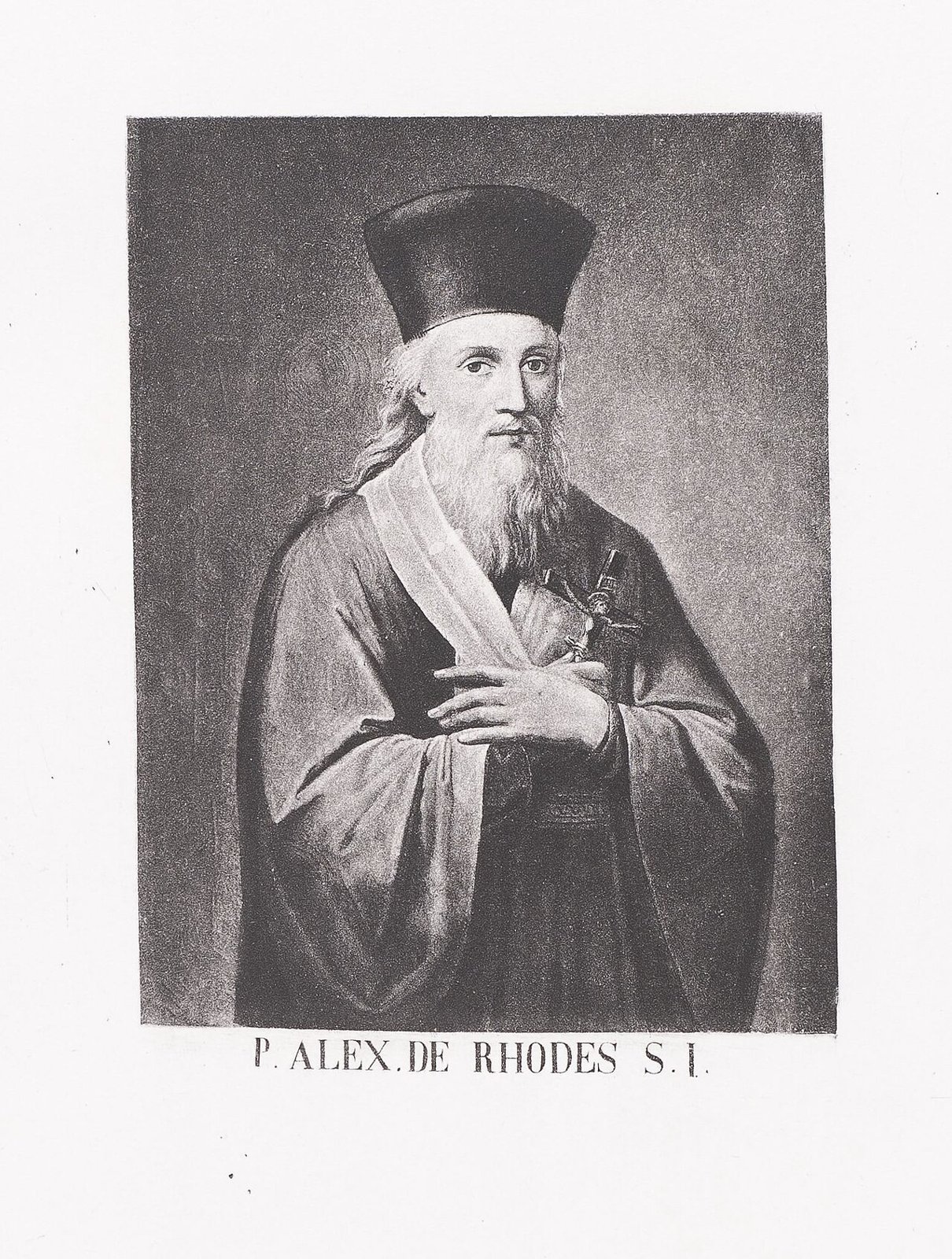
Portrait of the Jesuit Alexandre de Rhodes (1593–1660). Source: Wikimedia Commons, unknown artist, Public domain

He was not the inventor of chữ Quốc ngữ. He used the spelling of earlier Portuguese missionaries, and he put it in order and published it.
Then came the French colonisers. Educational reform began in 1906. In 1919 Emperor Khải Định of the Nguyễn dynasty approved abolishing all Confucian schools, and the examination system ended.
Chữ Quốc ngữ went from a missionary's tool to a nation's script.
The price was that the Vietnamese could now hardly read their own thousand years of writing. The Vietnamese Nôm Preservation Foundation (founded with the participation of American scholars) says on its own website: fewer than a hundred scholars in the world today can read Nôm.
Nôm is the script the Vietnamese made by adapting Chinese characters, to write the Vietnamese language. Classical Chinese is another matter; somewhat more people can read it.
A "heavenly kingdom from the West", in two layers
I once thought of a sentence: Vietnam was completely changed by a "heavenly kingdom" from the West, in both script and thought.
Thinking it over, there are two layers:
- the layer of script: begun by Catholic missionaries and spread by the colonisers;
- the layer of thought: later, communism.
These are not the same thing; below I take them separately.
The first layer, script. As said above: the missionaries put it in order, the colonisers spread it, and in 1919 the examinations ended. A country's script changed from Chinese characters and Nôm to the Latin alphabet. For a scholar, what was replaced was the strokes, and also the door to a thousand years of writing.
The second layer, thought. After the reunification of north and south in 1975, Caodaism was suppressed and was legally recognised only in 1997 (see the piece on Caodaism); in 1978–79 came the 450,000 Chinese mentioned above. These are two things that happened in the same period. As for how exactly communism in Vietnam dealt with Confucianism, Chinese characters and religion, I have not checked this layer; I write only this far and leave the rest to be filled in.
The two layers have one thing in common: both came from the West, both carried a "new Heaven", and both, within a generation, put a layer between a society and its own past.
There is also a difference: with the first layer, nobody required you to believe; with the second, you were required to believe.
In both places I have used the word "heavenly kingdom", but the meaning is different, and I want to say so separately. The first layer is the missionaries' "heavenly kingdom", in the literal sense: a place after death, in heaven; what they brought was a faith, and nobody forced it on you with a knife. The second layer is the "heavenly kingdom" as I use the term, standing in the same place as the Taiping and the Khmer Rouge: a new world to be built on earth, which demands that you believe and also demands that you hand over your old self. Put together, I think their effect on a society is the same: they put a layer between it and its own past. But what they ask of a person is not the same. I want the reader to be able to tell them apart.
Morality and discipline
When a country's script changes, the "morality" of a community also has to move to another place of storage.
In the past, morality was kept in the Four Books and Five Classics and in genealogies. Where is it kept now?
Caodaism (this series has a piece on it) is one answer the Vietnamese gave themselves: enshrine Confucius, Jesus, Hugo and Sun Yat-sen together.
What the Chinese gave is another: stay in Vietnam and become part of that 0.78%; or go elsewhere and, in someone else's country, find a new place to keep it.
Four criteria, measured
First, the Chinese:
- Numbers: 749,466 in the 2019 census, 0.78%; in 1978–79 about 450,000 left;
- Organisation: the businesses of the southern Chinese were taxed, restricted, even confiscated;
- Wealth: same; this is the one that was taken away;
- Doctrine: I did not find a "religion" of the Vietnamese Chinese themselves; left blank (to be supplemented).
Then the Vietnamese (the other group my position puts its question to):
- Numbers: no shortage;
- Organisation: Caodaism, with an official estimate of about 4.4 million for the Tây Ninh Holy See lineage, divided into about six recognised branches;
- Wealth: not written;
- Doctrine: there is already one, and it is a mixed one: Buddhism, Daoism, Confucianism, Christianity, plus Hugo and Sun Yat-sen.
For the Vietnamese Chinese, three of the four were taken away. For the Vietnamese, on doctrine, someone has already given an answer.
What my position says here
Was Vietnam's script "remade", or "chosen" by the Vietnamese themselves? My answer: both. The missionaries and colonisers did push it out; but by the twentieth century Vietnamese scholars themselves were taking up the Latin alphabet to write poems, newspapers, and words about independence for their nation. I do not want to mourn the Vietnamese's Chinese characters on their behalf. To Vietnamese ears, mourning like that may sound like yet another condescending voice from the north. What I want to say is another sentence: a person who has come to read his oldest books as a strange script may one day want to look back. On that day, if he wants to look, some people are willing to help him push that door open a little more.
Looking at it the other way
One view deserves to be taken seriously: chữ Quốc ngữ can also be read as a choice by the Vietnamese to free themselves from Chinese characters, not only as being "remade".
If one uses a "unified East Asian yigui" to mourn the Vietnamese's Chinese characters for them, it may sound to Vietnamese ears like another centripetal force from the north.
In 1978 the Vietnamese government's stated reason was that the Chinese were a security threat. What it feared was that the Chinese heart was in the north.
To my Vietnamese friends, and to the Chinese of Vietnam. Between you there is a history that was not easy. In 1978 and 1979, 450,000 people left Vietnam: a family, perhaps three generations, put what they could carry into one small bag and went down to the sea one night. Before that, Vietnam's own script was changed, generation by generation, into the Latin alphabet; today the scholars in the whole world who can read Nôm are said to number fewer than a hundred. To me these two things are one and the same sorrow: some people were forced to leave their homes, some were forced to leave their script. But this sorrow did not come from nowhere: it was a government's decision to treat the Chinese as a security threat, to tax them and confiscate from them, that produced those 450,000. Those who were driven out and those whose script was changed had no choice, either of them. I have a colleague of Vietnamese Chinese descent who was a refugee back then; I never asked him much about it. With this site I want to write this down for both of you.
A country, in order not to read others' characters any more, can no longer read its own old books. Who should say whether this price is worth it?
References
- For comparison: "A Vietnamese Religion That Enshrines Confucius, Jesus, Hugo and Sun Yat-sen Together" and "Korea Really Did Have a 'Religion of the Heavenly Way'" in this series; "Confucianism on the Indonesian ID card" in Duoshe
- Vietnam: in 1978–79 about 450,000 ethnic Chinese left or were expelled, about 250,000 of them to China (170,000 overland); 2019 census, Hoa 749,466 (0.78%); the de Rhodes dictionary of 1651 (more than 8,000 entries), based on the spelling of Pina and Rodrigues; the examinations and Confucian schools abolished in 1919
- Fewer than a hundred scholars can read Nôm: Vietnamese Nôm Preservation Foundation, "What is Nôm?" https://nomfoundation.org/nom-script/What-is-Nom-?uiLang=en 🟢 (the foundation's own estimate; basis not stated)
- Image sources are given in each caption