A port
In 1581 the Spanish marked out a piece of land outside the walls of Manila for the Chinese to live on, called the "parián". During the Spanish period there were nine pariáns in all; the first was in 1581, and the last did not disappear until 1860.
In the seventeenth century there were about two thousand Spaniards and, at most, about thirty thousand Chinese. That ratio was the source of the colonisers' fear.
In 1639 there was a Chinese uprising; in 1662 there was a massacre ordered by Governor Manrique de Lara. Both times, many Chinese died.
Conversion was a way out
Under Spanish rule, for a Chinese to stay there was one way: to become Catholic.
After baptism they intermarried with Filipinos, and their mixed descendants were called "Chinese mestizos".
Think of that choice: a merchant from Fujian, in a strange port, to stay and no longer be treated as a threat, had to swap the household shrine at home for a cross. He did not know that this step might leave his grandson not even knowing how to read his name.
The Philippines' first saint, Lorenzo Ruiz, was born in Binondo, Manila; his father was Chinese and his mother Filipino.
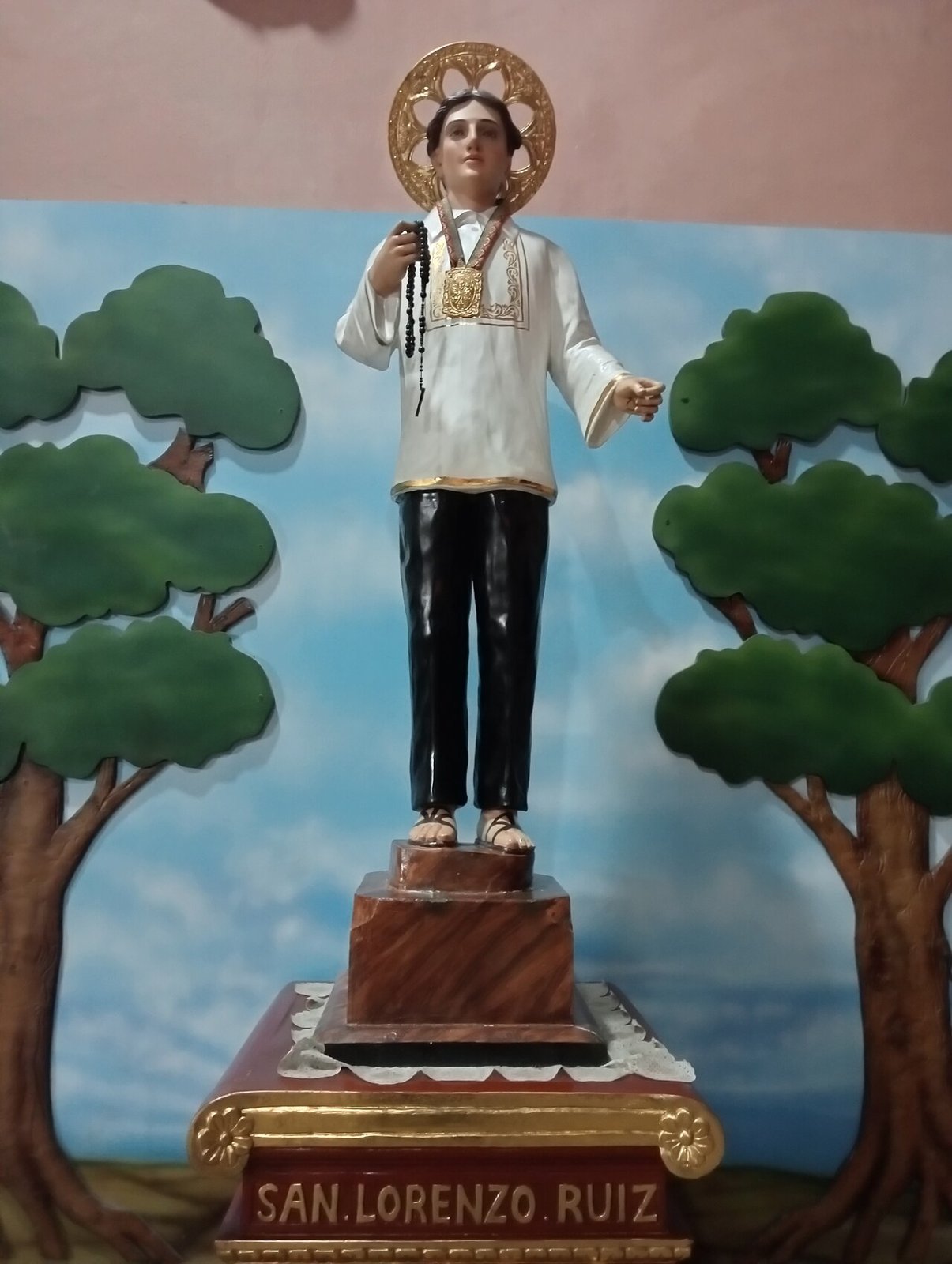
Statue of San Lorenzo Ruiz in Binondo Church, Manila. Source: Wikimedia Commons, Ralff Nestor Nacor, CC BY-SA 4.0

Names
This road produced some who later became symbols of the nation:
- José Rizal, the national hero of the Philippines. His great-great-grandfather was a Chinese who moved to Calamba in 1697, called Domingo Lam-co (Hokkien Cua Yi-nan, that is the Ke surname, Ke Yi-nan);
- Corazon Aquino. Her family, the Cojuangcos, descend from Co Yu Hwan (Xu Yuhuan), who came from Zhangzhou, Fujian, in 1861;
- Cardinal Jaime Sin, Archbishop of Manila. His father was a Chinese merchant and his mother was from Aklan.
Three names, three fields: nationalism, politics, the Church.
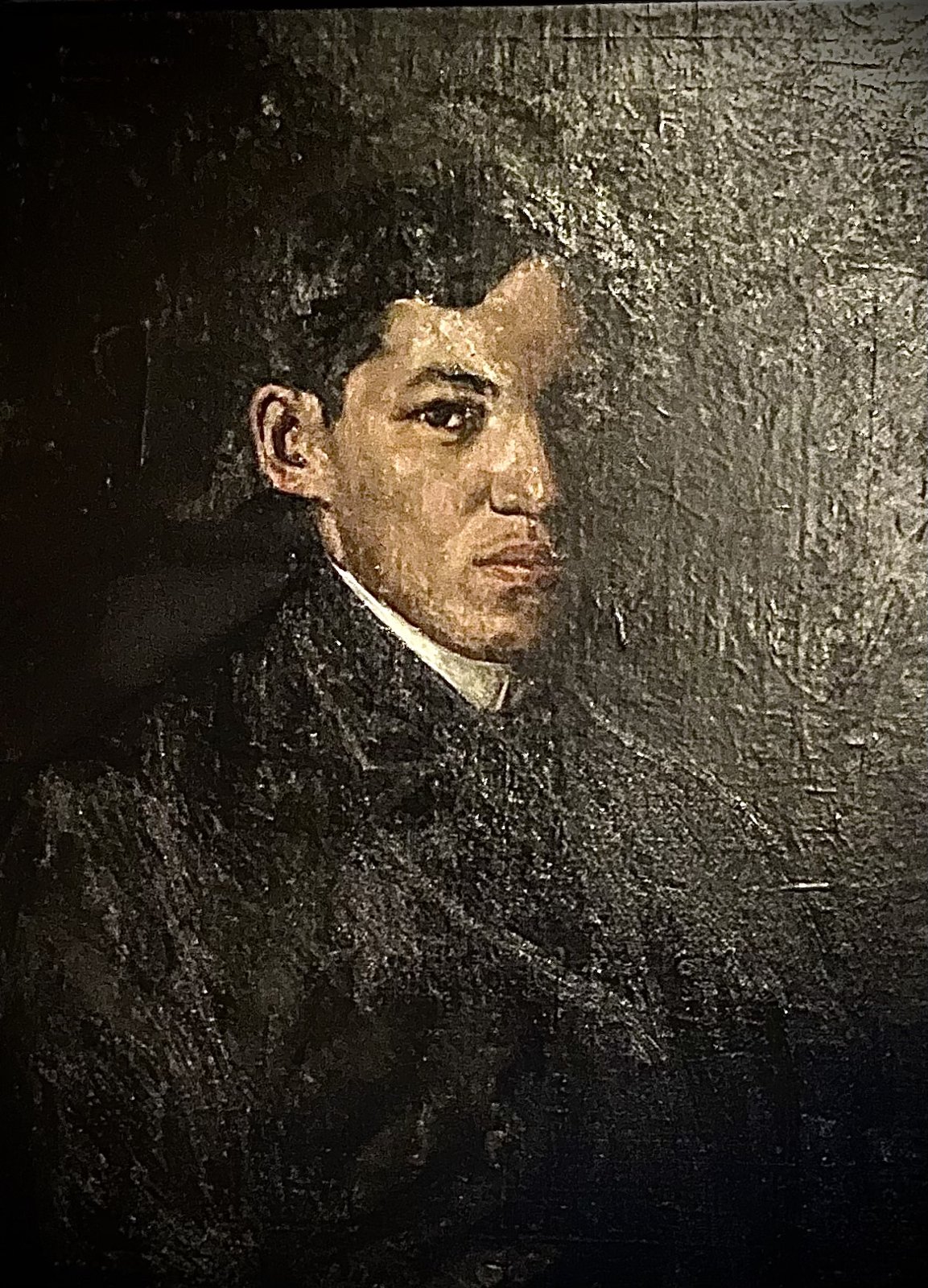
Portrait of José Rizal (1861–1896), 1891. Source: Wikimedia Commons, Telesforo Sucgang, CC0

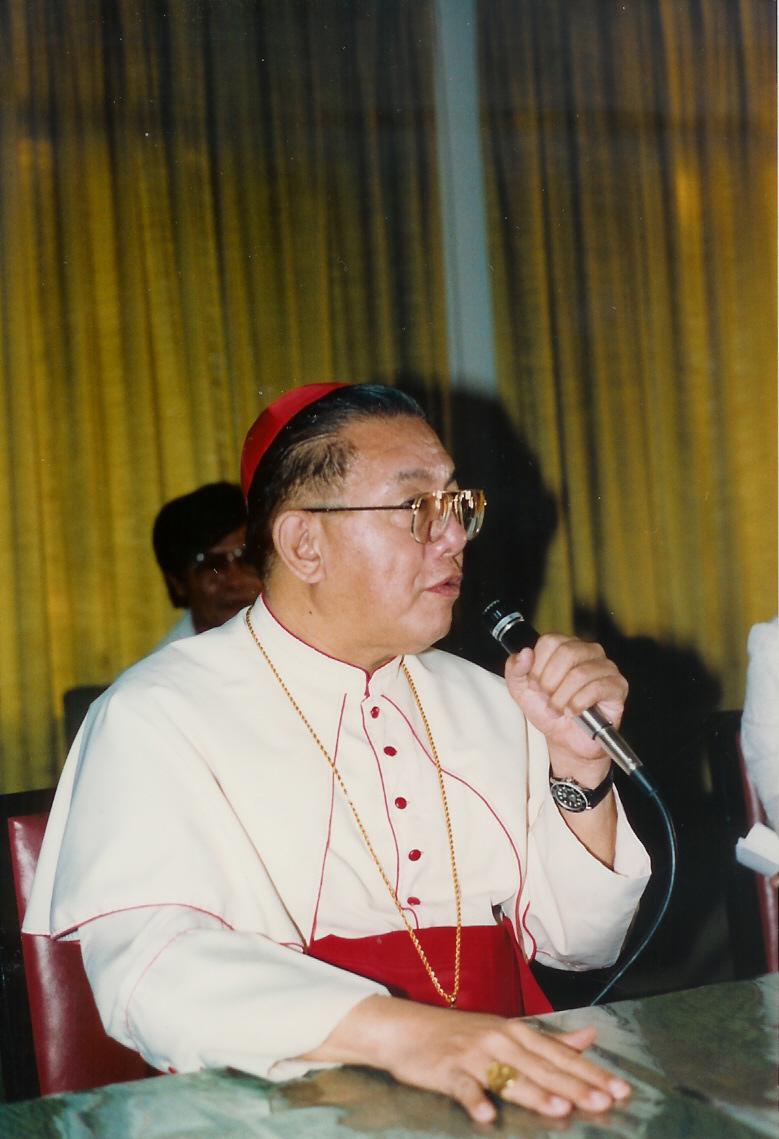
Cardinal Jaime Sin (1928–2005), 1988. Source: Wikimedia Commons, Ernmuhl, CC BY-SA 3.0

Numbers
The Philippine government does not conduct ethnic surveys.
The record of the Philippine Senate in 2013: pure Chinese about 1.35 million; Filipinos with any Chinese ancestry about 22.8 million. One account puts "Chinese mestizos" at about 1.2% to 1.8% of the population; another says that those with Chinese blood may be as many as 25%. The ways of counting differ enormously.
Belief: about ninety percent of Filipino Chinese are Christians, Catholic, Protestant, or of Philippine native churches; only about 5% follow Buddhism or Chinese folk religion.
But the religion here is also mixed: many devotees of the Black Nazarene are in fact Buddhists or Daoists who only nominally follow Catholicism.
1975
From the departure of the Americans in 1946 until 1975, Philippine legislation affecting the Chinese kept getting heavier.
In April 1975 President Marcos issued a decree: the Chinese could submit a simple, cheap application to the Office of the Solicitor General and acquire Philippine citizenship.
That year was also the year the Philippines and China established diplomatic relations. (9 June 1975.)
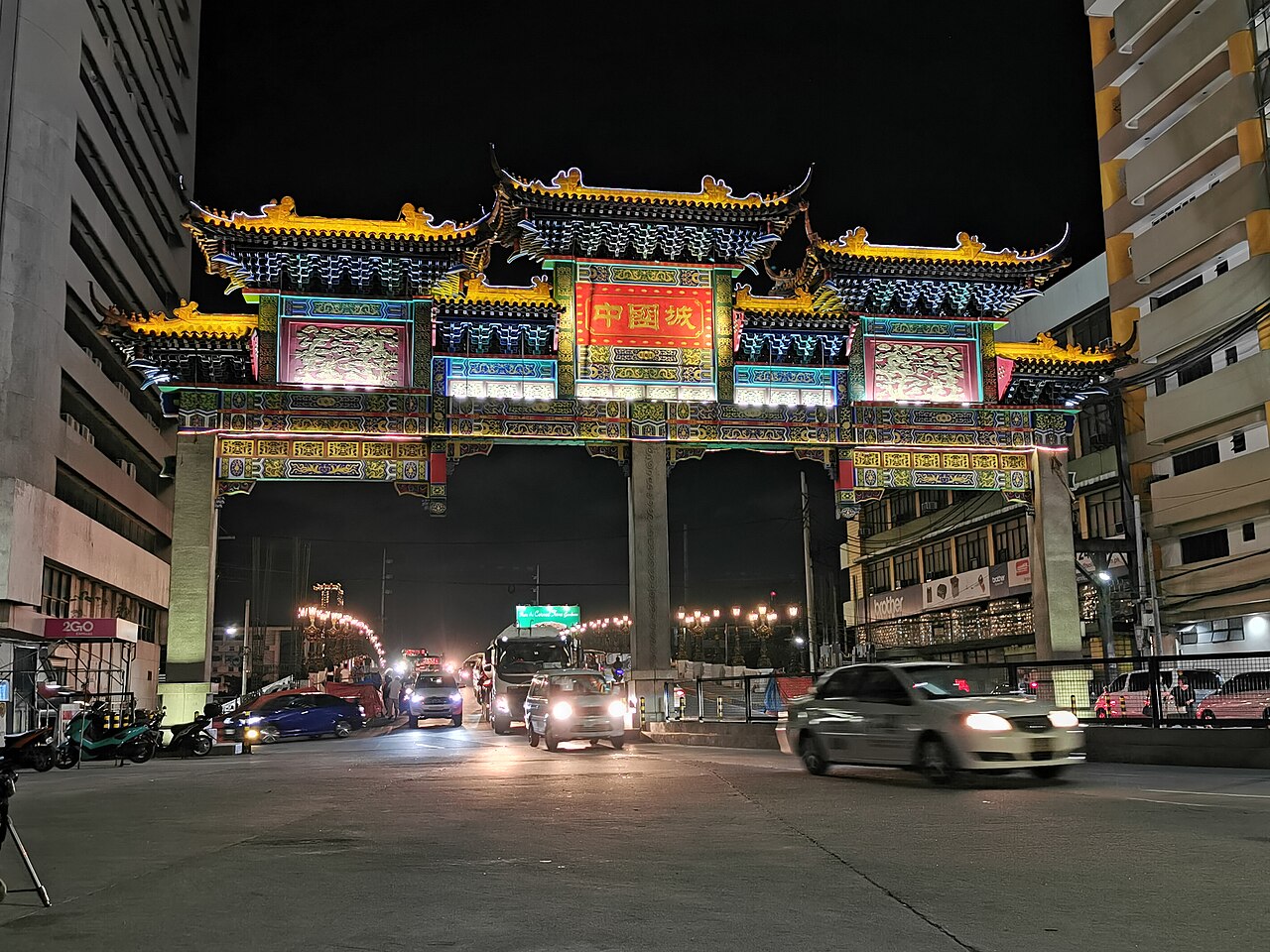
The Filipino–Chinese Friendship Arch in Binondo, Manila; Binondo is one of the oldest Chinatowns in the world. Source: Wikimedia Commons, Ranieljosecastaneda, CC BY-SA 4.0Binondo was set up by the Spanish in 1594 and is often called the oldest Chinatown in the world.

Four criteria, measured
- Numbers: pure Chinese only a little over 1%; those with Chinese ancestry, a high proportion;
- Organisation: Chinese schools, chambers of commerce, clan associations: I have not checked these item by item; left blank;
- Wealth: I have no reliable figures, so I do not write them;
- Doctrine: about ninety percent are Christians. Their doctrine is already Catholic.
What my position says here
The Philippines sets my position a difficult problem: the Chinese here are not few in number, but their "doctrine" was changed long ago. Should my position give them a new "Heaven", or a "Heaven" laid over Catholicism? My answer: neither. I do not ask a Catholic to take down his cross. I do not think "conversion" was a betrayal; it was a choice their ancestors made so that their children could live. My respect for them is greater than for any who "kept everything as it was". All I want to say is a small thing: if one day someone wants to know how his great-grandfather in Fujian burned incense to the ancestors, he can ask; and if on Qingming he wants to leave a place, before the cross, for that great-grandfather he never knew, that is no contradiction either. A "Heaven" like this is not laid over Catholicism; it leaves a chair beside it.
Looking at it the other way
This piece has to set a problem for "only two roads".
The two roads are: be strong enough, and form a new centripetal force; not be strong enough, and be assimilated.
The Philippines looks like the second: assimilated, converted to Catholicism, speaking Tagalog and English.
But the people who were assimilated later became the country's elite: Rizal, Aquino, Sin. They in turn became the country's core.
This is a third road: to be assimilated, and then to lead. The centripetal force is still that country's; the descendants of the Chinese merged into it.
For my position this is trouble: if the most successful outcome for the Chinese is to disappear into someone else's Catholicism and become its protagonists, is the yigui my position offers superfluous?
I cannot answer this question, and I am willing to leave it there. I only want to say one thing: Rizal did not "disappear". A country took him as its own most important person. His great-great-grandfather, a Chinese who came in 1697, could not have imagined that three hundred years later his descendant would be a nation's national hero. It makes me feel that "Chinese" may never have been something that "stays unchanged"; it can flow into other places and become other things while still carrying a little of the original colour. I think this too is a kind of yigui.
To my friends in the Philippines. In your country there are many whose names carry a Hokkien sound, and in whose homes there may be an old photograph of someone they do not know. In the Spanish years, a merchant from Fujian, to be allowed to stay in Manila, exchanged the family shrine for a cross; he did not know that his grandson might not even know how to say his name. That road later led to Rizal, to Aquino, to Sin. You are a whole Filipino, and also the descendant of someone who does not know whether he has been remembered. Your family history has one end in Fujian and the other in Manila, and nobody needs you to choose a side.
A person's ancestors were from Zhangzhou, he himself is a Catholic, and he became president of the Philippines. In what sense is he still "us"?
References
- For comparison: "Thailand" (another kind of assimilation) and "Indonesia" in this series; Duoshe "How New Religions Survive"
- Philippines: the parián of 1581, nine pariáns, the last until 1860; in the seventeenth century about 2,000 Spaniards, at most about 30,000 Chinese; the uprising of 1639 and the massacre of 1662; Lorenzo Ruiz (Chinese father, Filipino mother); Rizal's great-great-grandfather Domingo Lam-co, who moved to Calamba in 1697; the Cojuangco family descended from Co Yu Hwan of Zhangzhou, 1861; Jaime Sin (Chinese father, Aklan mother); Senate record of 2013: pure Chinese about 1.35 million, with Chinese ancestry about 22.8 million; about 90% of Chinese Filipinos Christian; Marcos's naturalisation decree of 1975
- Image sources are given in each caption