An ordinance
In 1928 Hong Kong's British colonial government issued the Chinese Temples Ordinance. It required all Chinese temples and religious bodies to register and to be vetted by a body called the "Chinese Temples Committee".
By its letter: it required you to register; it did not require you to close.
Unlike Indonesia in 1967, where Chinese characters were banned, Chinese schools closed, and religion and customs could be practised only at home.
But I should be clear that this was not a "clean registration only". From the material I have read, the ordinance defined what counted as a "Chinese temple" by conduct and fees, not by doctrine; the committee it set up had great control over the temples' income, funds and property; and a temple that had not registered, once a month had passed after the notice, was breaking the law to carry on, and was fined. So to say "register, but do not ban" is only half right: it did not ban temples, but it governed their money. (On the ordinance and the committee I follow Hong Kong's e-legislation and the government's 2015 review consultation paper; the committee is chaired by the Secretary for Home Affairs; the legislative reasons of the time I did not read.)
Wong Tai Sin Temple
The Wong Tai Sin Temple was built in 1921 by a family surnamed Leung on waste ground at Chuk Yuen in Kowloon.
In 1956 it was "formally opened".
This "formal" goes back to that ordinance of 1928: a temple had to be registered and vetted to have legal status.
The colonial government was not leaving things alone. It governed them by registration.
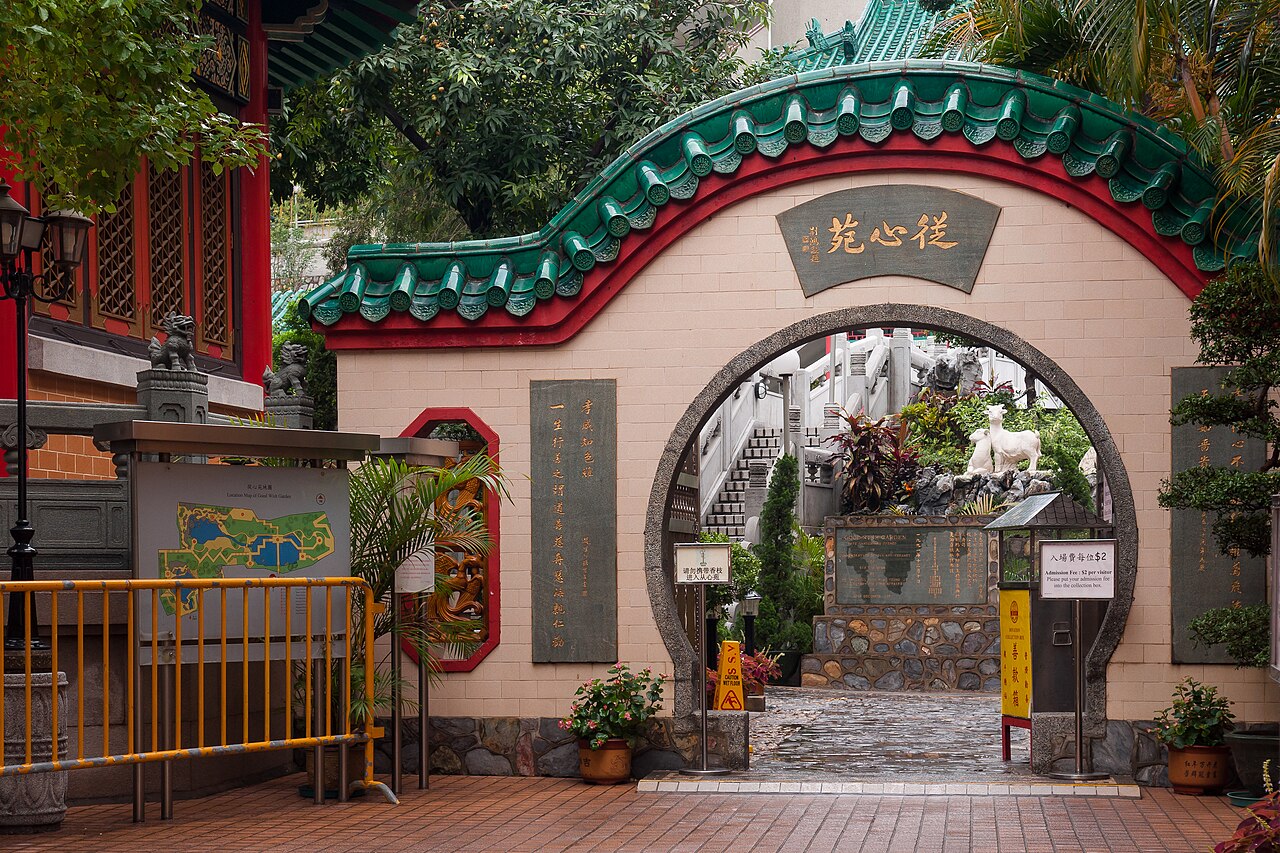
Wong Tai Sin Temple, Hong Kong. Source: Wikimedia Commons, CEphoto, Uwe Aranas, CC BY-SA 3.0

The Confucian Academy
The Confucian Academy was founded in Hong Kong in 1930 by Chen Huanzhang. This is the same Chen Huanzhang of the Confucian Association in Shanghai in 1912 ("Why the Confucian Association Failed" in this series).
In 1913 and 1916 the Confucian Association was rejected twice in the Republic's parliament. A dozen years or so later, in a British colony, it survived as a civil society body.
According to researchers, it kept Confucianism alive in Hong Kong in the form of an "organised religion".
Think of Chen Huanzhang: a doctor educated in the United States, twice rejected by his own parliament, who finally, in someone else's colony, founded an academy that gave what he valued most a place to live. It is hard not to feel that he was a little pitiable, and a little remarkable.
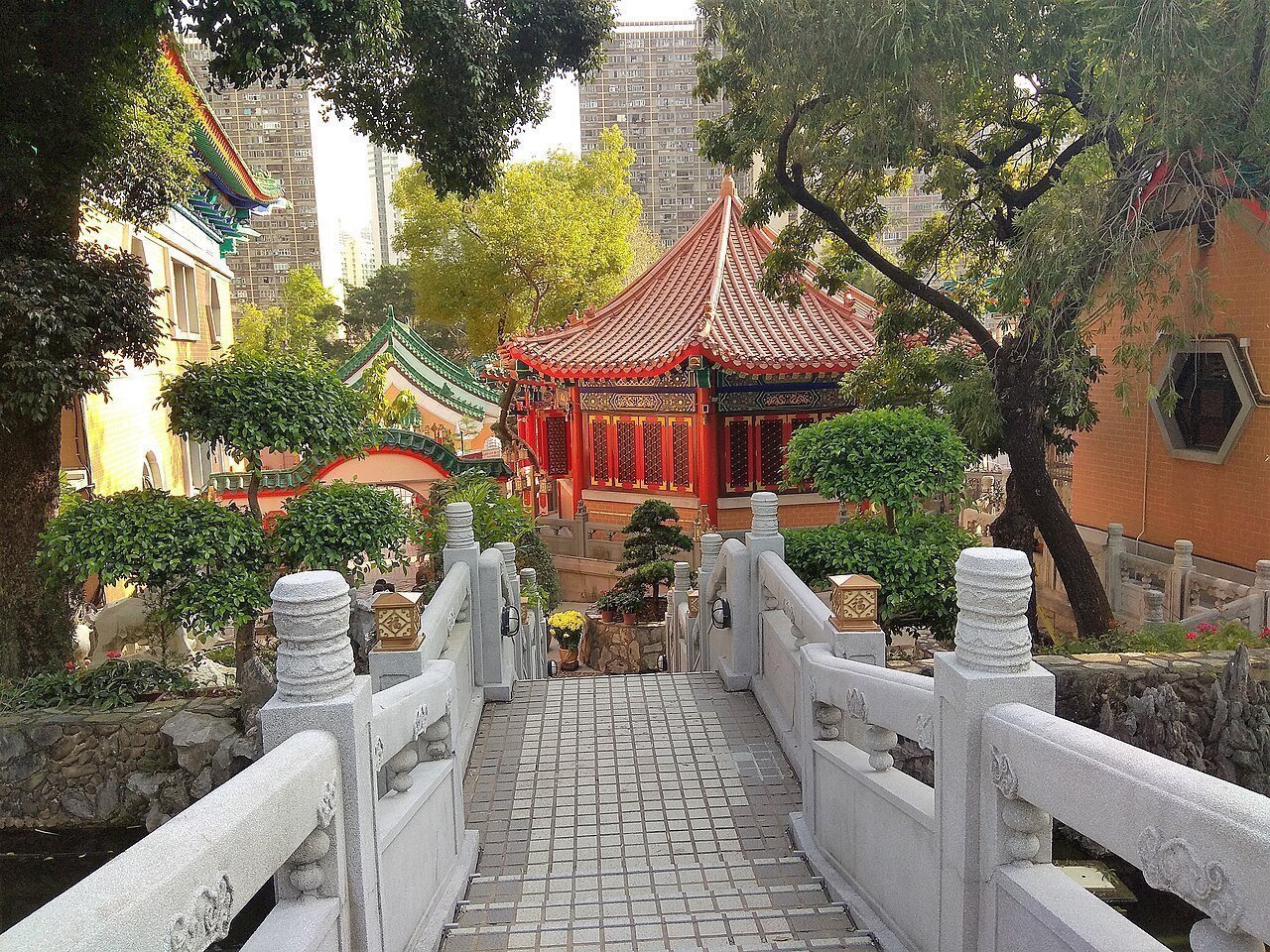
The Confucian Hall in the Wong Tai Sin Temple. Source: Wikimedia Commons, Underwaterbuffalo, CC BY-SA 4.0

Festivals
The Cheung Chau Taiping Qingjiao, that is the "Bun Festival", was placed on China's national intangible cultural heritage list in 2011. It honours Pak Tai (Beidi), who according to legend protected the island from a plague in the eighteenth century. (Other accounts say the late nineteenth century.) During the festival the islanders eat no meat for three days, and there are lion dances and the "bun scrambling".
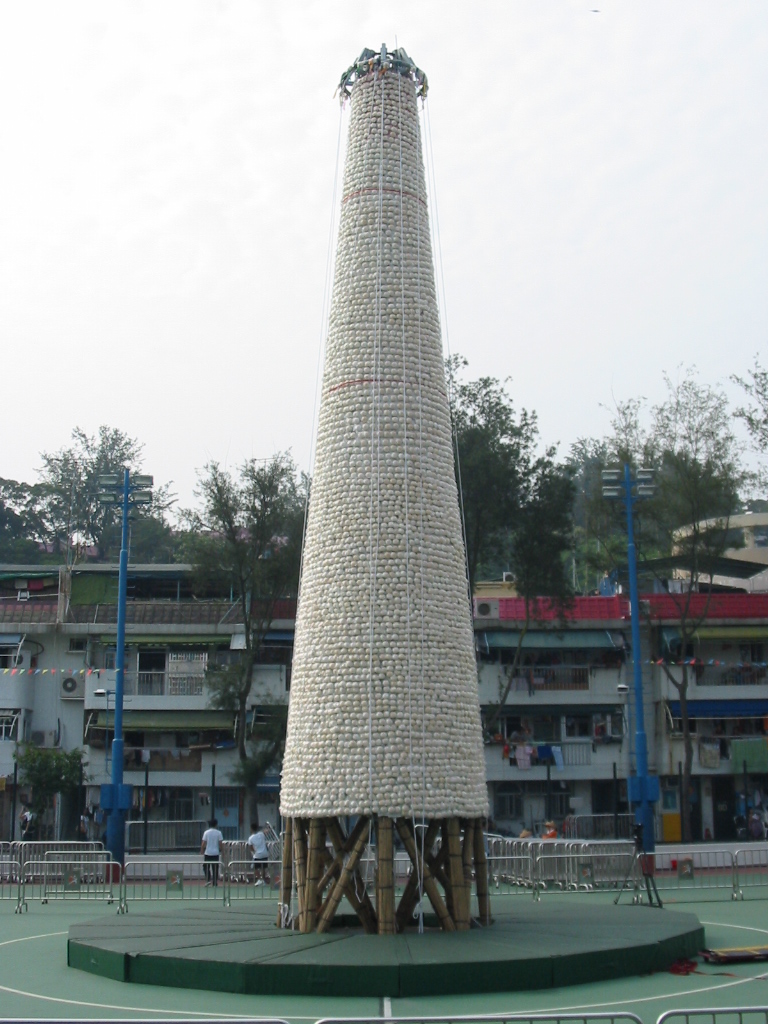
The bun tower at the Cheung Chau Bun Festival: a tall tower piled with peace buns. Source: Wikimedia Commons, User:Wrightbus, CC BY 3.0

The present
Religious figures (I did not find a source and year on one consistent basis; for reference only): no religion or not stated, 48.9%; Protestant 13.8%, Catholic 5.2%, Daoist 13.3%, Buddhist 13.3%, Muslim 4.0%, Hindu 1.3%.
According to the official statistics of 2024, among organised religions, Buddhists and Daoists each number over a million.
Four criteria, measured
The Chinese of Hong Kong are an overwhelming majority, and the power ruling here was a non-Chinese one:
- Numbers: enough;
- Organisation: the Chinese Temples Committee, the Confucian Academy;
- Wealth: I have found no figures; not written;
- Doctrine: not unified. A set of temples that answer to none of each other, plus some festivals. (This is my summary.)
Morality and discipline
The Chinese of Hong Kong have no single unified teaching. What do they use to govern themselves?
One, temples; two, the festivals of the year; three, the family. Not one of the three is "a church".
This may be why the colonisers did not feel the need to "ban" it: it never constituted a unified organisation.
What my position says here
Hong Kong is the place most favourable to my position: there are many Chinese, they have organisation, and there is no accusation of "is the centre foreign", because the majority here are the Chinese themselves. What should my position give here, so as not to be superfluous? My answer: give the thing Hong Kong now lacks most: an account. Hong Kong has many temples and lively festivals, but I guess many people walk into Wong Tai Sin only to draw a fortune stick and go to the Cheung Chau Bun Festival only to watch the crowd, with no chance to ask: what is all this for? What my position offers is not a new temple but a "why": why worship, why keep festivals, why pile a bun tower so high.
Looking at it the other way
There is a counter-argument to "register, but do not ban": it works because its object has no unified doctrine.
Once there is a "unified religious yigui", will this method still work? Was the 1928 ordinance guarding against a religion that might become a "political organisation"? I have not found the legislative reasons of the time .
To my friends in Hong Kong. For decades your city has done one thing very well: let many people, before different gods, live their own days at the same time. In the Wong Tai Sin Temple, Daoist and Buddhist halls and a hall to Confucius stand in one place; on the island of Cheung Chau, three days without meat at festival time, and nobody on the island finds it strange. Chen Huanzhang, turned down twice by his own parliament, in the end founded the Confucian Academy here with you, and what he valued found a place to live. Places like this are now few in East Asia. What I hope you hold on to is this way of "not pulling each other down"; it matters more than holding on to any one temple.
A community's yigui is a heap of temples that answer to none of each other. Is that weak, or resilient?
References
- For comparison: "Why the Confucian Association Failed", "After Boat People" (Vietnamese refugees in Hong Kong) and "What Was Allowed, and What Was Taken" (Indonesia: banning versus registration) in this series
- Hong Kong: Chinese Temples Ordinance of 1928 (registration, vetted by the Chinese Temples Committee); Wong Tai Sin Temple built in 1921, opened in 1956; Confucian Academy founded by Chen Huanzhang in 1930; Cheung Chau Taiping Qingjiao on the national intangible heritage list in 2011, honouring Pak Tai; religious composition (Wikipedia, year unknown); official statistics of 2024: Buddhists and Daoists each over 1 million
- The qualification of the 1928 ordinance as "registration plus control of temple property": the author's material notes "From Tianxia to the State", section 3 (secondary; the text of the ordinance is on Hong Kong e-Legislation, 🟢)
- Image sources are given in each caption