The seventh of July
In the Kwong Tong Cemetery in Kuala Lumpur there is a monument.
Its full name is the "Monument to the Selangor Overseas Chinese Mechanics Who Returned to Fight in the War and Died". It was put up in 1947. Those who put it up were a Selangor overseas Chinese relief body of the time (English name Selangor …… Relief Committee; the Chinese name has not been checked). In 1952 that body handed the annual commemoration over to the Kuala Lumpur and Selangor Chinese Assembly Hall. Since then, every year on the seventh of July, people go there to pay their respects.
Who they were
In February 1939 Tan Kah Kee, chairman of the Southseas Overseas Chinese Relief General Association (Nanqiao Zonghui), issued Circular No. 6, calling on young drivers and mechanics among the overseas Chinese to return and serve.
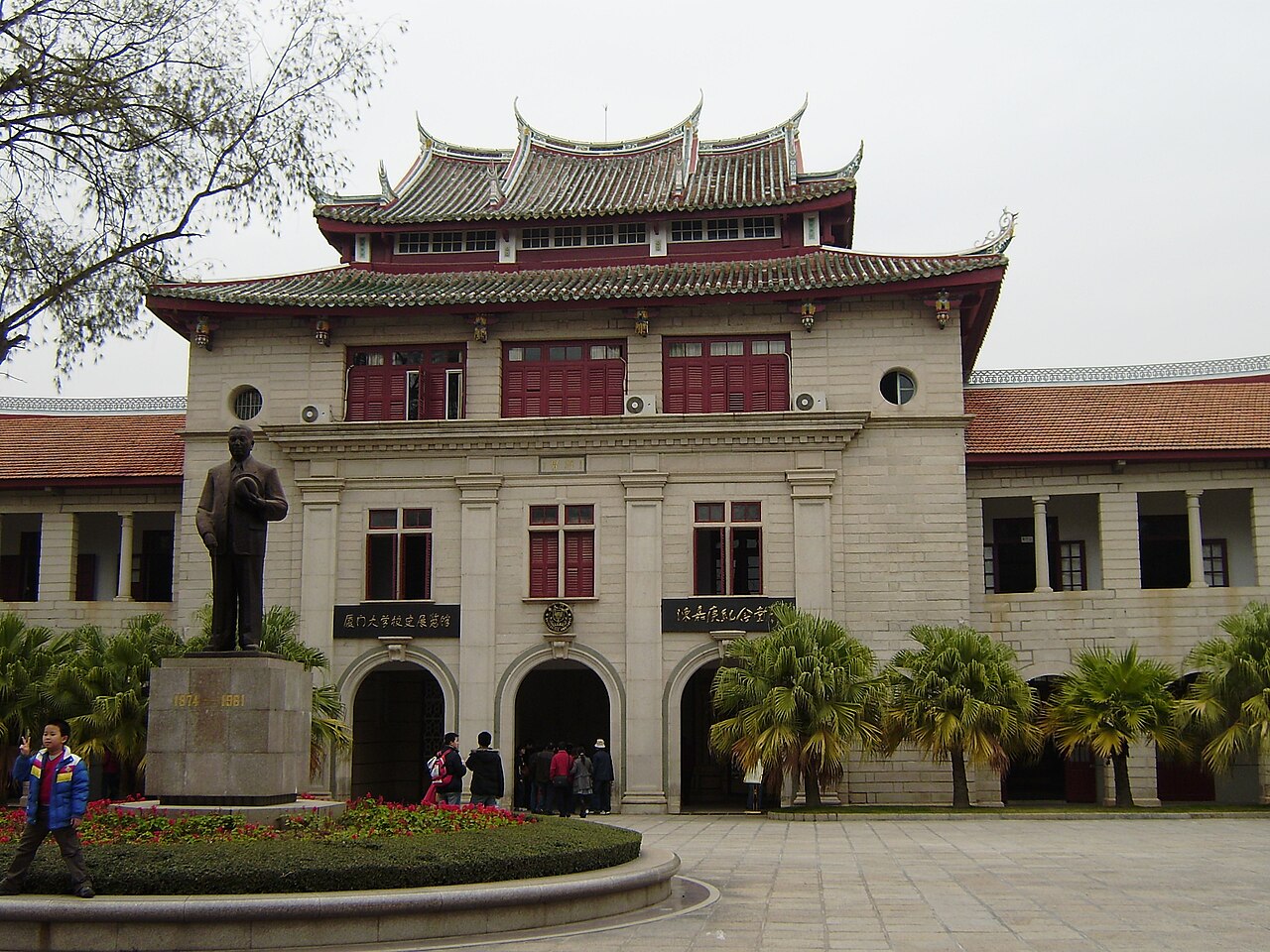
Tan Kah Kee Memorial Hall at Jimei, Xiamen. Tan Kah Kee was the leader of the Nanyang overseas Chinese, and in 1939 issued the circular summoning the mechanics. Source: Wikimedia Commons, Peter Guo, CC BY-SA 2.0

That year they went back in nine batches, 3,193 in all, of whom 4 were women. They came from Malaya, Singapore, Thailand, Burma, Vietnam, the Philippines, Indonesia, and also India.
Where they went was the Yunnan–Burma Road. From 1939 to 1942 about 500,000 tons of military supplies were rushed along that road, and a large part of them were carried by these men.
More than a thousand died in the fighting, in accidents and of disease. Another thousand or so returned after the war to where they had lived. The remaining thousand or so stayed in China.
Think of one of them: a young man in his early twenties, in Penang or Singapore, working at repairing cars, who received a circular, put down his toolbox, and boarded a ship. His mother probably did not stop him, and could not have. He did not know how many bends that road had or how high that mountain was; he knew only that a country was at war and needed people who could drive.
After they came back
Those who came back, according to a Malaysian newspaper column, returned to their old trades, driving, repairing cars, repairing machines, and in small towns quietly lived for decades, rarely talking about those years.
Those who stayed in China, according to the same column, mostly stayed in Yunnan, started families, and did not go back to Southeast Asia; they lost contact with their relatives in Nanyang for more than fifty years. Their families in Nanyang could hardly get any news of a son, a husband, a father.
More than fifty years. A mother waited fifty years for a son, until one day perhaps she herself was gone. This number, each time I read it, I find hard to read on past.
Other monuments
On 11 November 1951, in George Town, Penang, another monument to the mechanics was put up (English name Penang Overseas Chinese Anti-War Mechanics Memorial; the Chinese name has not been checked).
On 14 August 2025, in the Kwong Tong Cemetery in Kuala Lumpur, the "Malayan Nanqiao Jigong Memorial Park and Museum" was completed. In the park stands a ring-shaped memorial wall, its image taken from the "twenty-four bends" of the Yunnan–Burma Road, and on the wall are carved the names of about 3,200 Nanqiao mechanics.
About 3,200 names, carved on one wall. I think that was the first time these men were written down together like this, in good order.
Another monument: Malacca, 1948
There is one more monument, in Malacca.
On Bukit Cina (Chinese Hill) in Malacca there is a "Malacca Chinese Anti-Japanese Martyrs' Monument", unveiled on 5 April 1948 by the British High Commissioner of the Federation of Malaya. The monument bears four characters: 忠贞足式 ("Zhongzhen Zushi", roughly "such loyalty is fit to be a model"). According to Wikipedia, the calligraphy is Chiang Kai-shek's.
It commemorates not the mechanics but Malacca Chinese killed during the Japanese occupation from 1942 to 1945, mainly those who resisted Japanese rule. Their remains were gathered from various places by surviving overseas Chinese and buried together at the foot of Bukit Cina. In 1972 the monument had its first major repair.
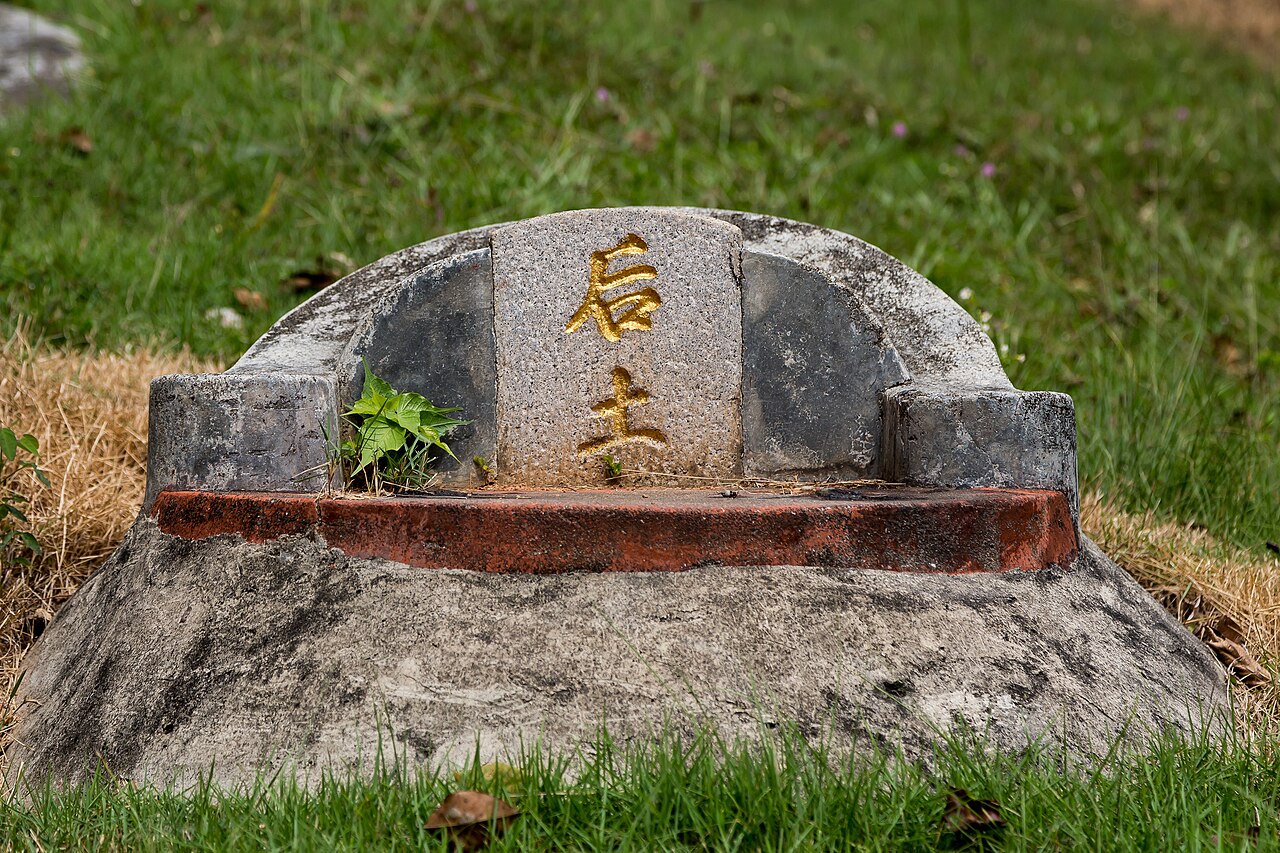
The Chinese cemetery at Bukit Cina, Malacca. Source: Wikimedia Commons, CEphoto, Uwe Aranas, CC BY-SA 3.0

I put it here because it belongs to the same time as the Selangor mechanics' monument: 1947, 1948, just after the war, surviving Chinese in the places where they lived put up monuments for the dead.
Two points are only set out here, not checked:
- that the calligrapher is Chiang Kai-shek is at present supported by only one source, Wikipedia;
- that a British High Commissioner unveiled this monument: Malaya at that time was still a British colony.
A question
The author of the column above raised a question: Malaysia's Chinese society has not treated the Nanqiao mechanics as part of the history of Malaysian Chinese, but as part of the history of China's War of Resistance. They argue that this period should be written into the textbooks of Chinese secondary schools.
This question, I think, is the question of the whole Nanyang group.
What I think
Reading these things, I feel a weight I cannot quite name.
In 1939 they went to a country in which they had not been born. They drove trucks along a road that was almost a cliff, carrying other people's supplies to other people's front. About a third did not come back. Those who came back, for decades, did not say much.
In Indonesia and Thailand the host countries' hardest accusation against the Chinese is "your heart is not here". I wrote about it in this series' preface, "Neighbours to the South". The mechanics are the most extreme sample of that accusation: their hearts did go elsewhere, and they took their lives there too.
And yet I cannot read this monument by "heart not here". Look at that wall, with 3,200 names, and not one of them is that of a "disloyal" person. They were a group of people who, for a country they did not live in, put down their work and went up a road. If you say that their "hearts were not here", I feel it is unfair to them.
Looking at it the other way
First, Malaya in 1939 was a British colony; there was no "host country" that could be failed. It became independent only in 1957.
Second, "returning to serve the country" was a special case of wartime and cannot be taken as the Chinese's usual direction. Among the same group, more than a thousand returned after the war to Malaya and Singapore and lived there.
Third, the monument says "overseas Chinese" (huaqiao), not "Malaysian Chinese". The word meant something different in 1947 from what it means in 2026. That may be half of the question that the columnist wants to raise.
What my proposal says here
My "core" is meant to give a community a "centripetal force", and the mechanics were the strongest case of it, yet the centre lay in another country. For my proposal, is this lesson a positive example or a negative one? My answer: both. A positive one: it proves how far a group of people can go, without any organisation giving orders, on a feeling of "we are one family" alone, as far as over a thousand leaving their lives on a mountain road. A negative one: it also reminds me that once this kind of centripetal force is tied to a state, it can take people very far, and into danger, and that in many cases that state will not remember them. So the "heart" I want cannot be tied to a state. It must be tied to something that will not fall, will not change, will not forget you: the ancestors, Heaven, a monument, and a place where every seventh of July someone still comes to pay respects.
To my friends in Malaysia, and to the descendants of the mechanics. There is one detail: after they came back, they rarely talked about those years. I think perhaps it was because nobody had asked them. So I want to ask here: your father, your grandfather, in those years, what vehicle did he drive? Did he leave you a name, an old photograph, a watch? If you have an answer, I want to know. I want to keep, on this site, a place for him, a name. I have no way to put up a monument for him; I can only write his story down.
A man gave his life to a country he did not live in. Whose history should his monument stand in?
References
- For comparison: in this series, "Neighbours to the South" (preface, "heart not here"), "What Was Allowed, and What Was Taken" (Indonesia), "Chinese Education" (Malaysia), "Temples, Native-Place Halls, Chambers of Commerce"
- Nanqiao Jigong: Circular No. 6 of February 1939, 3,193 people (including 4 women), nine batches, the Yunnan–Burma Road, about 500,000 tons in 1939–1942, over a thousand killed, over a thousand returned after the war to their countries of residence, over a thousand stayed in China; Monuments in Malaysia: the Malacca Chinese Anti-Japanese Martyrs' Monument of 1948 ("Zhongzhen Zushi", Chiang Kai-shek's calligraphy, according to Wikipedia); Selangor 1947, handed in 1952 to the Kuala Lumpur and Selangor Chinese Assembly Hall, every seventh of July; Penang 1951-11-11; the Nanqiao Jigong Memorial Park and Museum in Kuala Lumpur, 2025-08-14; the argument of one newspaper column
- Image sources are given in each caption