The characters are still there
Students in Taiwan use traditional characters and Zhuyin phonetic symbols from childhood. In high-school Chinese class they read classical Chinese.
Unlike Korea and Vietnam, nobody here says the characters should go. What is argued about is something else: how much to read.
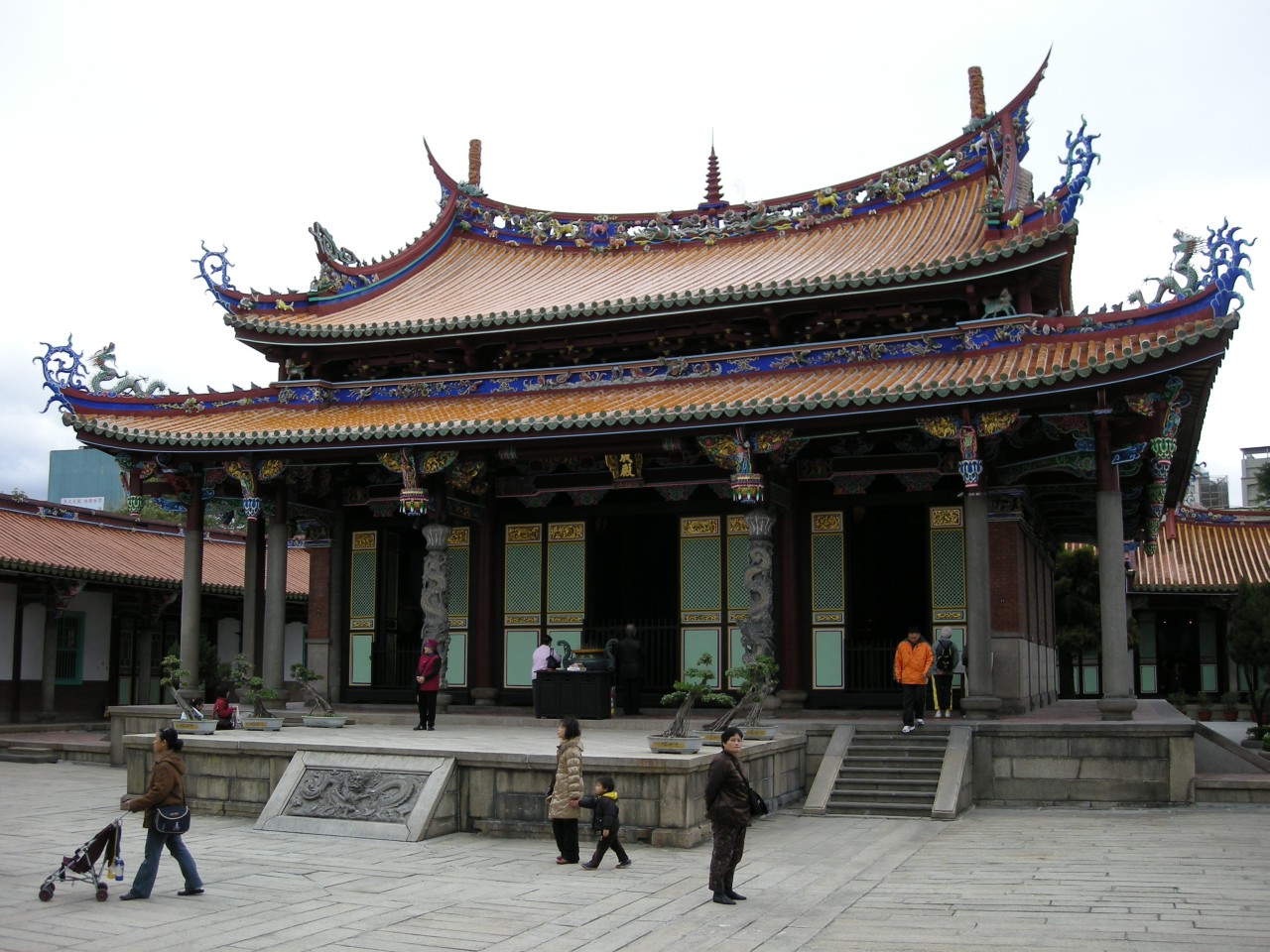
Taipei Confucius Temple. Source: Wikimedia Commons, Udo Schoene, CC BY-SA 3.0

Three numbers
Before the 108 curriculum, classical Chinese made up 45% to 65% of the general high-school Chinese course.
In August 2017, in the curriculum review board, the high-school group at one point proposed cutting it to below 30%. Society disputed it fiercely.
In September 2017, at the full review meeting, after two rounds of voting, it was set at 35% to 45%. The recommended selected texts were reduced from 20 to 15, with the requirement that they include different genres and local material.
What each side says
The review board's account: compulsory class hours were reduced and electives increased. Hours for every subject were generally cut, and so the number of texts that a Chinese class can teach fell with them.
Opponents put it more heavily: one writer said that to throw away classical Chinese would make the nation one "without memory" (this is a mainland media report; I have not found the original words). Some see the matter as "de-sinicisation". A former high-school teacher also said that after the 108 curriculum, students' writing has had problems (this is one person's view).
I set out only these two accounts, and do not judge.
October 1966
On 10 October 1966 Chiang Kai-shek issued the Message to the Whole Nation's Compatriots and launched the "Chinese Cultural Renaissance Movement". He criticised the Cultural Revolution that began that year on the mainland as "cutting off five thousand years of history and culture". In July 1967 a promotion committee was set up, with himself as chairman.
In the same month, on the two sides of the Strait, the same "culture" was put into two opposite stories: on one side, it was being broken; on the other, it was being kept.
Later, on the side that kept, people began to argue about how much to keep.
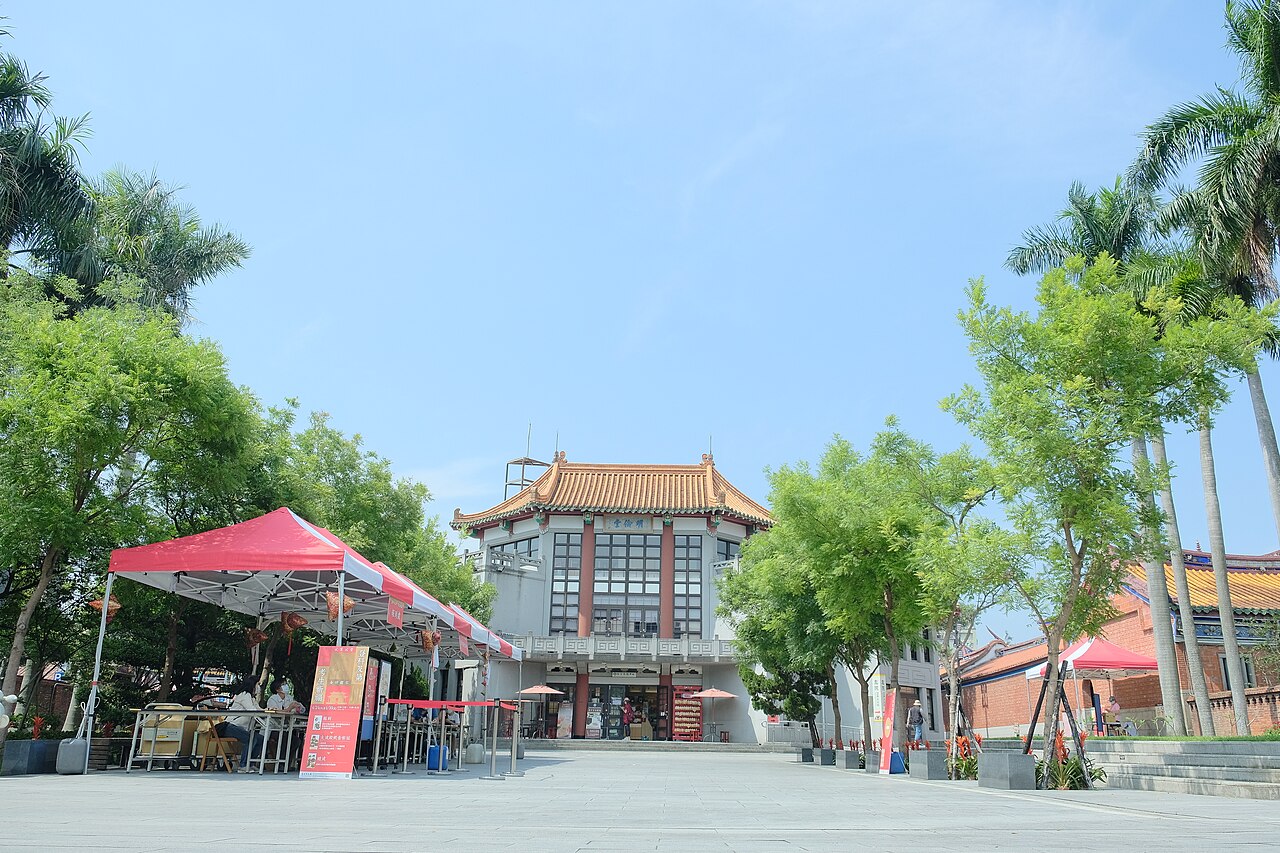
The Minglun Hall of the Taipei Confucius Temple. Source: Wikimedia Commons, Taiwankengo, CC BY-SA 4.0

What I thought
Three places, three ways: Korea, where the state gave an order and settled it at once; Vietnam, where outsiders pushed and, walking on, it became the Vietnamese's own; Taiwan, where a committee, round after round of votes, set a percentage. Reading the Taiwan section I feel a little envy, because there is at least one thing here that other places do not have: people are arguing in public. They argue over thirty-five percent or forty-five; over a few dozen texts, whom to keep and whom to drop. A society that will argue about such a thing, on television and in the review board, round after round, shows that many people truly care about the writing their ancestors left. A number can be voted on again; this caring, I think, matters more.
Looking at it the other way
First, a lower share does not mean the students are worse. Nor is there data to show they are better. What each side says is, on both sides, just what each side says.
Second, the review board's reason is real: with fewer hours, choices must be made. Where there are choices, someone feels dropped.
Third, on the mainland side they went the other way: the unified textbooks increased classical poems and prose in primary school by about eighty percent. The same worry, and the two sides wrote opposite prescriptions.
What my position says here
In Taiwan the characters are still there, and so are the Confucian sacrifices and the festivals. A society that, with the characters and the classics still present, still argues over "how much", shows that what is missing is not the characters. What is missing? I think it is "why read". A high-school student who reads the "Memorial on Leading the Army" and recites "Yueyang Tower", if he has no feeling in his heart that "these words were written for me", will see no difference between thirty-five and forty-five percent. Characters, classical Chinese, Confucian temples, ceremonies: Taiwan has all of these. What I want to ask is: do these things let a sixteen-year-old, late one night, read a sentence and suddenly feel that it is about him? A moment like that no syllabus can prescribe; yet only with it can this writing count as still alive.
To my friends in Taiwan. I read about your curriculum review board in writing. In September 2017 the board's general meeting, in two rounds of votes, set the share of classical Chinese at 35% to 45%, and cut the recommended texts from twenty to fifteen. This fight is not a joke; it is a society seriously thinking about one question: how much of the "past" shall we leave to the next generation? Your children have used traditional characters and Zhuyin since childhood and read classical Chinese in high school, to this day, and there have always been people arguing for it. I do not draw conclusions for you, and I do not want to use any label to speak of you.
Between thirty-five and forty-five percent, what is the difference?
References
- For comparison, in this series: "Can't Read Our Ancestors' Characters" (Korea) and "Why the Confucian Association Failed"; the units of Yigui that deal with related matters
- Before the 108 curriculum, classical Chinese 45%–65%; August 2017, 30% proposed; September 2017, set at 35%–45%, 15 recommended texts; Message to the Whole Nation's Compatriots, 1966-10-10; the promotion committee of July 1967; classical poetry and prose in the mainland's unified textbooks
- Image sources are given in each caption