
A city where meat may not be sold
In August 2014 the Gujarat government announced that Palitana would become a "no-meat zone": slaughter of animals is banned across the whole city, and the sale of meat, fish and eggs is banned. The media called it "the world's first officially recognised vegetarian city."
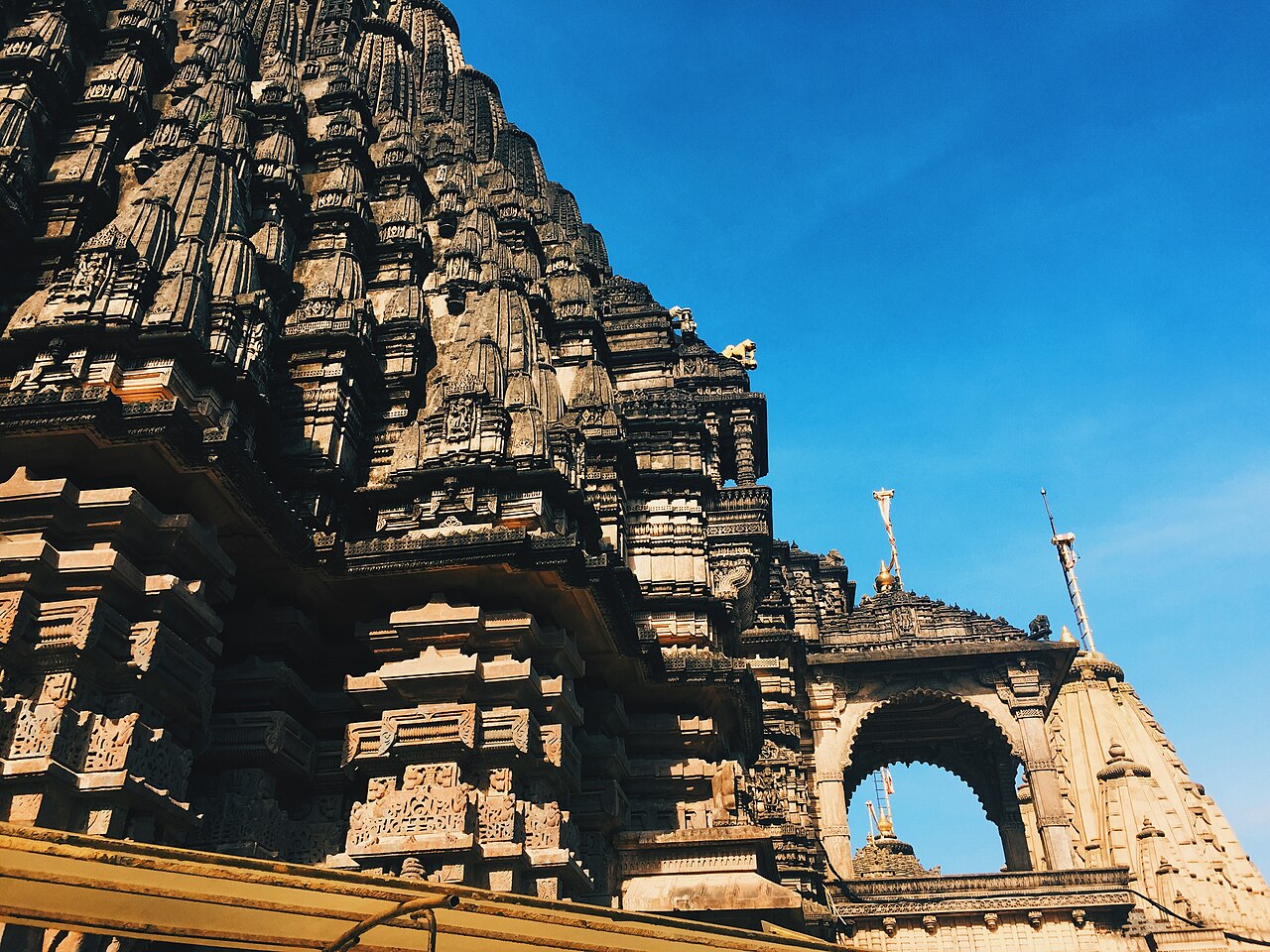
The Jain temples of Palitana, Gujarat. Source: Wikimedia Commons, Aashvi Sanghvi, CC BY-SA 4.0

This decision (14 August) was, by reports, made after about 200 Jain monks went on hunger strike in protest. Palitana is one of the most important holy places of Jainism, with hundreds of temples on the hill.
A city, because of the religious belief of a small group, changed the menu of all its residents. Hunger strike as a way of negotiating has low cost and quick effect, provided you really dare to go hungry. This happened in a country with a Hindu majority and also Muslims, Christians and others.
Now look at August 2025. The Mumbai municipal corporation issued an order on 14 August to close the city's slaughterhouses for two days (24 and 27 August) during the Jain festival of Paryushana (a festival lasting about a week). Jain groups proposed closing them for the whole week. The Bombay High Court expressed reservations, saying it would invite similar demands from other festivals. The Jain side also pointed out that Ahmedabad had long closed its slaughterhouses for the entire festival.
These two examples show the same thing: a group that is very small and whose voice is very loud.
First the numbers
- In the 2011 census India had 4,451,753 Jains, 0.37% of the population, the smallest of India's six major religions;
- In 1981 the share was 0.47% (some sources say 0.48%). That is, in 30 years the share fell by more than a fifth (see the piece on Jainism in the Old Souls, New Bodies series).
- In Pew's 2021 survey Jains were 0.4% of the Indian population.
One thing first: Pew interviewed nearly thirty thousand people, but only 109 of them were Jains, so every Pew number below can only be taken as a rough outline.
Now who they are:
- Education. In Pew's survey about a third (34%) of Jain adults have a college degree, against 9% nationally. The 2011 census counts differently: among Jains, 25.65% are graduates and above, also the highest of any religion; the literacy rate of Jains is 86.73%, likewise the highest.
- Wealth. Pew, citing the "wealth index" of the National Family Health Survey (NFHS), says Jains are the wealthiest religious group, with the great majority of Jain households in the top few bands nationally. I have seen a more specific claim elsewhere (about 70% in the richest fifth), but this time I did not check the original table, so I do not write it.
- Diet. 92% of Jains say they are vegetarian, and two thirds do not eat root vegetables such as garlic and onion.
- Caste. Only 20% of Jains say they belong to the lower castes, against 68% nationally. They are the only religious group in India of which most say they belong to the "general category" (upper).
- Geography. Concentrated in the west, especially Maharashtra. 4% of Mumbai's residents are Jains.
- Politics. Of every 10 Jains, 7 say they are closest to the Bharatiya Janata Party; among Hindus the share is 44%.
That is: few in number, but highly educated, wealthy, concentrated in a few big cities, with strong organisation. Add these together and in any country it is a group that gets things done. A group like this, even when very small, can make a voice in politics and society larger than its numbers would suggest.
Why this is so
Non-violence (ahimsa) is the core of Jainism. It rules out many occupations: farming (turning soil harms insects), slaughter, military service, leather. So many Jains turned to commerce, finance, jewellery and trade. Religion shut several roads, and many more people took the ones that remained. (See the piece on Jainism in the Old Souls, New Bodies series, which discusses in more detail how religion influences choice of occupation; I do not repeat it here.)
This road has a result: money, education, cities and community networks, four things stacked together. And these four are also the factors in modern society that most easily bring fertility down.
A position of "having it both ways"
The Jains' position in Indian law and politics is a bit delicate.
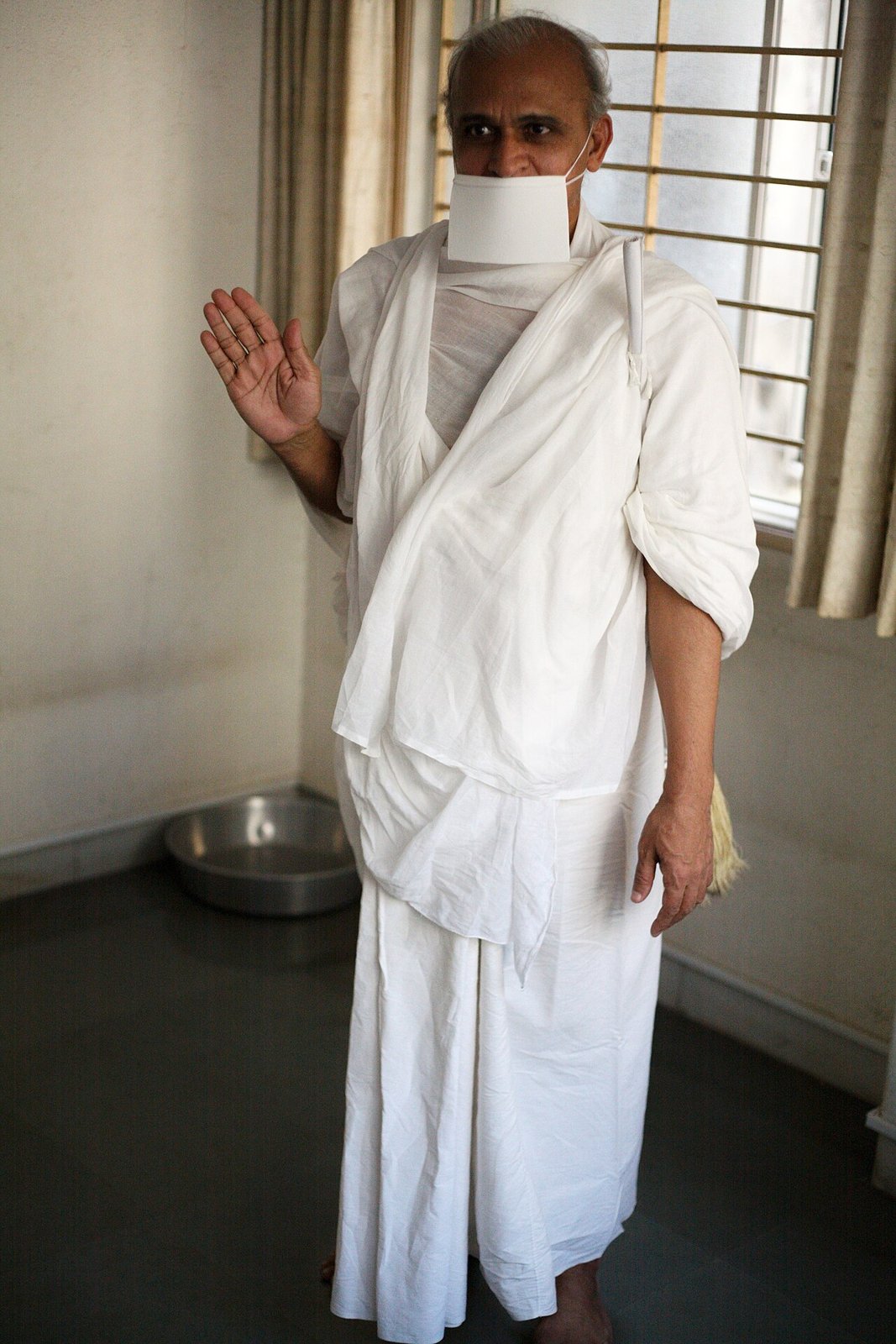
A Śvetāmbara (Sthānakavāsī) Jain monk, with a mouth cloth to avoid accidentally harming small creatures. Source: Wikimedia Commons, Samyak Modi, CC BY-SA 4.0

On one side, they are a minority religion in law. On 20 January 2014 the Union government listed Jainism as a national-level "minority community," the sixth, after Muslims, Christians, Sikhs, Buddhists and Parsis.
On the other side, they are among the most stable supporters of the Bharatiya Janata Party (Pew's figure: seven in ten say they are closest to the BJP). In the accounts of some Hindu nationalists Jainism is often counted as part of the "great Hindu family," and inside Jainism the attitude to this is not uniform. The minority status won in 2014 was seen by many Jain organisations as recognition of "we are an independent religion." This part concerns disagreements within the community; I found no systematic study and have only set the two attitudes side by side.
That is also why there is a relation of mutual use between Jain demands (meat bans, protection of animals) and larger political currents: the Hindu vegetarian tradition and cow protection, and Jain non-violence, often combine in practice. But this cooperation has its frictions.
One more niche matter
In August 2015 the Rajasthan High Court ruled that Sallekhana in Jainism (also called Santhara, a rite of voluntarily fasting at the end of life until death) is suicide and should be banned. Jain groups strongly opposed it, regarding it as a question of religious freedom. This judgment of 10 August 2015 was stayed by the Supreme Court three weeks later (31 August).
The point of this is not the outcome but what it shows: when an ancient religious practice meets modern legal concepts (suicide, the right to life), how should society deal with it?
Turning it around
First, is "the richer, the smaller" a rule? There is a similar example: the Parsis (India's Zoroastrians). They are also a small, wealthy, highly educated group concentrated in Mumbai; their number fell from about 70,000 in 2001 to about 57,000 in 2011, and from 2013 the government even launched a programme to encourage births, "Jiyo Parsi." This shows the phenomenon has appeared in other wealthy small groups too. But there are counterexamples, and more comparison is needed.
Second, few people does not necessarily mean little influence. The Jains' "shrinking" is in population share; their role in the economy, philanthropy and political lobbying does not necessarily shrink in step.
Third, different people feel differently about this influence. Some see it as the virtue of protecting animals; others feel a very small group should not decide everyone's menu. According to Indian media such as Outlook and Open, in cities like Mumbai some housing societies neither rent nor sell to meat-eaters (not written in the rules, an unwritten practice), and are accused of discrimination. These frictions arise at the surface where a community with a clear boundary touches the larger society.
Fourth, population is not the only measure. Should a religion's "success" be measured by numbers, or by whether it continues and whether it lets believers live the life it considers good? This is a question we asked in Old Souls, New Bodies, and in India the answer is more complicated: because a small group's choices directly affect other people.
If a community's numbers are shrinking while its influence grows, what should it most worry about: becoming fewer, or becoming so different from others that more and more people see it as a burden?
References
- India's 2011 census: Jains 4,451,753, 0.37%; 0.47% in 1981
- Pew Research Center, "6 facts about Jains in India," August 2021
- NFHS-4 (2015–16) wealth index distribution by religion (relayed by GKToday, Wikipedia and others)
- Reports on Palitana becoming a "no-meat zone" in 2014 (TheNewsMinute, Yale FORE and others)
- Reports on the Sallekhana case (LiveLaw, Gulf News, Times of India, August 2015)
- Reports on the closure of slaughterhouses in Mumbai during Paryushana 2025 (LiveLaw, Free Press Journal)
- Old Souls, New Bodies series: "Jainism: The Richer It Gets, the Smaller It Grows"