The man who put it out didn't understand why it caught fire
Almost twenty years ago, the "last twenty-eight chapters" of a Dream of the Red Chamber began to circulate online. The claim: this was an old manuscript preserving Cao Xueqin's original ending, completely different from the last forty chapters of the Cheng-Gao edition that we're used to reading. Because there is a marginal note in the book saying "the whole book was fair-copied in the twelfth month of Guiyou," people called it the "Guiyou manuscript."
Its last twenty-eight chapters are written brutally, without the little closing note of "orchids and cassia flourishing together" at the end of the Cheng-Gao. Many readers finished it feeling that this is more like the ending Cao Xueqin had in mind.
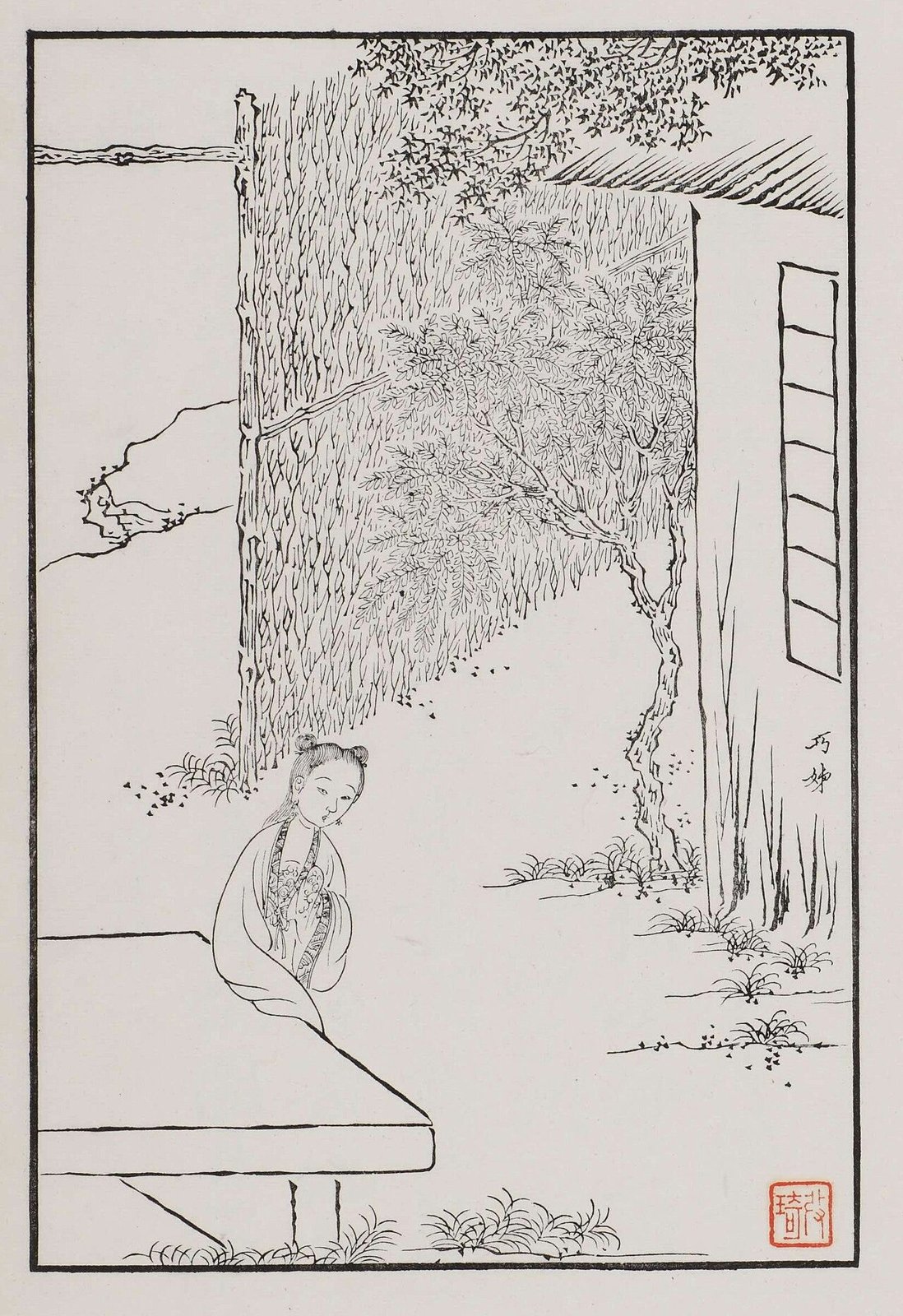
Qiaojie, from Gai Qi's Qing-dynasty "Illustrations of the Dream of the Red Chamber." In the Cheng-Gao edition she is finally married to a well-off country family and has somewhere to land; the Guiyou manuscript gives her a far crueller ending. For two hundred-odd years readers have been arguing over an ending for these girls. Source: Wikimedia Commons, painted by Gai Qi, public domain

In February 2018, Liu Jian, a reporter for Guangming Daily, went to find the man who had put the book out, online name "He Lili." The report says that when asked by the reporter, He Lili "repeatedly said that both marginal notes were forged by him, and that he himself deeply regrets it." The book title "Wu's Story of the Stone, an Abridged and Annotated Trial Commentary Edition" was also invented, and he used it back then "to sell a few more books." The report also relayed his 2014 account: the original manuscript had long been lost, and the twenty-eight chapters circulating online were "a plot he reconstructed from memory, and which was revised many times by him and by others."
In fairness I should add: he also stated that there was no possibility of forging a manuscript, that a manuscript really had existed, but could no longer be found.
What impressed me most in the report was this remark of his:
"The content of the last 28 chapters is too shocking, too bloody. I don't much like that plot and can't accept it; I don't understand why this edition caught fire."
The man who put it out didn't like it himself, and couldn't work out why it caught fire.
So what made it catch fire can only be the people who read it. That is, us.
One original, one true father, one debate
The Guiyou manuscript is not an isolated case. Put side by side the "secret copies" and "secret histories" that have travelled furthest on the Chinese-language internet in recent years, and you'll find they look alike.
An original. That's the Guiyou manuscript above: Cao Xueqin's real ending has always been there, it was just hidden, and what we have read for two hundred-odd years is a version someone altered.
A true father. In November 2025 an old claim suddenly took off online: the Kangxi emperor's real father was in fact Hong Chengchou, the Ming minister who surrendered to the Qing. So from Kangxi on, those who sat in the Forbidden City were really of Han blood. I wrote a piece on this for Yigui, so I won't go into detail here.
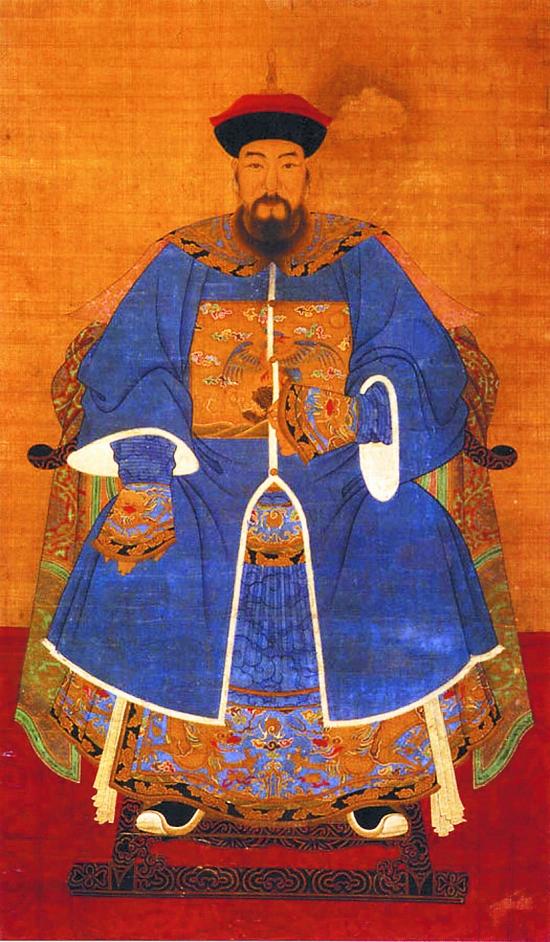
Portrait of Hong Chengchou, with an inscription by Yao Nai of 1771. He was the Ming Governor-General of Jiliao, captured at the Battle of Songjin and surrendered to the Qing, and later pacified most of the south for the Qing. Over three hundred years later, someone online wanted to make him Kangxi's real father. Source: Wikimedia Commons, Nanjing Museum, public domain

A debate. Another story circulating online says that at the time of the Taiping, Western missionaries came to the Heavenly Capital to debate the Bible with Hong Xiuquan and were left speechless by him. But look at the records of the time, and what the missionaries left behind is shock and disappointment. The American missionary formally invited to the Heavenly Capital by the Taiping, Issachar Roberts, by the time he left in 1862, was deeply disgusted. Quite a few missionaries visited the Heavenly Capital, and not one conceded defeat.
Three stories: one about a novel, one about an emperor, one about a religion; they seem to have nothing to do with each other. But their skeleton is the same:
The true version has always been there, only hidden; the "authoritative text" everyone sees is a cover; and a few people can read what was hidden.
Honestly, I've read all of these stories seriously, and some of them I was rather willing to believe. So this series doesn't plan to laugh at anyone from a height. What I want to understand is why they are so easy to believe.
I am one of those who believe
Don't laugh when I say it: the Guiyou manuscript, to this day, I still lean towards believing.
It isn't its wording that I believe. Its wording is, in many places, rough; some passages match the Cheng-Gao, some rhyme by today's standard Mandarin; I've looked at all this, and I accept it. Beauty lies in the bones, not the skin; the words don't matter. What I believe is its skeleton: how the Jia house fell, what each of those girls came to, where the whole book ends up. The purpose of that skeleton is a notch higher than the rise and fall of a family and love between men and women, and I don't much believe that someone who later compiled the book to sell it could have thought of it.
So my view is: its skeleton predates Cao Xueqin's own polishing, and its main body hasn't been tampered with; in the words, there is a lot that later hands added.
I know this is only one reader's judgment, not evidence from textual scholarship. The pieces later in this series on the Guiyou manuscript will lay out the evidence and the opposing cases one by one, including those that go against me. I put myself inside the "we" so that the dismantling doesn't turn into laughing at other people.
It grew in layers
A hundred years ago, the historian Gu Jiegang wrote a letter that later became famous. He said China's ancient history was "built up layer by layer," and gave three meanings:
One is "the later the age, the longer the traditional period of ancient history." The oldest figure in the Zhou people's mind was Yu; later there were Yao and Shun; later still Huangdi and Shennong; the later it gets, the further back ancient history reaches.
Two is "the later the age, the bigger the central figures of tradition are made." A figure gets another layer of stories with each generation it is passed down.
Three is that although we "cannot know the true state of any event, we can know the earliest state of an event in tradition."
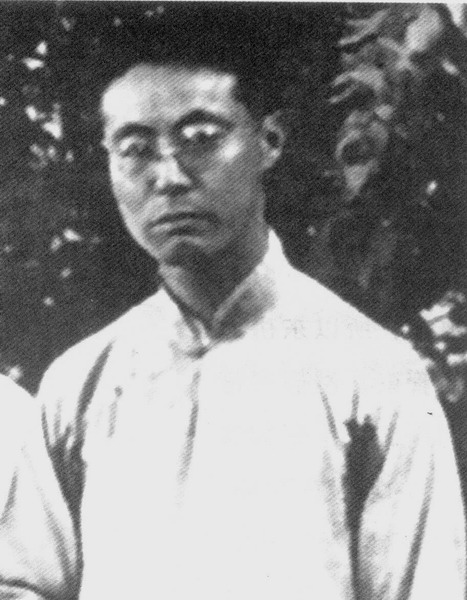
Gu Jiegang, 1924. He was thirty the year he put forward the "layered" theory. Source: Wikimedia Commons, public domain

Gu Jiegang was talking about high antiquity, but these three points fit today's pseudo-history very well too.
The Hong–Qing hypothesis grew in layers in just this way. In the early Qing someone wrote poems mocking "the Empress Dowager Xiaozhuang marrying Dorgon," and in the Republic the historian Meng Sen specifically wrote essays against it; in the late Qing and early Republic there was the story that "Qianlong was the son of the Chen family of Haining"; and by 2025 the lead role had changed to Hong Chengchou. The people in the story kept changing; the skeleton never did: the Qing emperors were really of Han blood.
The third point, I think, is the most useful for us ordinary readers. On many things we truly cannot know "the true state"; but where a claim first surfaced and who later added what to it can be traced. Most of the pieces in this series do exactly that.
Why we believe
Psychologists have studied this question a good deal. Karen Douglas of the University of Kent and colleagues wrote a review in 2017 on why people believe in conspiracy theories. Their conclusion, roughly, is that three kinds of need push people to believe (the following is my own translation):
One is epistemic: wanting to make sense of what is happening around you; one is existential: wanting to feel safe and in control in one's environment; and one is social: wanting to maintain a positive image of oneself and one's group.
What they studied is conspiracy theories, that is, explaining big events as the secret plotting of the powerful. Pseudo-history isn't entirely the same thing, but in many places it overlaps.
Which kind of pain it catches
Set these three needs against the three stories above, and you find each catches a little something.
What the Guiyou manuscript catches is a regret. Dream of the Red Chamber was never finished, and that has weighed on many people for two hundred-odd years. Someone telling you the real ending is still there, just hidden, is much easier to bear than "it simply wasn't finished."
What the Hong–Qing hypothesis catches is a pain that can't be said aloud. The shaving of heads and the change of dress after 1644 really happened. If the one sitting on the dragon throne was in fact Han, then that stretch of history seems less complete, and those shaved-off locks were in a way compensated in the dark. Put plainly: the single word "Han" couldn't hold its head up on its own land for three hundred years, and even today, mentioning it seems to require first explaining that it isn't "Han chauvinism." This stifled feeling is real, and the Hong–Qing hypothesis just gives it an outlet.
What the debate story catches is a breath held since modern times. After having the country's gates opened by other people's ships and guns, hearing that our side once won an argument on points of reason is always heartening.
Douglas and colleagues also mention in the article that some scholars think conspiracy theories let people push responsibility for bad outcomes onto others, thereby protecting the image of themselves and their group. What these stories console are real grievances.
But the same article has another line which I read for a long time. They say that current research hasn't shown that believing these claims really satisfies those needs; for many people, it is "attractive, but not necessarily satisfying."
I think that is true too. Believe the Guiyou manuscript, and Dream of the Red Chamber is still unfinished; believe the Hong–Qing hypothesis, and 1644 doesn't therefore cease to exist. That little grievance is still there; it has just been put somewhere else.
How this series will be written
So this series is called Mi Ben, "Secret Copies."
Each piece takes apart one widely spread claim: where it first came from, how it grew layer by layer, why some people are willing to believe it. What I take apart is the claim, not the people who believe it.
Every piece will have a section called "Why they believe," stating the real anxiety behind the story. Every piece will also have a section called "Looking the other way," and in this series I'll try to set out the strongest arguments of the pseudo-history side, not pick the weakest to knock down.
Roughly these blocks: the Guiyou Dream of the Red Chamber; the Hong–Qing hypothesis; the "Western pseudo-history theory" that has been very hot in recent years, the school that says the history of ancient Greece and Rome was made up by later people; and some people telling their own experiences. Last, some methods: how to trace the earliest source of a claim, how to tell whether one version is upstream or downstream of another.
In another series, Yigui, I keep looking for Huaxia's own yigui (something to rely on and return to). Writing this series is really the other half of that: a yigui that can truly stand has to be built on reliable history, and can't be propped up by hidden secret copies.
Looking the other way
First, the authoritative text really has been altered, and secret copies are sometimes real. When the Qing compiled the Complete Library of the Four Treasuries, they changed "the Qiang and Rong took turns usurping" in Gu Yanwu's Rizhilu to "armed conflict daily broke out" and deleted a whole passage; this is a real alteration that can be matched word by word. So to suspect that "the authoritative text has been tampered with" is not paranoia; it really happened in history. This is where the pseudo-history argument is strongest. The only difference is that the original of the Rizhilu can be produced and matched, while the Guiyou manuscript, its promoter himself says, can no longer be found.
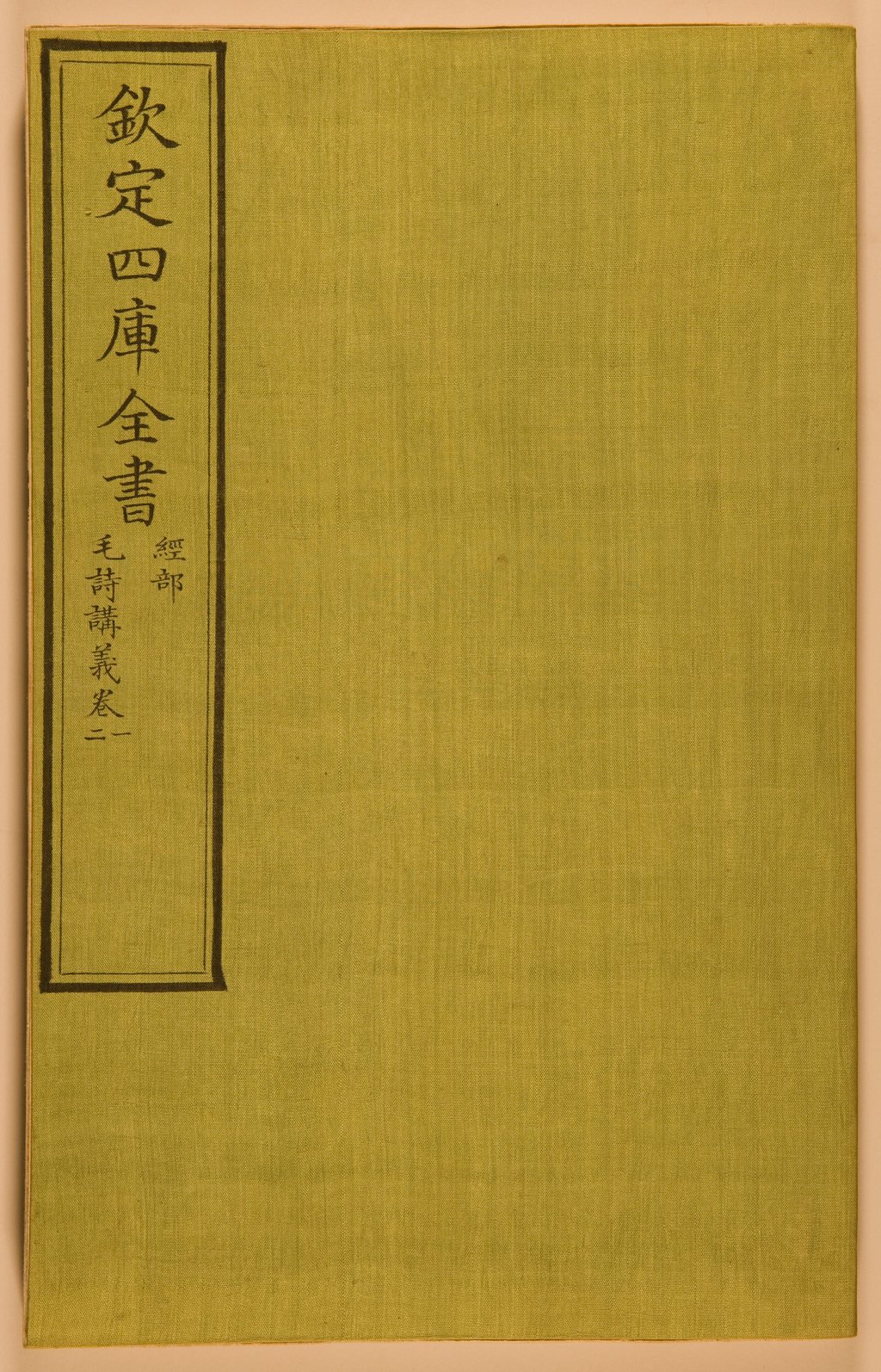
A volume of the Siku Quanshu. This collection preserved a great many ancient books, and also altered a great many. For saying "the authoritative text has been tampered with," the best evidence is this very set. Source: Wikimedia Commons, Library of Congress, public domain

Second, the label "pseudo-history" can also be misused. That a claim is called pseudo-history by the mainstream doesn't mean it is certainly wrong; there are cases that were later confirmed by new material. So this series tries not to pass judgment first: it sets out the evidence that can be found, and where none can be found, says none can be found.
Third, what Douglas and colleagues studied is mainly the conspiracy theories popular in Western societies; applying it to pseudo-history on the Chinese-language internet is my own analogy. Chinese readers may believe these stories for other reasons too, which that article doesn't cover. Later pieces will fill this in gradually.
If a "secret copy" you had always believed in were shown to be false, what would you be most reluctant to give up: the story itself, or the bit of comfort it once gave you?
References
- Liu Jian, "The Collapse of 'Wu's Story of the Stone,'" Guangming Daily, 27 February 2018
- Gu Jiegang, "Letter to Mr Qian Xuantong on Ancient History," Reading Magazine no. 9, 1923; collected in Gushibian, vol. 1, Pu She, 1926
- Karen M. Douglas, Robbie M. Sutton, Aleksandra Cichocka, "The Psychology of Conspiracy Theories," Current Directions in Psychological Science 26(6), 2017
- Gu Yanwu, Rizhilu, entry "Zhengshi" (Huang Rucheng's collected commentary edition, juan 17; Complete Library of the Four Treasuries edition, juan 13)
- Meng Sen, Verification of the Three Great Mysteries of the Early Qing, 1934
- Image sources are given in each caption